阿摩線上測驗
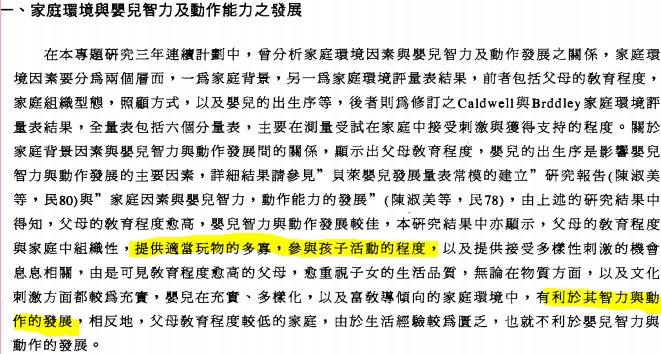
依據嬰兒版家庭量表的相關研究發現,以下何種因素最能預測童日後智商及學業成就?
(A) 適齡遊戲材料的提供及父母參與
(B) 孩子性別及氣質
(C) 排行 (出生序 )
(D) 家庭人數多寡
統計: A(3062), B(458), C(90), D(6), E(0) #358941
詳解 (共 3 筆)


Home Observation for Measurement of the Environment (HOME)
家庭環境評量表
(資料來源 https://edge.edx.org/assets/courseware/v1/bb4a6b8197e96dfcfbf30f6b9082b995/asset-v1:GeorgetownX+CCHD+2016+type@asset+block/HOME.pdf )
嬰兒版
Infant/Toddler (IT) HOME for PAT and HFA
For children ages 0 (birth) to 3 years old; contains 45 items total, divided into six subscales:
1. Responsivity: Extent of the parent’s emotional and verbal responsiveness to the child. 父母的情緒及語言回應性
2. Acceptance: Parental acceptance of undesirable behavior and avoidance of restriction/punishment; how the parent disciplines the child. 避免限制與處罰
3. Organization: How the child’s time is organized outside the family’s house (extent of regularity/predictability), and what the child’s personal space looks like. 家庭環境的組織性
4. Learning Materials: Presence of several types of toys and activities that are available to the child, age-appropriate, and directed towards intellectual development. 適當的遊戲材料提供
5. Involvement: Extent of parental involvement; how parent interacts physically with the child. 父母的參與
6. Variety: Amount and range of daily stimulation, particularly how daily routine is designed to incorporate social meetings with people other than the mother (e.g. father, other family members). 多樣性日常刺激的機會
另一篇研究有提到與智力相關預測
家庭環境與幼兒認知與動作能力發展關係
(來源 http://rportal.lib.ntnu.edu.tw/bitstream/20.500.12235/11321/1/ntnulib_ja_A0201_0025_013.pdf )