6.Phenyl Grignard reagent reacts with 2-methylpropanal to form a secondary alcohol. The <sup>1</sup>H NMR spectrum of 2-methylpropanal displays the two methyl groups as equivalent (a single doublet at δ 1.1). However, in the product alcohol (a racemic mixture), the <sup>1</sup>H NMR now shows two distinct 3H doublets, one at δ 0.75 and one around δ 1.0. Why do the two methyl groups in the product have different NMR chemical shifts? What is the term applied to such protons? (A) The presence of the hydroxyl group creates an asymmetric center, making the methyl groups homotopic. (B) The formation of a chiral center in the product makes the two methyl groups diastereotopic, meaning they experience different chemical environments. (C) The hydroxyl group participates in hydrogen bonding, causing different splitting patterns for the methyl groups, which are now homotopic. (D) The two methyl groups in the product remain chemically equivalent, and the observed difference in NMR chemical shifts is due to rotational averaging. (E) The steric hindrance of the bulky phenyl group shields one methyl group, making them enantiotopic rather than diastereotopic.
 阿摩線上測驗
登入
阿摩線上測驗
登入
 ) in an atom is acceptable: (A) (1, 0, 2, -1/2) (B)
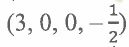 (C)
(C)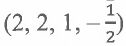 (D)
(D)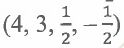 (E) (3, 2, 1, 1)
 . Propose a structure and explain how it is consistent with the observed absorptions.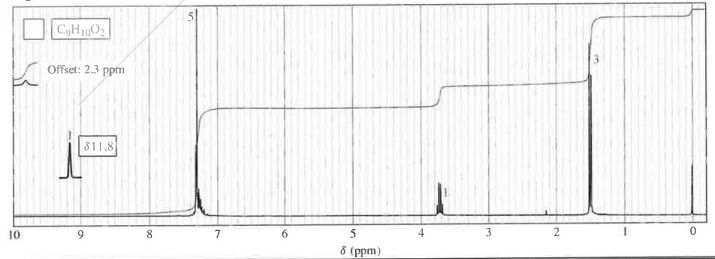

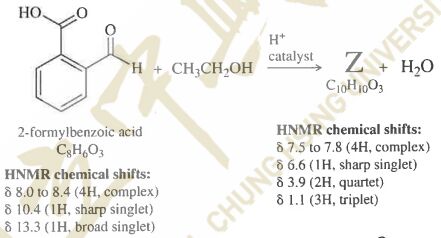
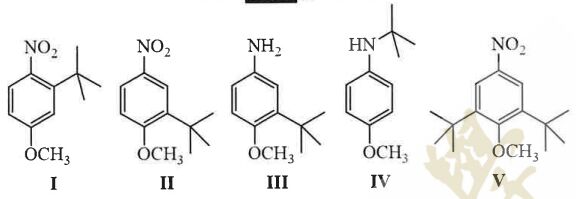
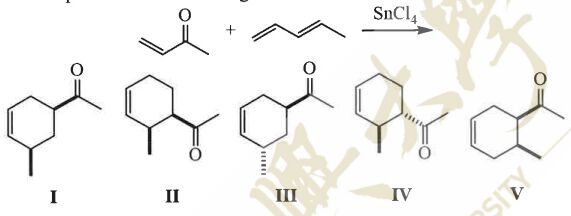
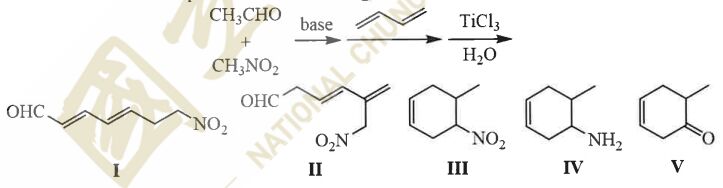
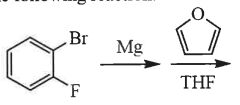
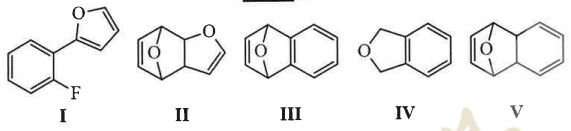
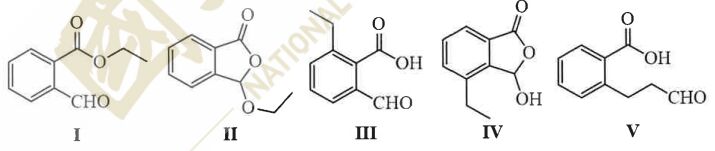 (A) I (B) II (C) III (D) IV (E) V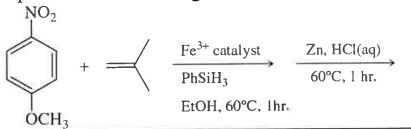
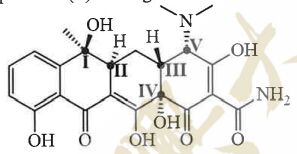

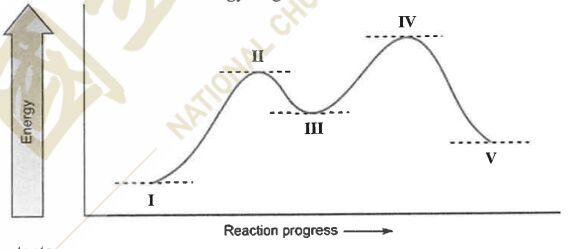 (A) I: Reactants (B) II: Transition state (C) III: Activated complex (D) IV: Transition state (E) V: Products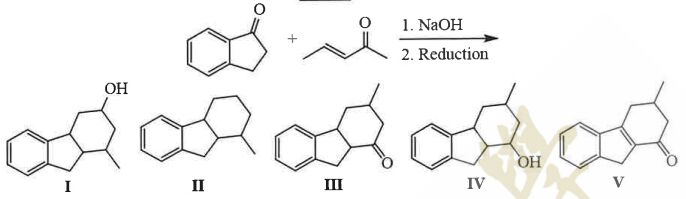
 (A) 1,2-dimethylcyclopentene (B) 2,3-dimethylcyclopentene (C) 1,2-dimethylcyclopent-2-ene (D) 1,5-dimethylcyclopentene (E) 1,5-dimethylcyclopent-4-ene
 substitution reaction? (A) tert-Butyl bromide (B) Isopropyl chloride (C) Methyl iodide (D) Phenyl chloride (E) Chloroform