阿摩線上測驗
登入
首頁
>
研究所、轉學考(插大)◆普通化學
>
111年 - 111 高雄醫學大學學生轉系考試:普通化學#109910
> 試題詳解
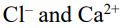
10. Which of the following make an isoelectronic pair:
?
(A)
(B)
(C)
(D)
(E) None of the above.
答案:
登入後查看
統計:
A(2), B(1), C(1), D(13), E(0) #2973564
詳解 (共 2 筆)
uu(已上榜)
B1 · 2023/10/12
#5945738
(共 1 字,隱藏中)
前往觀看
0
0
yuping0
B2 · 2025/06/17
#6488266
Cl-電子數:17+1=18 Ca2+...
(共 71 字,隱藏中)
前往觀看
0
0
相關試題
11. The cobalt(III) complex, , has how many 3d electrons? (A) 0 (B) 7 (C)6 (D) 5 (E) 4
#2973565
12. Which of the atoms listed below has the smallest radius? (A) Al (B) P (C)As (D) Te (E) Na
#2973566
13. If the radius of atom X is greater than the radius of atom Y, then it is also likely that (A) X has a larger electron affinity than Y does. (B) X has a larger effective nuclear charge than Y does. (C)X has greater metallic character than Y does. (D) X has a larger first ionization energy than Y does. (E) X is a poorer conductor of electricity than Y when in the solid state.
#2973567
14. Which one of the following ionic solids would have the largest lattice energy? (A) NaCl (B) NaF (C)CaBr2 (D) CsI (E) CaCl2
#2973568
15. Which of the following substances is/are bent? (i) H2S (ii). CO2 (iii) (iv) (v) O3 (A) only (iii) (B) (i) and (v) (C)(i), (iii), and (v) (D) (i), (ii), (iii), and (v) (E) (i), (iv), and (v)
#2973569
16. Which are the properties of ionic compounds? 1. They are liquids or solid at room temperature. 2. They have high melting points. 3. Solids do not conduct electricity, but liquids do. 4. All of ionic compounds can dissolve in water. (A) all (B) 1, 2, and 3 (C)1, 3, and 4 (D) 2, 3, and 4 (E) 2 and 4
#2973570
17. Which of the following liquids would make a good solvent for iodine, I2? (A) HCl (B) H2O (C)CH3OH (D) NH3 (E) CS2
#2973571
18. For the overall chemical reaction shown below, which one of the following statements can be rightly assumed? (A) The reaction is third-order overall. (B) The reaction is second-order overall. (C)The rate law is, rate = k[H2S]2 [O2]. (D) The rate law is, rate = k[H2S][O2]. (E) The rate law cannot be determined from the information given.
#2973572
19. Which one of these statements about strong acids is true? (A) All strong acids have H atoms bonded to electronegative oxygen atoms. (B) Strong acids are 100% ionized in water. (C)The conjugate base of a strong acid is itself a strong base. (D) Strong acids are very concentrated acids. (E) Strong acids produce solutions with a higher pH than weak acids.
#2973573
20. You have 500.0 mL of a buffer solution containing 0.20 M acetic acid (CH3COOH) and 0.30 M sodium acetate (CH3COONa). What will the pH of this solution be after the addition of 20.0 mL of 1.00 M NaOH solution?(A) 4.41 (B) 4.74 (C)4.56 (D) 4.92 (E) 5.07
#2973574
相關試卷
115年 - 115 高雄醫學大學_學生轉系考試試題:普通化學#146461
2026 年 · #146461
115年 - 115 國立嘉義大學_轉學生招生考試試題_應用化學系:普通化學#143922
2026 年 · #143922
115年 - 115 國立嘉義大學_轉學生招生考試試題_獸醫學系:普通化學#143851
2026 年 · #143851
115年 - [無官方正解]115 國立臺灣大學_轉學生招生考試:普通化學(C)#142702
2026 年 · #142702
115年 - 115 台灣聯合大學系統_學士班轉學生考試試題_A1:普通化學#142701
2026 年 · #142701
115年 - [無官方正解]115 台灣聯合大學系統_學士班轉學生考試試題_A6:普通化學#142699
2026 年 · #142699
115年 - [無官方正解]115 國立臺灣大學_轉學生招生考試:普通化學(A)#142644
2026 年 · #142644
114年 - 114 臺北醫學大學_寒假轉學入學考試試題:普通化學#145030
2025 年 · #145030
114年 - 114 國立嘉義大學_轉學生招生考試試題:普通化學#143941
2025 年 · #143941
114年 - 114 國立嘉義大學_轉學生招生考試試題_獸醫學系:普通化學#143721
2025 年 · #143721
 阿摩線上測驗
登入
阿摩線上測驗
登入
阿摩線上測驗
登入
阿摩線上測驗
登入
 ?
?