阿摩線上測驗
37 In an American court of law, who decides whether a defendant is guilty or not?
(A)The judge
(B)The State
(C)The jury
(D)The lawyers
統計: A(53), B(56), C(313), D(14), E(0) #338570
詳解 (共 2 筆)
在確定國家是否已超越合理懷疑證明被告有罪,陪審團成員應遵循,只能通過對證據的全面和公正的評價。陪審員不應影響自己的個人偏見或同情。

In both civil民事的 and criminal court cases in the United States, a jury陪審團 is called to give a verdict判決.
The jury is made up of members of the general一般 population—individuals who typically have little or no legal法律的 training.
Such a jury is valued重要、有價值的 because it offers a trial審判 by one’s peers同輩、同等社會地位或能力.
In preparation預備、準備工作 for hearing a court case, a jury must understand the presumption推測 of innocence and the burden of proof舉證責任.
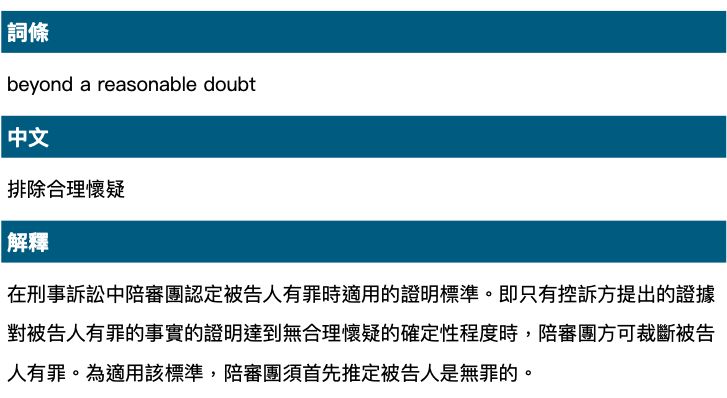
Before a legal trial, an explanation解釋 is read to jurors, as follows: “The defendant enters this courtroom as an innocent person, and you must consider him to be an innocent person until the State 國家、政府 convinces確信 you beyond a reasonable doubt排除合理懷疑 that he is guilty of every element要素 of the alleged被指控 offense. If, after all the evidence and arguments論點, you have a reasonable doubt as to the defendant’s having committed any one or more of the elements of the offense, then you must find him not guilty.”
In determining決定 whether or not the State has proven the defendant’s guilt beyond a reasonable doubt, jury members should be guided only by a full and fair evaluation評估 of the evidence. Jurors should not be influenced by their own personal bias偏袒 or sympathy.