阿摩線上測驗
登入
首頁
>
學士後西醫物理及化學
>
114年 - 114 國立中山大學_學士後醫學系招生考試試題:物理與化學#126239
> 試題詳解
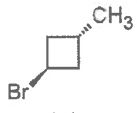
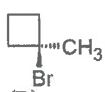
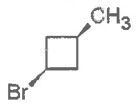
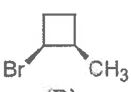
69. Which of the following molecules is optically active?
(A)
(B)
(C)
(D)
(E) none of the above
答案:
登入後查看
統計:
A(1), B(0), C(0), D(1), E(1) #3421264
詳解 (共 1 筆)
MoAI - 您的AI助手
B1 · 2025/09/21
#6764782
題目解析 這道題目要求我們判斷哪一種分...
(共 756 字,隱藏中)
前往觀看
1
0
其他試題
65. A crystal of NaCl is _____ (A) hard, high-melting, and a poor electrical conductor (B) hard, high-melting, and a good electrical conductor (C) soft, low-melting, and a good electrical conductor (D) soft, high-melting, and a poor electrical conductor (E) soft, low-melting, and a poor electrical conductor
#3421260
66. Which of the following chemical or physical changes is an endothermic process? (A) the evaporation of water (B) the mixing of sulfuric acid and water (C) the freezing of water (D) the combustion of gasoline (E) none of the above
#3421261
67. The _____ is the electrode at which the reaction of interest occurs. (A) auxillary electrode (B) counter electrode (C) anode (D) cathode (E) working electrode
#3421262
68. Which of the shown molecules fits the fragmentation pattern of the mass spectrum below the best? (A)(B)(C)(D)(E)
#3421263
70. Rank the following compounds according to increasing solubility in water. I CH3-CH2-CH2-CH3 II CH3-CH2-O-CH2-CH3 III CH3-CH2-OH IV CH3-OH (A) I <II < IV < III (B) I < III < IV< II (C) I <II < III < IV (D) III < IV < II < I (E) None of the above is correct.
#3421265
71. Nitrogen gas (N2) reacts with hydrogen gas (H2) to form ammonia (NH3). At 200°C in a closed container, 1.2 atm of nitrogen gas is mixed with 2.3 atm of hydrogen gas. At equilibrium, the total pressure is 2.1 atm. Calculate the partial pressure of hydrogen gas at equilibrium. (A) 2.3 atm (B) 0.0 atm (C) 1.8 atm (D) 0.20 atm (E) 0.92 atm
#3421266
72. The corrosion of which transition metal results in a characteristic green patina? (A) lead (B) copper (C) chromium (D) silver (E) iron
#3421267
73. EDTA is an example of a(n) _____ ligand. (A) hexadentate (B) bidentate (C) octadentate (D) tetradentate (E) tridentate
#3421268
74. When a molecule absorbs a photon, the molecule is promoted to an excited state M*. The rate at which M* is created is proportional to the concentration of M. There are three pathways that M* may take to return to the ground state. Which statement about these three pathways below is wrong? (A) The rate at which the excited state returns to the ground state is independent of the pathway to the ground state and the concentration of excited state molecules. (B) The three possible pathways to return to the ground state are emission, deactivation, and quenching. (C) Quenching occurs when a second molecule, the quencher Q, collides with M* and energy is transferred from M* to Q: M* + Q→M+Q*. (D) Deactivation returns M* to the ground state by colliding with other molecules and releasing energy in the form of heat: M* → M + heat. (E) Emission returns M* to the ground state by emitting a photon: M* → M + hv.
#3421269
75. A novel analytical method named ______ may enhance the fluorescence of immunoassays by a factor of 100 by measuring the fluorescence of Eu3+ 200 us after excitation with a laser pulse. (A) time-resolved fluorescence immunoassay (B) time-dependent fluorescence immunoassay (C) immunoassay fluorescence over time immunoassay (D) weakly bound time fluorescence immunoassay (E) europium-bound fluorescence immunoassay
#3421270