 阿摩線上測驗
題組內容
8. It is given grad f = ∇f = 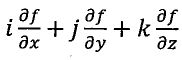 , div
, div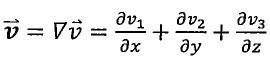 , and curl
 =
=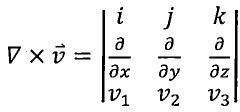 , where f and v1, v2 and v3 are the scalar functions of x, y and z.
(i) ∇ × (∇f) = 0 (2)
states "Gradient fields are irrotational. That is, if a continuously differentiable vector function is the gradient of a scalar function f, then its curl is a zero vector."
(ii) ∇ ⋅ (∇ × v) = 0 (3)
states "the divergence of the curl of a twice continuously differentiable vector function v is zero.”
(a) (6%), (6%) Please first prove Equations (2) and (3), respectively