所屬科目:研究所、轉學考(插大)◆經濟學原理
1. Refer to Table 1. As price rises from $10 to $12, the price elasticity of demand using the midpoint method is approximately (A) 0.08. (B) 0.18. (C) 0.42. (D) 0.58.
2. Refer to Table 1. Demand is unit elastic when quantity demanded changes from (A) 10 to 9. (B) 9 to 8. (C) 8 to 7. (D) There is not enough information given to determine the correct answer.
3. Refer to Table 1. When price is between $10 and $14, demand is (A) elastic. (B) unit elastic. (C) inelastic. (D) There is not enough information given to determine whether demand is elastic, unit elastic, or inelastic.
4. Suppose the demand for macaroni is inelastic and the supply of macaroni is elastic, and the demand for cigarettes is inelastic and the supply of cigarettes is elastic.If a tax were levied on the sellers of both of these commodities, we would expect that the (A) burden of both taxes would fall more heavily on the buyers than on the sellers. (B) burden of the macaroni tax would fall more heavily on the sellers than on the buyers, and the burden of the cigarette tax would fall more heavily on the buyers than on the sellers. (C) burden of the macaroni tax would fall more heavily on the buyers than on the sellers, and the burden of the cigarette tax would fall more heavily on the sellers than on the buyers. (D) burden of both taxes would fall more heavily on the sellers than on the buyers.
5. If the government wants to reduce smoking, it should impose a tax on (A) buyers of cigarettes. (B) sellers of cigarettes. (C) either buyers or sellers of cigarettes. (D) whichever side of the market is less elastic.
6. Which of the following would not shift the demand curve for mp3 players? (A) a decrease in the price of mp3 players (B) a fad that makes mp3 players more popular among 12-25 year olds (C) an increase in the price of CDs, a complement for mp3 players (D) a decrease in the price of satellite radio, a substitute for mp3 players
7. Which of the following events would cause a movement upward and to the left along the demand curve for olives? (A) The number of buyers of olives decreases. (B) Consumer income decreases, and olives are a normal good. (C) The price of pickles decreases, and pickles are a substitute for olives. (D) The price of olives rises.
8. Refer to Figure 1. Which price and quantity combination represents the social optimum? (A) P₀ and Q₁. (B) P₂ and Q₁. (C) P₁ and Q₀. (D) P₂ and Q₀.
9. Refer to Figure 1. Which of the following statements is correct? (A) The marginal benefit of the positive externality is measured by P₃ - P₁. (B) The marginal cost of the negative externality is measured by P₃ - P₂. (C) The marginal cost of the negative externality is measured by P₃ - P₁. (D) The marginal cost of the negative externality is measured by P₃ - P₀.
10. Bill owns 3 acres of beautiful wooded land.When Bill decides to move to be closer to his grandchildren, he donates the land to the state with the understanding that the land will be used as a state park. This state park is large enough that it is not congested.It is an example of a good that is (A) both rival in consumption and excludable. (B) neither rival in consumption nor excludable. (C) nonrival in consumption and excludable. (D) rival in consumption and nonexcludable.
11. Because of the free-rider problem, (A) private markets tend to undersupply public goods. (B) the federal government spends too many resources on national defense and not enough resources on medical research. (C) fireworks displays have become increasingly dangerous. (D) poverty has increased.
12. Which of the following is an example of a barrier to entry? (A) Tom charges a higher price than his competitors for his house-painting services. (B) Dick obtains a copyright for the new computer game that he invented. (C) Harry offers free concerts on Sunday afternoons as a form of advertising. (D) Larry charges a lower price than his competitors for his lawn-mowing services. Scenario 1 Consider a transportation corporation named C.R. Evans that has just completed the development of a new subway system in a medium-sized town in the Northwest. Currently, there are plenty of seats on the subway, and it is never crowded.Its capacity far exceeds the needs of the city. After just a few years of operation, the shareholders of C.R. Evans experienced incredible rates of return on their investment, due to the profitability of the corporation.
13. Refer to Scenario 1. Which of the following statements are most likely to be true? (i) New entrants to the market know they will have a smaller market share than C.R. Evans currently has. (ii) C.R. Evans is most likely experiencing increasing average total cost. (iii) C.R. Evans is a natural monopoly. (A) (i) and (ii) only (B) (ii) and (iii) only (C) (i) and (iii) only (D) (i), (ii), and (iii)
14. Refer to Scenario 1. Which of the following statements are most likely to be true? (i) New entrants to the market know they will have a smaller market share than C.R. Evans currently has. (ii) C.R. Evans is most likely experiencing decreasing average total cost. (iii) C.R. Evans is a natural monopoly. (A) (i) and (ii) only (B) (ii) and (iii) only (C) (i) and (iii) only (D) (i), (ii), and (iii)
15. Refer to Scenario 1. C.R. Evans will continue to be a monopolist in the subway transportation industry only if (A) population growth leads to an overcrowding of the subway cars. (B) there are no new entrants to the market. (C) demand for transportation services decreases. (D) All of the above are correct.
16. Refer to Scenario 2. What is the marginal productivity of the second worker? (A) 7 (B) 10 (C) 12 (D) 22
17. Refer to Scenario 2. What is the total productivity of three workers? (A) 12 (B) 22 (C) 30 (D) 42
18. Refer to Scenario 2. Suppose that Harry pays each worker $80 per day and that he charges each customer $20 to have his driveway shoveled. What is the value of the marginal product of labor for the second worker? (A) $200 (B) $240 (C) $800 (D) $960
19. Refer to Scenario 2. Suppose that Harry pays each worker $80 per day and that he charges each customer $20 to have his driveway shoveled. What is the value of the marginal product of labor for the third worker? (A) $160 (B) $640 (C) $1,600 (D) $2,400
20. James owns two houses. He rents one house to the Johnson family for $10,000 per year. He lives in the other house. If he were to rent the house in which he lives, he could earn $12,000 per year in rent by doing so. How much do the housing services provided by the two houses contribute to GDP? (A) $0 (B) $10,000 (C) $12,000 (D) $22,000
21. Suppose there are only two firms in an economy: Cowhide, Inc.produces leather and sells it to Couches, Inc., which produces and sells leather furniture. With each $1,000 of leather that it buys from Cowhide, Inc., Couches, Inc. produces a couch and sells it for $3,000. Neither firm had any inventory at the beginning of 2006. During that year, Cowhide produced enough leather for 20 couches. Couches, InC.bought 80% of that leather for $16,000 and promised to buy the remaining 20% for $4,000 in 2007. Couches, InC. produced 16 couches during 2006 and sold each one during that year for $3,000. What was the economy's GDP for the 2006? (A) $48,000 (B) $52,000 (C) $64,000 (D) $68,000
22. A nation's standard of living is best measured by its (A) real GDP. (B) real GDP per person. (C) nominal GDP. (D) nominal GDP per person.
23. For a given year, productivity in a particular country is most closely matched with that country's (A) level of real GDP over that year. (B) level of real GDP divided by hours worked over that year. (C) growth rate of real GDP divided by hours worked over that year. (D) growth rate of real GDP per person over that year.
24. Dependable Appliances had a P/E ratio of 25, earnings per share of $4, and retained earnings per share of $3. What was its dividend yield? (A) 4% (B) 3% (C) 1% (D) None of the above is correct.
25. When the price level rises, the number of dollars needed to buy a representative basket of goods (A) increases, and so the value of money rises. (B) increases, and so the value of money falls. (C) decreases, and so the value of money rises. (D) decreases, and so the value of money falls.
26. A country has national saving of $70 billion, government expenditures of $20 billion, domestic investment of $30 billion, and net capital outflow of $40 billion. What is its supply of loanable funds? (A) $30 billion (B) $40 billion (C) $50 billion (D) $70 billion
27. Other things the same, as the real interest rate rises (A) domestic investment and net capital outflow both rise. (B) domestic investment and net capital outflow both fall. (C) domestic investment rises and net capital outflow falls. (D) domestic investment falls and net capital outflow rises.
28. If at a given real interest rate desired national saving would be $50 billion, domestic investment would be $40 billion, and net capital outflow would be $20 billion, then at that real interest rate in the loanable funds market there would be a (A) surplus. The real interest rate would rise. (B) surplus. The real interest rate would fall. (C) shortage. The real interest rate would rise. (D) shortage. The interest rate would fall.
29. According to liquidity preference theory, if the quantity of money demanded is greater than the quantity supplied, then the interest rate will (A) increase and the quantity of money demanded will decrease. (B) increase and the quantity of money demanded will increase. (C) decrease and the quantity of money demanded will decrease. (D) decrease and the quantity of money demanded will increase.
30. Changes in the interest rate bring the money market into equilibrium according to (A) both liquidity preference theory and classical theory. (B) neither liquidity preference theory nor classical theory. (C) liquidity preference theory, but not classical theory. (D) classical theory, but not liquidity preference theory.
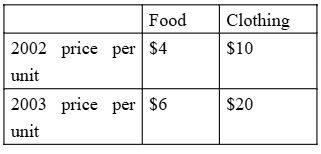
(II) Short Question (10 points)In a simple economy, people consume only 2 goods, food and clothing. The market basket of goods used to compute the CPI consists of 50 units of food and 10 units of clothing. What is the percentage increase in the CPI?
 阿摩線上測驗
登入
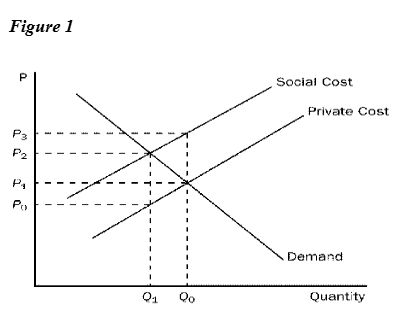 (A) P₀ and Q₁. (B) P₂ and Q₁. (C) P₁ and Q₀. (D) P₂ and Q₀.