所屬科目:主題課程專用
十五. Consider the famous hat problemn. Suppose that n pcople throw their hats in a box and n each picks one hat at random. (Each hat can be picked by only one person, and cach assi of hats to persons is equally likely) Let X be a random variable that ropresents the number of people that get back their own hat. Which of the following statemnents is/are true? (A) When n =3, P(X =3)= (B) When n = 3, P(X = 1)= (C) When n = 4, P(X = 3) = 0. (D) When n = 4, E[X] = 2. (E) When n = 5, E[X] = 1.
十六. Consider the famous hat problem as in the previous problem. Let X, be a random variable that takes value 1 if the ith person selects his/her own hat, and takes value O otherwise. Let cov(Y, Z) = [Y . Z] -E[Y] ㆍE[Z] be the covariance of two random variables Y and 2. Which of the following statements is/are true? (A) When n = 4, cov(X4, X4) is .(B)When n = 4,cov(X1,X2)=(C) When n = 4, va=2. (D) When n = 4, Xi and Xz are statistically independent. (E) For any two random variables Y and Z, cov(Y, Z) ≥0.
X and Y are independent continuous random variables with probability density functions (PDFs) shown below. What is the probability of P(-1 (A) 1/4 (B) 2/3 (C) 3/4 (D) 5/8 (E) none of the above.
(A) 1/4 (B) 2/3 (C) 3/4 (D) 5/8 (E) none of the above.
15. (5%) The random variables X1, X2,X3 have the joint Gaussian pdf: What is the marginal Goint) pdf of Xi and X3? (A) 0. (B) (C) (D)(E) None of the above.
16. (5%) According to Problem 15 above, for the 3✖3 covariance matrix of (X1.X2,X3), determine the correct element values Ki of the covariance matrix. (A) (B) (C)(D) (E) None ofthe above.
(5%) Let X and Y have the joint probability density function f(x,y)=2, 0≤x≤y≤1. Which of the following is correct? (A) E[X] = 1 (B) E[Y] = 1/2 (C) E[Y2] =1/2 (D)Pr(o sX sY,O≤Y≤=1/2 (E) None of these
(二)求條件機率(conditional probability)(0|0)= P(X=0|Y=0)(5分)
Problem 7. (2.5 %) Consider two random variables X and Y, each taking val- ues in {1,2,3}. Let their joint PMF be such that for any 1 ≤ x, y ≤ 3,
Then,
(i) X and Y can be independent or dependent depending upon the strictly positive values(ii) X and Y are always independent(iii) X and Y can never be independent
(b) (4%) Find(x, y).
(c) (4%) Find.
(d) (5%) Find E[Y|A].
(b) (4%) Find the conditional probability density function .
(d) (8%) Let Z = 3X + 2Y. Derive the moment generating function . You have to give the derivation, not just the an- swer.
8.(10%) The joint p.d.f. of x and y is for some k. Deter-
mine the conditional p.d.f..
a)Derive the conditional cumulative distribution function.(5%)
c) Is the correlation coefficient = 0? Explain why. (5%)
(b) (5%) Find the conditional pdf
(c) (5%) Find the conditional pdf
(d) (5%) Find the conditional mean E[Y|X = x], for x≥ 0
(e) (5%) Find the conditional variance Var(Y|X = x), for x ≥ 0
7.(8%) The random variable x is uniform in the interval [-5, 5]. Define y = Find C.D.F. Fy(y) and p.d.f. fy(y).
(10%) Suppose that X is a continuous random variable with cumulative distribution function (CDF) Fx(x) and probability density function (pdt) fx(x), respectively. Let Y = |2X|. Find the CDF of Y.
 阿摩線上測驗
登入
 (B) When n = 3, P(X = 1)=
 (C) When n = 4, P(X = 3) = 0.
(D) When n = 4, E[X] = 2.
(E) When n = 5, E[X] = 1.
 .(B)When n = 4,cov(X1,X2)=
 (C) When n = 4, va
 =2.
(D) When n = 4, Xi and Xz are statistically independent.
(E) For any two random variables Y and Z, cov(Y, Z) ≥0.
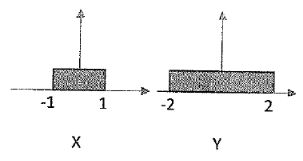 (A) 1/4 (B)
2/3 (C) 3/4 (D) 5/8 (E) none of the above.
 What is the marginal Goint) pdf of Xi and X3?
(A) 0.
(B)
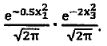 (C)
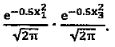 (D)
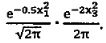 (E) None of the above.
 (B)
 (C)
 (D)
 (E) None ofthe above.
 =1/2 (E) None of these
 (0|0)= P(X=0|Y=0)(5分)

 (x, y).
 .
 .
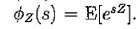 . You have to give the derivation, not just the an-
swer.
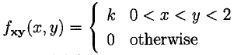 for some k. Deter-
 .
 .(5%)
 = 0? Explain why. (5%)


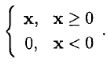 Find C.D.F. Fy(y) and p.d.f. fy(y).