所屬科目:中山◆電機◆工程數學乙
(b) (2%)Use the Fundamental Subspaces Theorem to show that N(ATA) N(A).
(a) (1+2%) Let δ be a unit element of"t", the addition operation of V. (i) Write the equality condition about & as shown in the corresponding axiom. (ii) Let y be another unit element of "+". Show that δ=y.(須註明使用到的所有向量空間定義中的公設,否則不計分)
(c) (2%) Let 〈●,●) be an inner product defined on V. Show that the function defined satisfies the triangular inequality property.
(d) (2+3%) Consider the vector space R2✖2 with the inner product (A,B):= trace(ATB) and denote Y:= .(i) Describe Y⊥ as the span of an orthonormal basis. (ii) What is the matrix, denoted by PY⊥, that represents the orthogonal projecting operation ⅡY⊥ : R2✖2 → Y⊥ along with the subspace Y with respect to the ordered basis E = {G,H}, where G and H are vectors of the standard bases for Y and Y⊥, respectively?
(a) (2%) Let be an eigenvalue of A with corresponding eigenvector x. Derive in details the equation for solvingλ.(要求推導出公式、而非背寫出公式卻沒有任何數學的說明)
(b) (2+2%)(i) Let μ be an eigenvalue of matrix A . What is the mathematic notation for describing the number of linearly independent eigenvectors associated with μ? (i) Let {μi,....,μk}be the set of all distinct eigenvalues of matrix A. Use the corresponding notation as in (i) to describe the condition for A being a diagonalizable matrix.
(c) (5%) Suppose A = B+iC is a Hermitian matrix and let . Show that any eigenvalue λ of Ω is also an eigenvalue of A .
(a) (15%) Let u(t) = O and the initial conditions bex1(0)=x2(0)=1,.Find the solutions of the differential equations.
(a) (10%) Express the differential equations using the polar coordinate; i.e. express the equations in terms of (r, θ), where x1(t) =r(t) cos(θ(t)) and x2(t) =r(t) sin(θ(t).
 阿摩線上測驗
登入
 N(A).
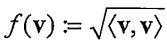 defined
 satisfies the triangular inequality property.
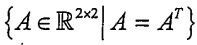 .(i) Describe Y⊥ as the span of an orthonormal basis. (ii) What is the matrix,
denoted by PY
 be an eigenvalue of A with corresponding eigenvector x. Derive in details the
equation for solvingλ.(要求推導出公式、而非背寫出公式卻沒有任何數學的說明)
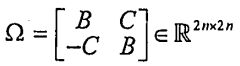 . Show that any eigenvalue λ of Ω is also an eigenvalue of A .
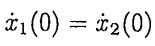 .Find the solutions of the differential equations.