所屬科目:研究所、轉學考(插大)◆工程數學
(a) Let A be an n x n matrix with real entries. If A is symmetric, then all the eigenvalues of A are real.
(b) Let A be an n x n matrix. If A is diagonalizable, then A has n distinct eigenvalues.
(c) Let A be an n x n matrix. Then A is singular if and only if 0 is an eigenvalue of A.
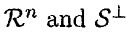
(d) Let S be a subspace of be the orthogonal complement of S. Then dim(S) + = n.
(e) Let A and B be 2 x 2 matrices. Then rank(AB) = rank(BA).
(f) Let A and B be n x n matrices. If A is nonsingular and B is singular, then A + 2B is nonsingular.
(g) Let A and B be n x n matrices. If A is similar to B, then A and B have the same eigenvalues.
(h) If the vectors v1, v2, and v3 are linearly independent, then the fol- lowing vectors
2v1 + v2 + 2v3, v2 + v3, v2 + 2v3
are also linearly independent.
(i) Let v1 and v2 be n x 1 vectors. Then rank() = 2.
(j) Let A be an n x n symmetric matrix. Let v be an n x 1 vector. If Av = 0, then Av = 0.
(a) (6%) Find all the eigenvalues of A.
(b) (6%) Find an orthonormal basis for R3, consisting of the eigenvectors of A.
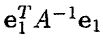
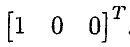
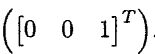
(c) (6%) Find , where e1 = .
(d) (2%) Find the nullity of A.
(a) (4%) Find T.
(b) (6%) Find T
(a) What is the mathematical definition of a RV? (3%)
(b) What is the mathematical definition of a probability function? (3%)
(c) Consider the experiment of throwing a fair 2-sided dice, where the sample space S = {?, ?} and Prob({?}) = Prob({?}) = 0.5. Define a random variable X for this experiment and write down the probability mass function PMF of X, i.e., Prob(X=x) for all real x ∈ R. (5%)
(a) You know that the previous taxi arrival is s time ago. Let TR be the remaining time you have to wait for the next taxi arrival. Derive the probability that you will need to wait for no more than a time duration r, knowing that the previous arrival was s time ago. (You need to give the derivation, not just the answer. 10%)
(b) Now (time 0), you decide not to take a taxi but to count the number of taxi arrivals in a period [0, τ]. Let the number of arrivals in [0, τ] be K, which is a RV. Derive Prob(K = 0). (You need to give the derivation, not just the answer. 5%)
(a) Derive the conditional cumulative distribution function FXY(x|y). (5%)
(b) E[E[X|Y]] = ? (5%)
(c) Is the correlation coefficient ρXY = 0? Explain why. (5%)
(a) How do you estimate the value of θ? (5%)
(b) Is your estimate unbiased, i.e., does the mean of your estimate equal θ? Why? (4%)
 阿摩線上測驗
登入
阿摩線上測驗
登入
 be the orthogonal complement of S. Then dim(S) +
  = n.
= n.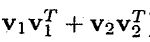 ) = 2.
 Av = 0, then Av = 0.
 , where e1 =
  .
. .
.