所屬科目:研究所、轉學考(插大)◆化學(含普通化學、有機化學)
5. Determine the empirical formula for a compound that contains C, H and O. It contains 51.59% C and 35.30% O by mass. (C: 12.0 g/mol; H: 1.00 g/mol; O:6.0 g/mol) (A) C2H6O (B) CHO (C) (D) CH4O3
6. Give the theoretical yield, in grams, of CO2 from the reaction of 4.000 moles of with 4.000 moles of O2. (C: 12.0 g/mol; H: 1.00 g/mol; O: 16.0 g/mol) (A)112.7 g (B)102.4 g (C)176.0 g (D)704.0 g
10. Place the following in order of increasing radius. Ca2⁺ S2⁻ Cl⁻ (A)(B) (C) (D)
13. Which of the following Lewis structures is incorrect? (A) (B) (C) (D)
28. Which of the following is a Lewis base? (A)AlF3 (B) H2O (C) SiF4 (D)
29. Which are acid-base reactions according to Lewis theory but not according to the Brønsted-Lowry theory? (A) I, II (B) III, IV (C) I, III, IV (D) I, II, III, IV
30. Which acid is the most acidic? (A) I (B) II (C) III (D) IV
31. Which is the IUPAC name for the following cycloalkane? (A) 2,4-dimethyl-1-ethylcyclopentane (B) 1,3-dimethyl-5-ethylcyclopentane (C) 1-ethyl-2,4-dimethylcyclopentane (D) 1-ethyl-3,5-dimethylcyclopentane
32. Which conformation of pentane is most stable? (A) I (B) II (C) III (D) IV
33. Which of these diaxial conformations has the highest energy? (A) I (B) II (C) III (D) IV
34. Which structure is Z-2-bromo-3-methyl-2-pentene? (A) I (B) II (C) III (D) IV
35. Arrange these carbocations in order of increasing stability (least to most). (A) I, II, III (B) I, III, II (C) II, I, III (D) III, II, I
39. What is the major product of the following reaction? (A) (B) (C) (D)
40. Provide the reagents necessary to complete the following transformation. (A) 1. BH3∙THF 2. H2O2, HO- (B) H2O, H2SO4 (C) OsO4, H2O2 (D) CH3CO3H
44. Predict the specific rotation of the compound shown. (A) It is impossible to predict; it must be determined experimentally. (B) Because both asymmetric centers are R, the compound is dextrorotatory. (C) Because both asymmetric centers are S, the compound is levorotatory. (D) Zero; the compound is achiral.
47. Which of the following species is attacked by benzene in the electrophilic nitration reaction? (A) HNO3 (B) (C) NO2 (D)
49. Which series of reagents would be required to perform the following synthesis? (A) 1. ClCH2CH2CH3, AlCl3 2. FeBr3, Br2 (B) 1. ClCOCH2CH3, AlCl3 2. FeBr3, Br2 (C) 1. ClCOCH2CH3, AlCl3 2. FeBr3, Br2 3. Zn(Hg), HCl (D) 1. ClCOCH2CH3, AlCl3 2. Zn(Hg), HCl 3. FeBr3, Br2
52. Through what basic mechanism is 1-methylcyclohexanol converted to 1-bromo-1-methylcyclohexane upon treatment with HBr? (A) (B) (C) E1 (D) E2
53. What is the major organic product of the following reaction? (A) (B) (C) (D) Both A and B
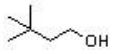
54. What is the best way to make the ether shown below using a Williamson Ether Synthesis reaction? (A) (CH3)3CO- + BrCH3 (B) (CH3)3CBr + -OCH3 (C) (CH3)3COH + BrCH3 (D) (CH3)3CBr + HOCH3
56. What is the correct IUPAC name of the compound below? (A) 3-(2-bromopropyl)-6,6-dimethylheptan-2-ol (B) 5-bromo-3-(3,3-dimethylbutyl)hexan-2-ol (C) 5-(2-bromopropyl)-2,2-dimethylheptan-6-ol (D) 7-bromo-5-(1-hydroxyethyl)-2,2-dimethyloctane
61. Which sequence ranks the following carbonyl compounds in order of increasing rate of nucleophilic addition? (A) 2 < 3 < 1 (B) 3 < 2 < 1 (C) 2 < 1 < 3 (D) 1 < 3 < 2
62. What product will result from the reaction shown? (A) imine (B) amino acid (C) amino alcohol (D) hydrazine
63. What product will result from the reaction shown? (A) acetal (B) hydrazine (C) ester (D) ylide
64. The cyclic structure of glucose is shown below. What functional groups are present in this molecule? (A) acetal (B) hemiacetal (C) oxime (D) hydrate
65. Provide the correct IUPAC name for the following amine. (A) 4-(methylamino)-2-methyl-1-pentene (B) 2,N-dimethyl-1-penten-4-amine (C) 4,N-dimethyl-4-penten-2-amine (D) 1,3,N-trimethyl-3-buten-1-amine
66. What compound results from the reaction below? (A) imine (B) amide (C) primary amine (D) quaternary ammonium salt
67. List the following weak acids in order of increasing acidity (from lowest to highest.). (A) 4 < 3 < 2 < 1 < 5 (B) 4 < 1 < 3 < 2 < 5 (C) 5 < 2 < 3 < 1 < 4 (D) 4 < 1 < 2 < 5 < 3
68. Which of the following sequences ranks the structures below in order of increasing acidity? (A) 1 < 2 < 3 (B) 2 < 3 < 1 (C) 3 < 1 < 2 (D) 2 < 1 < 3
72. What is the correct IUPAC name for the following compound? (A) N-ethyl-2,N-dimethylbutanamide (B) N-ethyl-N-methylisobutyramide (C) 2,N-dimethyl-N-ethylbutanamide (D)1-(ethylmethylamino)-2-methylbutanamide
73. Arrange the carboxylic acid derivatives below in order of increasing reactivity towards nucleophilic acyl substitution. (A) 1 < 2 <3 (B) 1 < 3 < 2 (C) 2 < 1 < 3 (D) 2 < 3 < 1
77. What is the predicted major product of the following reaction? (A) (B) (C) (D)
78. Predict the major organic product from the following reaction. (A) carboxylic acid (B) ester (C) nitrile (D) 2° amide
79. What type of reaction is shown below? (A) Aldol condensation (B) Claisen Condensation (C) Michael Addition (D) Alkylation
80. Which of the pairs shown below are tautomers? (A) (B) (C) (D)
 阿摩線上測驗
登入
阿摩線上測驗
登入
 (D) CH4O3
 with 4.000 moles of O2. (C: 12.0 g/mol; H: 1.00 g/mol; O: 16.0 g/mol)
 (A)112.7 g (B)102.4 g (C)176.0 g (D)704.0 g
 (B)
 (C)
 (D)

 (B)
 (C)
 (D)


 (A) I, II (B) III, IV (C) I, III, IV (D) I, II, III, IV
 (A) I (B) II (C) III (D) IV
 (A) 2,4-dimethyl-1-ethylcyclopentane (B) 1,3-dimethyl-5-ethylcyclopentane (C) 1-ethyl-2,4-dimethylcyclopentane (D) 1-ethyl-3,5-dimethylcyclopentane
 (A) I (B) II (C) III (D) IV
 (A) I (B) II (C) III (D) IV
 (A) I (B) II (C) III (D) IV
 (A) I, II, III (B) I, III, II (C) II, I, III (D) III, II, I
 (A)
 (B)
 (C)
 (D)

 (A) 1. BH3∙THF 2. H2O2, HO- (B) H2O, H2SO4 (C) OsO4, H2O2 (D) CH3CO3H
 (A) It is impossible to predict; it must be determined experimentally. (B) Because both asymmetric centers are R, the compound is dextrorotatory. (C) Because both asymmetric centers are S, the compound is levorotatory. (D) Zero; the compound is achiral.
 (C) NO2 (D)

 (A) 1. ClCH2CH2CH3, AlCl3 2. FeBr3, Br2 (B) 1. ClCOCH2CH3, AlCl3 2. FeBr3, Br2 (C) 1. ClCOCH2CH3, AlCl3 2. FeBr3, Br2 3. Zn(Hg), HCl (D) 1. ClCOCH2CH3, AlCl3 2. Zn(Hg), HCl 3. FeBr3, Br2
 (B)
 (C) E1 (D) E2
 (A)
 (B)
 (C)
 (D) Both A and B
 (A) (CH3)3CO- + BrCH3 (B) (CH3)3CBr + -OCH3 (C) (CH3)3COH + BrCH3 (D) (CH3)3CBr + HOCH3
 (A) 3-(2-bromopropyl)-6,6-dimethylheptan-2-ol (B) 5-bromo-3-(3,3-dimethylbutyl)hexan-2-ol (C) 5-(2-bromopropyl)-2,2-dimethylheptan-6-ol (D) 7-bromo-5-(1-hydroxyethyl)-2,2-dimethyloctane
 (A) 2 < 3 < 1 (B) 3 < 2 < 1 (C) 2 < 1 < 3 (D) 1 < 3 < 2
 (A) imine (B) amino acid (C) amino alcohol (D) hydrazine
 (A) acetal (B) hydrazine (C) ester (D) ylide
 (A) acetal (B) hemiacetal (C) oxime (D) hydrate
 (A) 4-(methylamino)-2-methyl-1-pentene (B) 2,N-dimethyl-1-penten-4-amine (C) 4,N-dimethyl-4-penten-2-amine (D) 1,3,N-trimethyl-3-buten-1-amine
 (A) imine (B) amide (C) primary amine (D) quaternary ammonium salt
 (A) 4 < 3 < 2 < 1 < 5 (B) 4 < 1 < 3 < 2 < 5 (C) 5 < 2 < 3 < 1 < 4 (D) 4 < 1 < 2 < 5 < 3
 (A) 1 < 2 < 3 (B) 2 < 3 < 1 (C) 3 < 1 < 2 (D) 2 < 1 < 3
 (A) N-ethyl-2,N-dimethylbutanamide (B) N-ethyl-N-methylisobutyramide (C) 2,N-dimethyl-N-ethylbutanamide (D)1-(ethylmethylamino)-2-methylbutanamide
 (A) 1 < 2 <3 (B) 1 < 3 < 2 (C) 2 < 1 < 3 (D) 2 < 3 < 1
 (B)
 (C)
 (D)

 (A) carboxylic acid (B) ester (C) nitrile (D) 2° amide
 (A) Aldol condensation (B) Claisen Condensation (C) Michael Addition (D) Alkylation
 (B)
 (C)
 (D)
