所屬科目:研究所、轉學考(插大)◆生物化學
1. Which one of the following accounts for increased lactate formation in muscle under anaerobiosis?(A) Inhibition of hexokinase by glucose-6-phosphate(B) Provision of 2,3-bisphosphoglycerate for the phosphoglyceromutase reaction(C) Inhibition of pyruvate kinase by pyruvate(D) Provision of a proper form of coenzyme for glyceraldehyde-3-phosphate dehydrogenase(E) Inhibition of phosphofructokinase-1 by AMP
2. A human cell line is transfected with a sIRNA targeted toward MEK. When such cells are treated with agrowth factor which works through a tyrosine kinase receptor, which one of the following effects wouldoccur?(A) Activation of ERK(B) Activation of Myс(C) Activation of phosphollpase (PLC-v)(D) Activation of Fos(E) Activation of STAТ
3. In muscle, under anaerobic conditions, what is the net synthesis of ATP starting from one mole of glucosederived from muscle glycogen?(A) 1 mole of ATP(B) 2 moles of ATP(C) 3 moles of ATP(D) 4 moles of ATP(E) 5 moles of ATP
4. Which of the following is the compound A?(A) Citroyl-CoA(B) Citrate(C) 2-Hydroxypropane-1,2-dicarboxylic acid(D) 2-Hydroxypropane-2,3-dicarboxylic acid(E) 1-Hydroxypropane-1,2,3-tricarboxylate
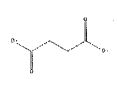
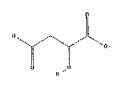
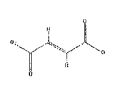
5. Which of the following is the structure of compound B?(A) (B)(C)(D)(E) None of the above
6. Which of the following enzyme (C) catalyzes the conversion of compound B to compound D?(A) Glutaryl-CoA dehydrogenase(B) a-Ketoglutarate dehydrogenase(C) a-Ketoglutarate decarboxylase(D) Glutarate oxidase(E) aconitase
7. Which of the following is the compound D?(A) Succinyl phosphate(B) Adenylosuccinic acid(C) Succinyl-CoA(D) (Hydroxymethyl)succinyl-CoA(E) None of the above
8. Which of the following is the structure of compound E?(A)(B)(C)(D)(E) None of the above
9. The standard transformed free energy change for the conversion of compound F to oxaloacetate is +29.7kJ/mol, and the reaction is apparently thermodynamically unfavorable. Which of the following is the reasonfor its operation in cells?(A) The reaction is coupled to ATP hydrolysis(B) The reaction is coupled to electron transport chain(C) The continual removal of oxaloacetate drives the reaction(D) The oxidation of nicotinamide adenine dinucleotide (NADH) drives the reaction(E) Protonmotive force provides the energy to drive the reaction
10. Which of the following enzyme (G) catalyzes the conversion of compound F to oxaloacetate?(A) Malate dehydrogenase(B) Malate reductase(C) Oxaloacetate reductase(D) Fumarase(E) Fumarate reductase (quinol)
11. Adenosine 5'-triphosphate is a substrate of(A) DNA polymerase(B) DNA ligase(C) RNA polymerase(D) telomerase(E) topoisomerase
12. What is the function of microRNAS?(A) regulate RNA stability and protein translation(B) catalyze some biochemical reactions(C) act as cofactors of telomerases(D) assist transport of mRNA(E) bind to methylated CpG islands
13. Which is an acidic amino acid?(A) Asp(B) Asn(C) Gln(D) Arg(E) Gly
14. Which base may transform into uracil through deamination?(A) Cytosine(B) Thymine(C) Adenine(D) Guanine(E) Xanthine
15. Which one is NOT a product of the urea cycle?(A) Fumarate(B) Ornithine(C) Urea(D) AMP(E) Pyrophosphate
16. Which one of the followings can act as a potassium ionophore?(A) Maltoporin(B) Penicillin(C) Tetracyclin(D) Kanamycin(E) Valinomycin
17. Which one of followings is produced from cholesterol?(A) Estradiol(B) Prostaglandin(C) Epinephrine(D) Insulin(E) dolichol
18.Which one of the followings is responsible for the transport of water molecules across the cell membrane?(A) SERCА(B) Porin(C) Aquaporin(D) GLUTS(E) Valinomycin
19. Which proteln is associated with the formation of carveolae?(A) Caveolin(B) Cathepsin(C) Calmodulin(D) SNARE(E) SNAP-25
20. Phospholipase C is able to catalyze the reaction to convert membrane lipid to which molecule?(A) 1,2-Diacylglycerol(B) Phosphatidic acid(C) Lysophosphatidylcholines(D) Fatty acid(E) Cholesterol
21. What are lipid raft composed of?(A) Sphingolipids + cholesterol(B) Sphingolipids + cardiolipin(C) Triacylglycerol + sphingolipids(D) Ceramides + phosphatidylcholine(E) Phosphatidylcholine + GM1 (monosialotetrahexosylganglioside)
22. What is the strategy used by lactose permease to facilitate the transport of lactose?(A) Primary active transport(B) Secondary active transport(C) Simple diffusion(D) Facilitated diffusion(E) lon channel
23. Which compound is the active form of Vitamin D?(A) 7-Dehydrocholesterol(B) Ergosterol(C) 1, 25-Dihydroxycholecalciferol(D) Vitamin D3(E) Vitamin D2
24. Which one of the followings is the precursor of eicosanoids?(A) Ergosterol(B) Triacylglycerol(C) Behenic acid(D) Ceramide(E) Arachidonic acid
25. Which one of the followings is an essential fatty acid?(A) Stearic acid(B) Linoleic acid(C) Oleic acid(D) Lauric acid(E) Palmitic acid
a. Which process is involved in the formation of the "stomach" form of mRNA? (3 points)
b. What is the sequence of the peptide translated from the "stomach" form of mRNA? (7 points). (A standardcodon table is provided below)
(1) Please draw a plot to describe the enzyme kinetic.
(2) Please calculate the Km of the enzyme.
(3) Please calculate the Vmax of the enzyme.
 阿摩線上測驗
登入
阿摩線上測驗
登入
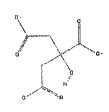 (B)
(B)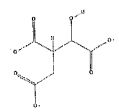
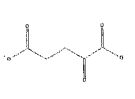 (D)
(D)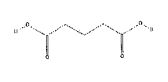 (E) None of the above
 (B)
(B)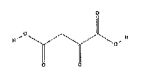
 (D)
(D)