所屬科目:轉學考-普通化學
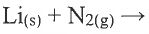
3. Finish the following reaction: (A) (B) (C)(D)
4. Which element has the largest number of unpaired electrons? (A) (B) (C)(D) (E)
5. Choose the correct shape, weak/strong field, and number of unpaired electrons for . (A) square planar, strong, 6(B) square planar, weak, O (C) tetrahedral, strong, O (D) octahedral, strong, O (E) octahedral, weak, 6
8. If, at a given temperature, the equilibrium constant for the reaction is 5.0, then the equilibrium constant for the reaction can be represented as (A)0.040(B)25 (C) 0.45 (D)0.20 (E) 5.0
9. A mixture of H2SO4 and NaOH has a pH of 1.9. Which one below is true about the mixture at equilibrium? (A)(B)(C) (D) (E)
12. What sign of △G° will lead to equilibrium constant that is greater than 1? (A)△G°=0(B) Not enough information is given (C)△G°>0 (D)△G°<O
13. You are trying to dissolve the most amount of Ag2S possible. Beaker A is filled with 100 mL of pure water and beaker B filled with 100 mL of a 0.10 M Ag2SO4 solution. Which beaker will dissolve the most Ag2S and why? (A) Beaker B, because sulfate helps dissolve salts (B) Beaker A, because there isn't a common ion already present (C) Beaker A, because pure water increases the of Ag2S (D) Beaker B, because the silver ions in the solution will increase the solubility (E) Beaker B, because "like dissolves like"
15. Which is the strongest base? (A) 1 M hydroxylamine; = 8.0 (B) 1 M aniline; = 9.4 (C) 1 M ethylamine; = 3.4 (D) 1 M ammonia; = 4.7 (E) 1 M hydrazine;= 6.0
19. For a orbital, what are the values of n and I? (A) 4,2 (B) 3,1 (C) 3,2 (D) 4,3 (E) 4,1
(1) Write the rate law of each reaction (that is, r1, , and r2, 3 points)
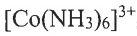 . (A) square planar, strong, 6(B) square planar, weak, O (C) tetrahedral, strong, O (D) octahedral, strong, O (E) octahedral, weak, 6
 阿摩線上測驗
登入
阿摩線上測驗
登入
 (A)
(A) (B)
(B) (C)
(C) (D)
(D)
 (B)
(B) (C)
(C) (D)
(D) (E)
(E)
 is 5.0, then the equilibrium constant for the reaction
  can be represented as (A)0.040(B)25 (C) 0.45 (D)0.20 (E) 5.0
 (A)
(A) (B)
(B) (C)
(C)  (D)
(D) (E)
(E)
 of Ag2S (D) Beaker B, because the silver ions in the solution will increase the solubility (E) Beaker B, because "like dissolves like"
 = 8.0 (B) 1 M aniline;
  = 9.4 (C) 1 M ethylamine;
  = 3.4 (D) 1 M ammonia;
  = 4.7 (E) 1 M hydrazine;
 = 6.0
= 6.0 orbital, what are the values of n and I? (A) 4,2 (B) 3,1 (C) 3,2 (D) 4,3 (E) 4,1
 , and r2, 3 points)