所屬科目:轉學考-普通化學
(a) (3%) Calculate the longest wavelength of light that will ionize H atoms in their ground state.
(b) (3%) Assume the atom is ionized by collision with an electron that transfers all its kinetic energy to the atom in the ionization process. Calculate the speed of the electron before the collision. Express your answer in meters per second (m s-¹)
(c) (4%) Calculate the temperature required to ionize a H atom in its ground state by thermal excitation. (Hint: Recall the criterion for thermal excitation of an oscillator in Planck's theory of blackbody radiation is that hv≈kBT, h = 6.626070 x 10⁻³⁴ m² kg/s and kB= 1.380649 × 10⁻²³ m² kg s² K-¹.
2. (10%) A particle of mass m is placed in a three-dimensional rectangular box with edge lengths 2L, L, and L. Inside the box the potential energy is zero, and outside it is infinite; therefore, the wave function goes smoothly to zero at the sides of the box. Calculate the energies and give the quantum numbers of the ground state and the first five excited states (or sets of states of equal energy) for the particle in the box.
(a) (3%) Write down the de Broglie formula for the wavelength of matter wave and then derive the quantization rule for the electron's angular momentum in a hydrogen atom.
(b) (3%) Calculate the allowed energies of a hydrogenic atom using the hybrid Bohr-de Broglie model.
(c) (4%) The speed of an electron in n=1 orbit can be shown to be given by v = Zac, where α = is the fine structure constant. Since no particle can travel faster than c, the speed of light, what would you expect the atomic number (Z) for the heaviest element that can exist without violating this constraint.
4. (10%) The pyridine molecule (C5H5N) is obtained by replacing one C-H group in benzene with a nitrogen atom. Because nitrogen is more electronegative than the C-H group, orbitals with electron density on nitrogen are lower in energy. How do you expect the p MOs and energy levels of pyridine to differ from those of benzene?
(a) (2%) H-H, H-D, and D-D bonds have about the same bond enthalpy. Evaluate A,H°.
(b) (2%) Evaluate △rS° of this reaction. Useful formula: Boltzmann's entropy formula S = kB In 2, where 2 is the number of microstates available. Entropy of mixing: Amix S = -n ka(xıln x1 + X2 ln x2)
(c) (2%) Evaluate △rG°.
(d) (2%) Evaluate the equilibrium constant K for this reaction at room temperature.
(e) (2%) Initial partial pressures (before reaction) are 1.00 atm, and 1.00 atm for H2(g) and D2(g), respectively. Using the law of mass action based on the equilibrium constant K, calculate the partial pressure of each gas at equilibrium. [Note: You can reach the same result by using the total entropy of mixing as a function of the extent of reaction for these three components in the system. However, the implicit assumption on the molar entropy of reactants and product need to be made with this approach.]
(f) (2%) In fact, the enthalpy change A.H° for this reaction is the difference in zero-point energy (ZPE=1/2 hv, where v is the vibrational frequency of the molecule) between products and reactants: △rH°= ZPE(products) - ZPE(reactants). Using the following vibrational wavenumber (v) for H2, D2, and HD: 4390.cm-¹, 3110 cm-¹, and 3610 cm-¹, respectively, calculate ZPE for each molecule, and △rH°(in unit, J/mol). Is this reaction exothermic or endothermic
(g) (2%) Evaluate △rG°.
(h) (2%) Evaluate the equilibrium constant K for this reaction at room temperature.
(i) (2%) Initial partial pressures (before reaction) are 1.00 atm, and 1.00 atm for H2(g) and D2(g), respectively. What is the partialpressure of each gas at equilibrium?
(j) (2%) Plot In K as a function of 1/T corresponding to these two △rН°.
6. (10%) An ideal gas at 298 K expands isothermally from a pressure of 10 bar to 1 bar.What are the values of w per mole, q per mole, △U, △H, and △S in the following cases? (a) The expansion is reversible. (b) The expansion is free. (c) The gas and its surroundings form an isolated system, and the expansion is reversible. (d) The gas and its surroundings form an isolated system, and the expansion is free. The ideal gas constant R = 8.314 J/K.mol.
(a) (3%) Write down a system of rate equations for the change of concentrations of these four chemical species with time t by applying the law of mass action (the rate of a reaction is proportional to the product ofthe concentrations of the reactants).
(b) (4%) Applying the steady-state approximation to ES, show that the initial rate V0 at which P is formed can be described by the Michaelis-Menten equation Vo=(Vmax*[S]0)/ ([S]0 +Km), where [S]0 is the concentration of the substrate and Vmax=kcat [E]0 is the maximum rate at which the product may be formed and Km = (kf+kcat)/kf is the MichaelisMenten constant.
(c) (4%) Show that the Michaelis-Menten equation can be written in the form (1/V0)=(Km/Vmax)(1/[S]0) + (1/Vmax) (This formula is know as the Lineweaver-Burk equation and shows that there is a linear relationship between (1/V0) and (1/[S]0).)
(d) (4%) Sketch the graph ofthe lineweaver-Nurk equation. Use a coordinate system in which (1/[S]0) is on the horizontal axis and (1/V0) is on the vertical axis. Show the resulting graph is a line that intersects the horizontal axis at (-1/Km) and the vertical axis at (1/Vmax)
(a) (5%) Calculate the change in the entropy when 1 mol of liquid water at -10°C changes to ice at -10°C. Explain your result!
(b) (5%) The entropy of change for the isolated system upon freezing includes the entropy change of the surrounding as the entropy change of the water. Since the heat capacity of surrounding is large, the heat evolved by the water on freezing us absorbed by the surrounding with only an infinitesimal change in temperature. Calculate the entropy change of the surrounding! What is the change in the entropy of the universe?
(c) (5%) What is the Gibbs free energy of freezing water at -10°C? (Molar melting enthalpy of ice: △mH° = 5619 J mol -1at–10°C, △mH° = 6008 J mol-¹ at 0°C; molar heat capacity: ice Cp,m=37.66 J mol-¹K-¹, water Cp,m-75.38 J mol¹K¹)
 阿摩線上測驗
登入
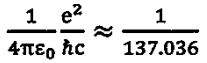 is the fine structure constant. Since no particle can travel faster than c, the speed of light, what would you expect the atomic number (Z) for the heaviest element that can exist without violating this constraint.