所屬科目:駕照◆機車法規(英文)
1. According to the diagram, which rider is wearing the helmet “correctly”? (A) A. (B) B. (C) C.
2. According to the diagram, which of the following regulations is being violated? (A) Rider and passengers shall wear helmets. (B) The direction passengers are facing. (C) The number of passengers.
3. According to the diagram, which statement about the width of the cargo is “correct”? (A) The cargo shall not exceed the outer edge of each grip by 10 cm. (B) The cargo shall not exceed the outer edge of each grip by 20 cm. (C) The cargo mus not hinder passers-by on either sides.
4. According to the diagram, which statement about the length of the cargo is “correct”? (A) The cargo shall not extend 50 cm from the rear axle. (B) The cargo shall not extend 100 cm from the rear axle. (C) The cargo must not hinder the rider.
5. According to the diagram, what does the triangle sign “△” mean? (A) The tire size. (B) The location of the“tread wear indicator”. (C) The width of the tread.
6. In the diagram, what does the object in the red circle mean? (A) The tread friction indicator, which can increase the tire friction. (B) The tread vulnerability indicator, which may not be damaged. (C) The tread wear indicator. If the tire treads are worn to this point, the tire must be replaced.
7. According to the diagram, when the motorcycle is heading straight, which zones cannot be seen by the rider through the side mirrors? (A) A, C, and E . (B) A, B, and C . (C) C, D, and E .
8. According to the diagram, when riding a motorcycle to the right or left of a car, the rider shall pay attention to which of the following zones to avoid a collision? (A) B and C . (B) A and E . (C) C and D .
9. According to the diagram, when a car makes a left turn, the motorcycle rider behind shall be especially careful because a car driver cannot see which of the following zones? (A) A (B) B (C) C
10. According to the diagram, when a car makes a right turn, the motorcycle rider behind shall be especially careful because a car driver cannot see which of the following zones? (A) C (B) D (C) E
11. According to the diagram, when a large vehicle makes a right turn, the motorcyclist shall avoid entering which of the following zones due to the difference in the turning radius? (A) Zone A. (B) Zone B. (C) Zone C.
12. According to the diagram, when the motorcyclist makes a right turn, what is the safest way to do it? (A) Pass the large vehicle quickly to make a turn ahead of it. (B) Moves to the side at A and wait for the large vehicle to turn before making a turn. (C) Moves to the side at B and wait for the large vehicle to turn before making a turn.
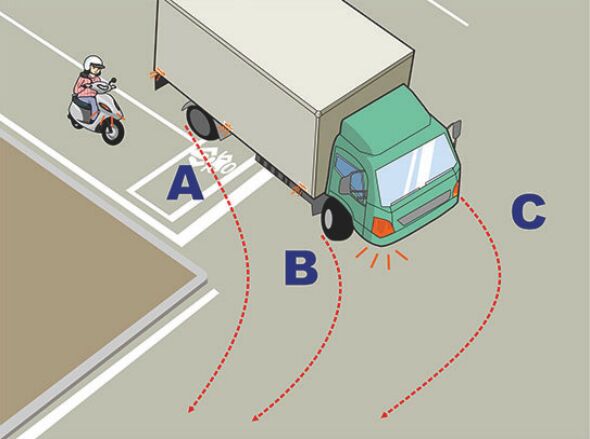
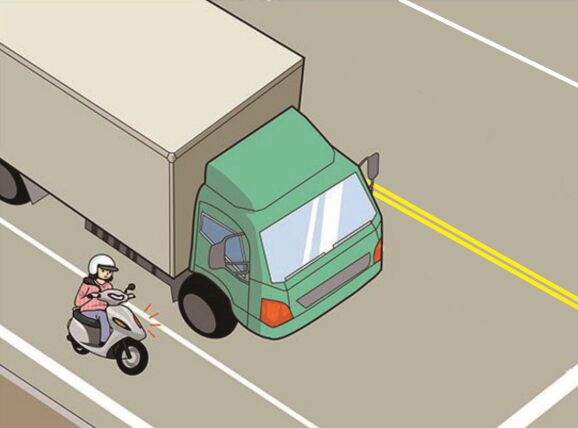
13.According to the diagram, what should the motorcyclist do to travel more safely? A.Since the driver sits higher in the large vehicle, there is a dead angle in front of the vehicle. The motorcyclist shall avoid riding in the front. B.The motorcyclist shall keep a safe distance from and a gap between the large vehicle. C.Brake immediately and wait for the large vehicle to pass before traveling. D.Pass the large vehicle quickly to make a turn ahead of it. (A) A and B. (B) B and C. (C) A and D.
14.According to the diagram, what should the motorcyclist do to travel more safely? (A) The large vehicle must let the vehicle driving straight go first, so the motorcyclist should speed up to pass the large vehicle. (B) Slow down and move away from the large vehicle and let the large vehicle go first. (C) Stay close to the large vehicle.
15.According to the diagram, what should the motorcyclist should do to ensure safe travel?(A) Loosen the throttle to slow down and avoid loss of control when making a turn. (B) Travel at the same speed. (C) No need to slow down or prepare to lean motorcycle into curve.
16. According to the diagram, what should the motorcyclist do to ensure safe travel? (A) Quickly speed up. (B) Quickly slow down. (C) Maintain appropriate speed.
17. According to the diagram, what should the motorcyclist do to ensure safe travel? (A) Speed straight ahead regardless of whether the motorcycle is fully upright. (B) Straighten out the motorcycle and ensure safety before speeding up. (C) Open the throttle entirely.
18. According to the diagram, how should the motorcyclist travel when making a right turn? (A) Stop the motorcycle and let pedestrians go first before traveling. (B) Stop the motorcycle and honk the horn to urge pedestrians to cross the road quickly. (C) Bypass pedestrians directly to make a right turn quickly.
19. According to the diagram, how should the motorcyclist travel? (A) Stop the vehicle at Zone A and let pedestrians go first. (B) Move forward into Zone B and honk the horn consecutively three times or more to urge pedestrians to cross the road quickly. (C) Bypass pedestrians directly to travel forward to the next intersection.
20. In the diagram, how should motorcyclist X travel safely forward ? (A) Move forward into Zone B and wait there. Pass through the intersection after the traffic congestion in front has diminished. (B) Stop the vehicle at Zone A and pass through the intersection after the traffic congestion in front has diminished. (C) Move forward continuously with vehicles ahead to pass through the intersection.
21. In the diagram, which of the following options for the motorcyclist is most hazardous? (A) Although the motorcyclist has not passed the stop- line, he/she can still speed up and pass through the intersection. (B) If the motorcyclist has not passed the stop-line, he/she should stop behind the stop-line and pass through the intersection when the light is green. (C) If the motorcyclist has passed the stop-line, he/she should continue to pass through the intersection, paying attention to the surrounding traffic.
22. In the diagram, where should the motorcyclist stop? (A) Zone A. (B) Zone B. (C) Zone C.
23. In the diagram, in which lane should the motorcycle not travel? (A) Lane A. (B) Lane B. (C) Lane C.
24. In the diagram, in which lane should the motorcycle not travel? (A) Lane A. (B) Lane B. (C) Lane C.
25. In the diagram, in which lane should the motorcycle not travel? (A) Lane A. (B) Lane B. (C) Lane C.
26. In the diagram, when the ordinary heavy-duty motorcyclist Y intends to turn left and travel from Zone A to Zone B for a hook turn,what is the safest way? (A) Travel directly to Zone B without turning on the turn signal. (B) Signal a right turn and change to the curbside lane and then travel to Zone B. (C) Travel directly to Zone B and wait.
27. In the diagram, if the motorcyclist X intends to turn left, what is the safest way? (A) Turn on the left turn signal 10 m before the intersection, change to the fast lane, and travel to the center of the intersection, and turn left after making sure there is no oncoming traffic. (B) Turn on the left turn signal 30 m before the intersection and change to the fast lane, and travel to the center of the intersection, and turn left after making sure there is no oncoming traffic. (C) Change to the fast lane directly and turn left upon passing the stop-line.
28. In the diagram, if motorcyclist X intends to turn right, what is the safest way? (A) Turn on the right turn signal 10 m before the intersection and change to the curbside lane, travel to the center of the intersection, and turn right. (B) Turn on the right turn signal 30 m before the intersection and change to the curbside lane slowly, travel to the intersection, and turn right. (C) Change to the curbside lane directly and turn right upon passing the stop-line.
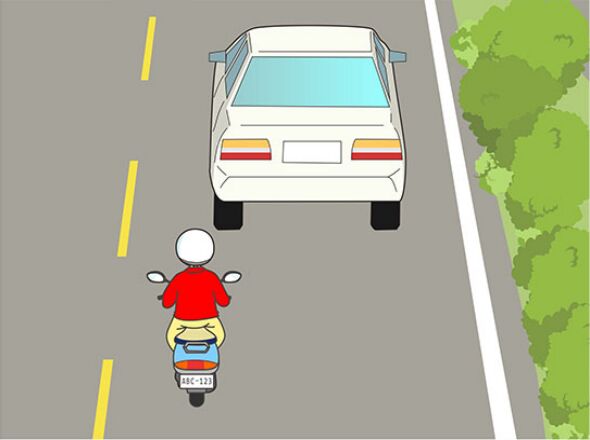
29. In the diagram, if the motorcyclist finds the vehicle ahead is travelling slowly, can he/she pass the vehicle? (A) No. (B) Pass the vehicle on the left side. (C) Pass the vehicle on the right side.
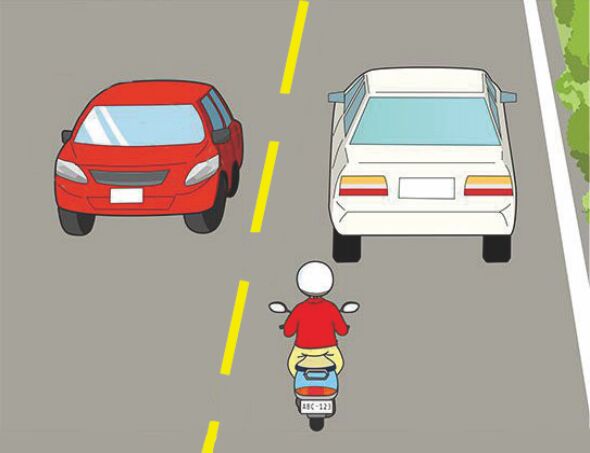
30. In the diagram, if the motorcyclist finds the vehicle ahead is travelling slowly, can he/she pass the vehicle? (A) No. (B) Pass the vehicle on the right side. (C) Pass the vehicle on the left side.
31. In the diagram, if the motorcyclist finds the vehicle ahead is travelling slowly, can he/she pass the vehicle? (A) No. (B) Yes, pass the vehicle on the right side. (C) Yes, just be careful.
32. In the diagram, which statement is correct? (A) The motorcycle should let the vehicle pass first. (B) The vehicle should let the motorcycle pass first. (C) Whichever is faster passes first.
33. In the diagram, why should the motorcycle let the vehicle pass first? (A) The vehicle traveling on the road should let the motorcycle traveling on the branch road go first. (B) The motorcycle traveling on the branch road should let the vehicle traveling on the road go first. (C) The vehicle is faster.
34. In the diagram, how should the motorcyclist travel safely? (A) Stop temporarily and check around and continue to travel after the vehicle passes. (B) Slow down and check around before passing through the intersection. (C) Honk the horn and pass through the intersection quickly without being concerned about markings.
35. In the diagram, how should the motorcyclist travel safely? (A) The motorcyclist should slow down when approaching the intersection and pass through the intersection carefully. (B) The motorcyclist should stop at the intersection and continue to travel forward after the vehicle passes. (C) Honk the horn and pass through the intersection quickly without being concerned about markings.
36. According to the diagram, how should the motorcyclist travel more safely? (A) Slow down and stop to let the vehicle pass first. (B) Honk the horn and pass the intersection directly. (C) Pass the intersection quickly without honking the horn.
37. In the diagram, how should the motorcyclist travel safely? (A) Pass through the intersection directly without slowing down. (B) Slow down and check whether any vehicles are traveling on the road, and pass through the intersection. (C) Slow down and honk the horn before passing through the intersection.
38. In the diagram, how should the motorcyclist travel safely on a narrow road? (A) The motorcyclist should stop at the roadside and let the vehicle go first. (B) The vehicle driver should move over and stop on the roadside and let the motorcyclist go first. (C) Honk the horn and pass the vehicle on the right side.
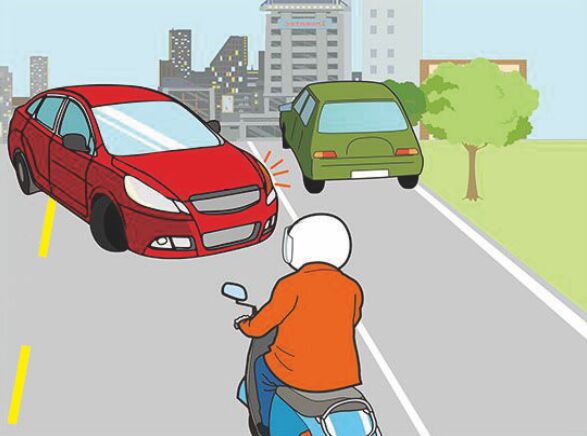
39. In the diagram, how should the motorcyclist brake safely? (A) Brake the front wheel with the support of rear wheel braking. (B) Brake the rear wheel with the support of front wheel braking. (C) Brake the front wheel.
40. In the diagram, if the motorcyclist experiences the vehicle turning around suddenly, what is the safest way to brake? (A) Brake the front wheel with the support of rear wheel braking. (B) Brake the rear wheel with the support of front wheel braking. (C) Open the throttle and brake the front wheel and rear wheel at the same time.
41. In the diagram, how should the motorcyclist travel safely? (A) Let the vehicle in the loop pass first and enter the loop afterwards. (B) Travel directly into the loop without stopping. (C) Honk the horn before passing through the loop.
42.In the diagram, Vehicle B and Vehicle A pass through the uncontrolled intersection at the same time. How should Vehicle B travel safely? (A) Honk the horn and pass through the intersection first. (B) Stop and let Vehicle A pass first. (C) If Vehicle B has passed the stop-line, Vehicle B should go first.
43. In the diagram, when the vehicle and motorcycle are travelling through the section at the same time, how should the motorcyclist travel safely?(A) Slow down and let the vehicle pass first. (B) Speed up to pass through the section. (C) Stay close to the vehicle and pass through the section.
44. In the diagram, how should the motorcyclist travel safely in these conditions? (A) Watch the front vehicle's lights due to the poor visibility, without turning on the motorcycle's headlight. (B) Slow down and keep a longer safety distance from the vehicle in front because of the slippery road. (C) Travel according to the speed limit on the road.
45. In the diagram, how should the motorcyclist travel safely?(A) Honk the horn, speed up and pass through quickly. (B) Slow down and stay close to the vehicle and pass it. (C) Slow down and keep a door's distance away from the vehicle at the roadside.
46. In the diagram, how should the motorcyclist travel safely?(A) Slow down and check conditions in front of the vehicle at any time due to the dead zonein front of it. (B) Honk the horn and continue to pass. (C) Travel at the same speed but switch on the light as a warning.
47. In the diagram, when traveling through the alley, how should the motorcyclist travel safely? (A) Since the motorcyclist is travelling straight, he can pass first and continue to travel forward. (B) Slow down and observe the reflector and check whether there is a vehicle arriving from the left. (C) Honk the horn and continue to pass.
48. In the diagram, can the motorcyclist turn left into the alley? (A) Yes. (B) No. (C) Depending on the road conditions.
49. In the diagram, what is the main purpose of establishing of reflector in the alley? (A) The motorcyclist can use the reflector to observe the traffic in the alley. (B) The establishment of a reflector can prevent vehicles and motorcycles from parking on the roadside. (C) The reflector enlarges the space, making the alley wider and brighter.
50. In the diagram, how should the motorcyclists travel safely? (A) Continue to travel according to the speed limit. (B) Move to the right side immediately to let the ambulance pass first. (C) Speed up immediately and travel continuously due to a rush.
51. In the diagram, how should the motorcyclist travel safely? (A) The motorcyclist does not have to let the ambulance running a red light pass first. (B) Let the ambulance pass first regardless of the traffic signal. (C) Speed up and leave the intersection to avoid hindering the ambulance under operation.
52. In the diagram, how should the motorcyclist travel safely? (A) Travel in the opposite lane to pass the bus. (B) Travel to the right side of the bus and honk the horn to pass by. (C) Wait until the bus leaves and continue travelling.
53. In the diagram, how should the motorcyclist travel safely? (A) Slow down to avoid slipping when making a turn. (B) Pass the vehicle ahead depending on the width of the curve. (C) Travel side by side with the vehicle according to the width of the curve.
54. In the diagram, if the motorcyclist experiences the situation ahead, what is the safest way to proceed? (A) Directly pass the vehicle on the left side. (B) Honk the horn to warn the vehicle driver ahead and pass the vehicle on the right side. (C) Slow down and stop and do not pass the vehicle arbitrarily.
55. In the diagram, how should the motorcyclist travel safely? (A) Slow down and stop behind the railroad crossing gate. (B) Speed up and pass through the railroad crossing before the gate has fully dropped. (C) Avoid the gate and pass through the railroad crossing if the train can't be seen.
56. In the diagram, when the motorcyclist makes a turn and travel the road, how should he/she travel safely? (A) Avoid or slow down as much as possible. (B) Speed up immediately, make the turn and pass along the road. (C) Brake suddenly.
57. According to the diagram, when a motorcyclist passes markings on a rainy day, how should he/she travel safely? (A) Avoid markings as much as possible. (B) Travel according to the speed limit. (C) Avoid sudden brakes.
58. According to the diagram, when a motorcyclist travels a rough road, how should he/she travel safely? (A) Avoid it as much as possible or slow down. (B) Speed up immediately, make the turn and pass along the road. (C) Brake suddenly.
59. In the diagram, can the motorcyclist change lanes to pass vehicles ? (A) No. (B) Yes. (C) It depends on the distance between vehicles.
60. In the diagram, which statement about the the motorcyclist's driving is “ false”? (A) The motorcyclist should keep an appropriate safe distance from the vehicle ahead and pay attention to changes in traffic. (B) The motorcyclist should turn on the headlights in a timely manner according to the road illumination. (C) The motorcyclist should turn on the headlights right through the tunnel.
 阿摩線上測驗
登入
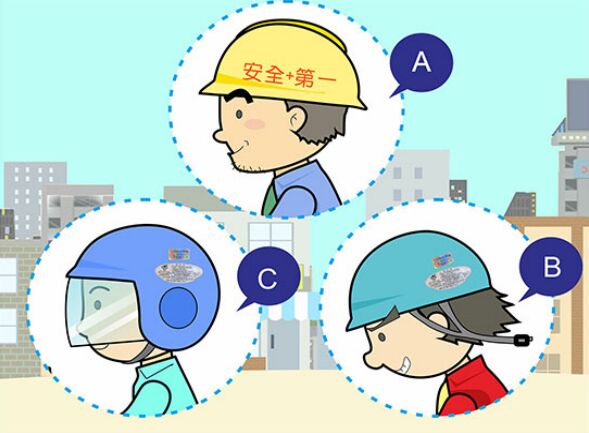 (A) A. (B) B. (C) C.
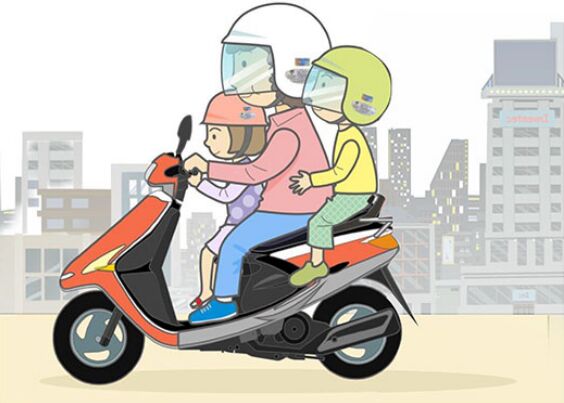 (A) Rider and passengers shall wear helmets. (B) The direction passengers are facing. (C) The number of passengers.
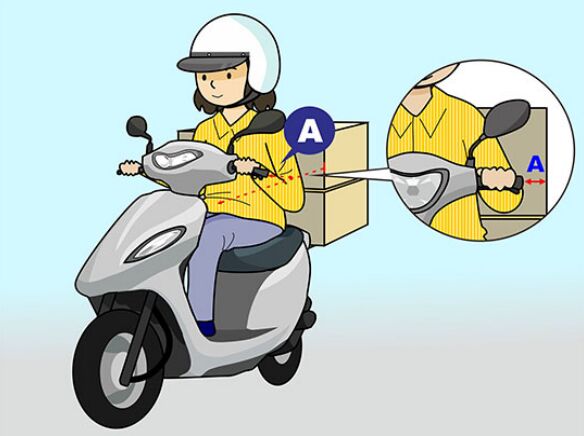 (A) The cargo shall not exceed the outer edge of each grip by 10 cm. (B) The cargo shall not exceed the outer edge of each grip by 20 cm. (C) The cargo mus not hinder passers-by on either sides.
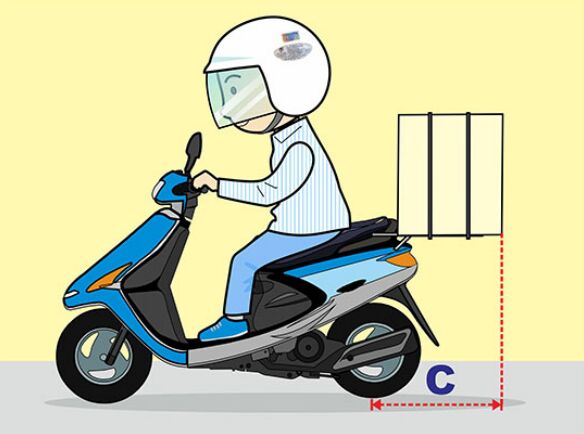 (A) The cargo shall not extend 50 cm from the rear axle. (B) The cargo shall not extend 100 cm from the rear axle. (C) The cargo must not hinder the rider.
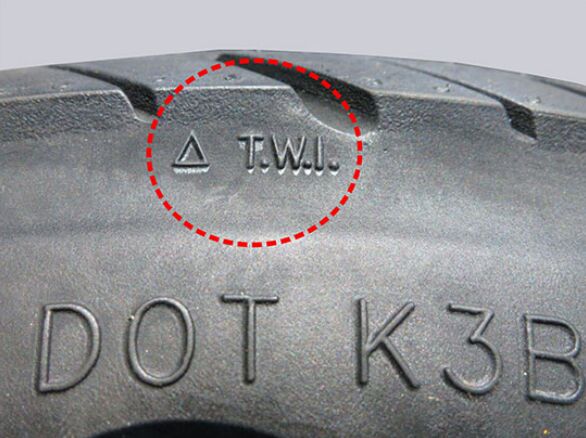 (A) The tire size. (B) The location of the“tread wear indicator”. (C) The width of the tread.
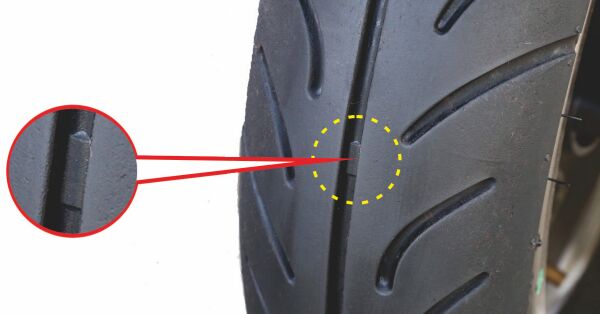 (A) The tread friction indicator, which can increase the tire friction. (B) The tread vulnerability indicator, which may not be damaged. (C) The tread wear indicator. If the tire treads are worn to this point, the tire must be replaced.
 (A) A, C, and E . (B) A, B, and C . (C) C, D, and E .
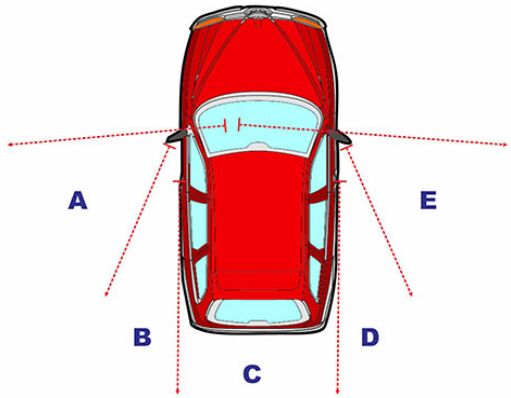 (A) B and C . (B) A and E . (C) C and D .
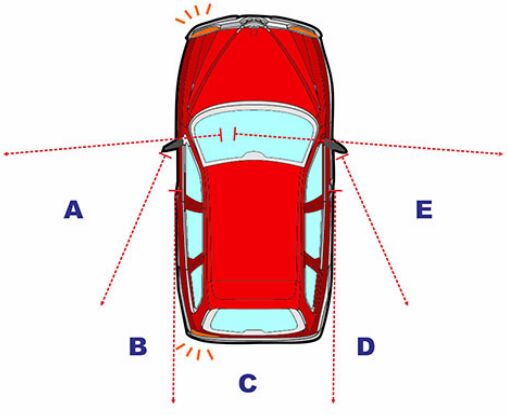 (A) A (B) B (C) C
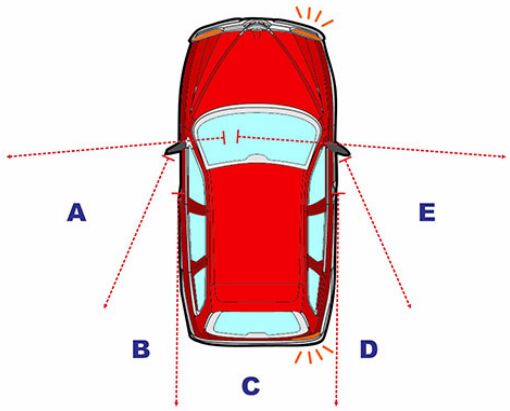 (A) C (B) D (C) E
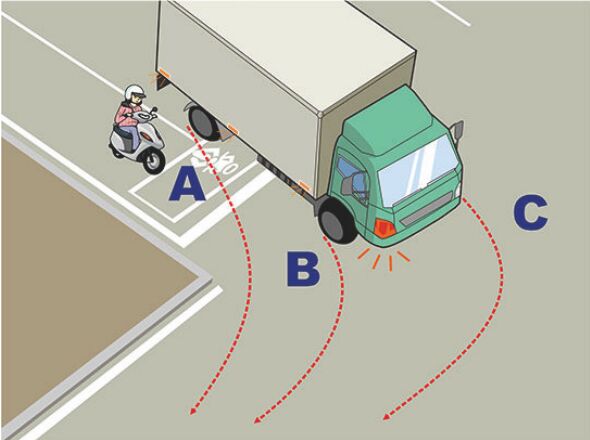 (A) Zone A. (B) Zone B. (C) Zone C.
 (A) Pass the large vehicle quickly to make a turn ahead of it. (B) Moves to the side at A and wait for the large vehicle to turn before making a turn. (C) Moves to the side at B and wait for the large vehicle to turn before making a turn.
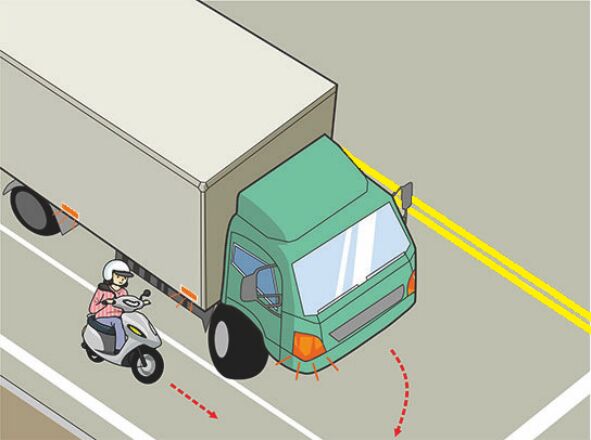 (A) The large vehicle must let the vehicle driving straight go first, so the motorcyclist should speed up to pass the large vehicle. (B) Slow down and move away from the large vehicle and let the large vehicle go first. (C) Stay close to the large vehicle.
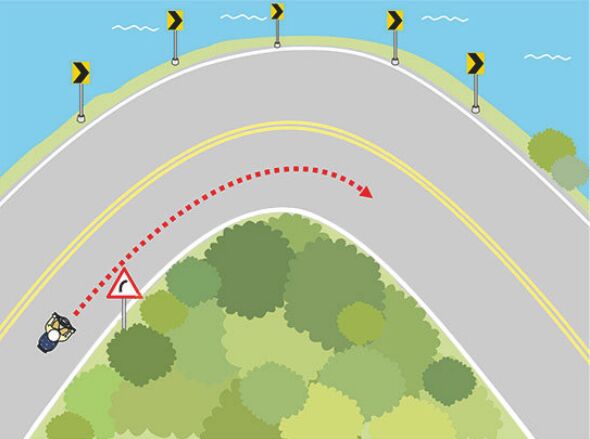 (A) Loosen the throttle to slow down and avoid loss of control when making a turn. (B) Travel at the same speed. (C) No need to slow down or prepare to lean motorcycle into curve.
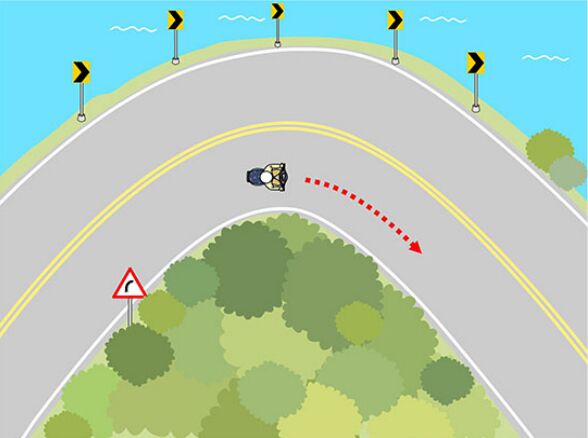 (A) Quickly speed up. (B) Quickly slow down. (C) Maintain appropriate speed.
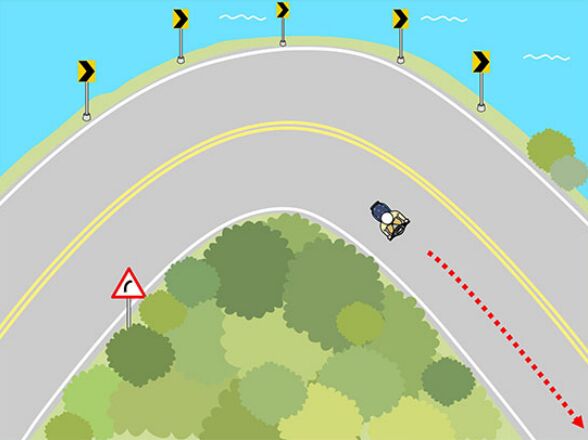 (A) Speed straight ahead regardless of whether the motorcycle is fully upright. (B) Straighten out the motorcycle and ensure safety before speeding up. (C) Open the throttle entirely.
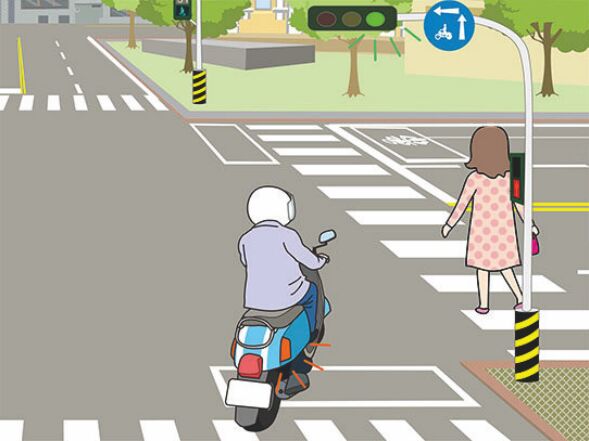 (A) Stop the motorcycle and let pedestrians go first before traveling. (B) Stop the motorcycle and honk the horn to urge pedestrians to cross the road quickly. (C) Bypass pedestrians directly to make a right turn quickly.
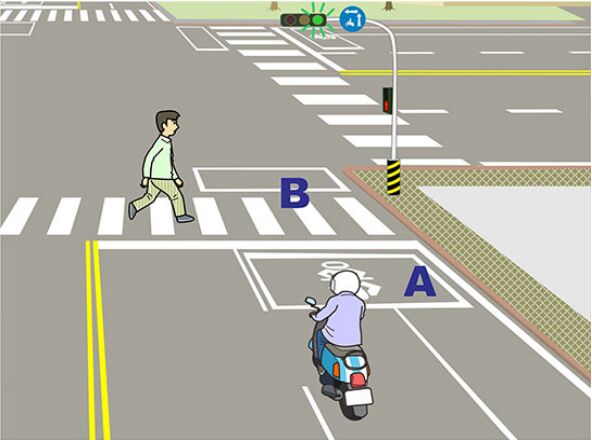 (A) Stop the vehicle at Zone A and let pedestrians go first. (B) Move forward into Zone B and honk the horn consecutively three times or more to urge pedestrians to cross the road quickly. (C) Bypass pedestrians directly to travel forward to the next intersection.
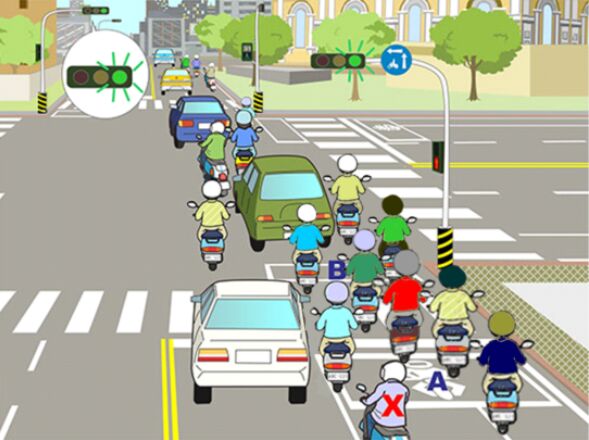 (A) Move forward into Zone B and wait there. Pass through the intersection after the traffic congestion in front has diminished. (B) Stop the vehicle at Zone A and pass through the intersection after the traffic congestion in front has diminished. (C) Move forward continuously with vehicles ahead to pass through the intersection.
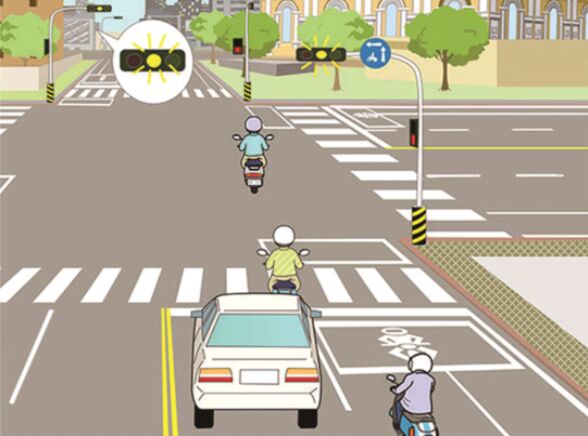 (A) Although the motorcyclist has not passed the stop- line, he/she can still speed up and pass through the intersection. (B) If the motorcyclist has not passed the stop-line, he/she should stop behind the stop-line and pass through the intersection when the light is green. (C) If the motorcyclist has passed the stop-line, he/she should continue to pass through the intersection, paying attention to the surrounding traffic.
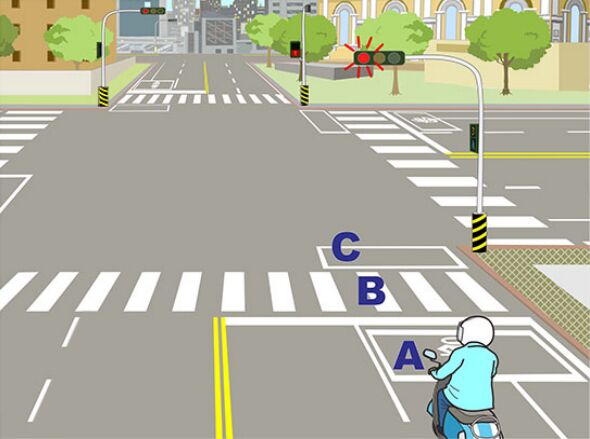 (A) Zone A. (B) Zone B. (C) Zone C.
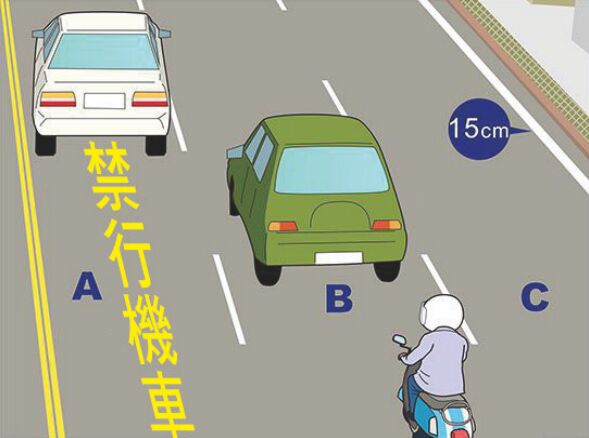 (A) Lane A. (B) Lane B. (C) Lane C.
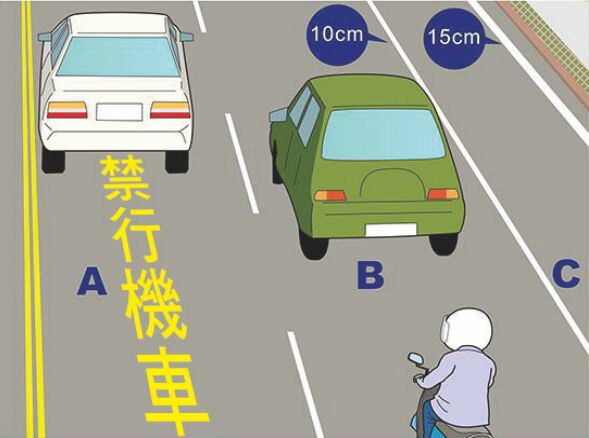 (A) Lane A. (B) Lane B. (C) Lane C.
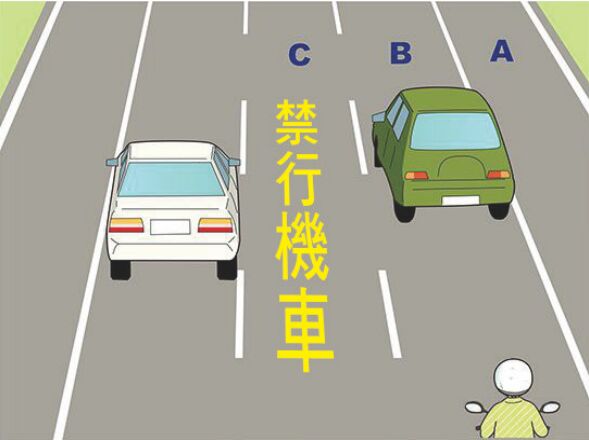 (A) Lane A. (B) Lane B. (C) Lane C.
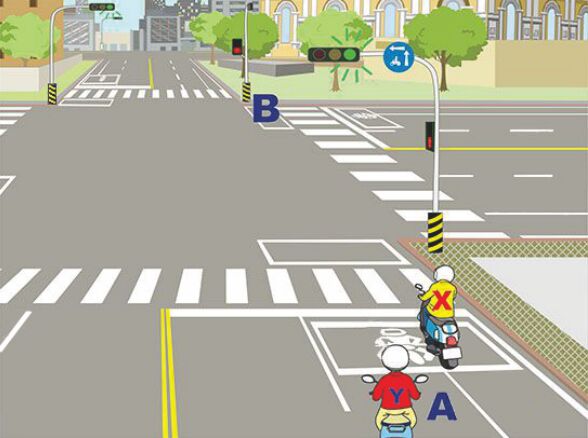 (A) Travel directly to Zone B without turning on the turn signal. (B) Signal a right turn and change to the curbside lane and then travel to Zone B. (C) Travel directly to Zone B and wait.
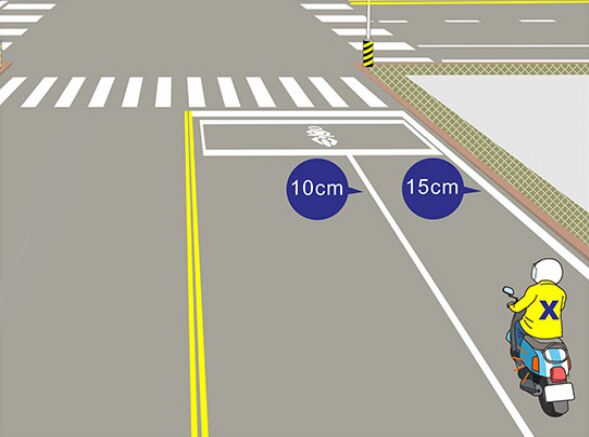 (A) Turn on the left turn signal 10 m before the intersection, change to the fast lane, and travel to the center of the intersection, and turn left after making sure there is no oncoming traffic. (B) Turn on the left turn signal 30 m before the intersection and change to the fast lane, and travel to the center of the intersection, and turn left after making sure there is no oncoming traffic. (C) Change to the fast lane directly and turn left upon passing the stop-line.
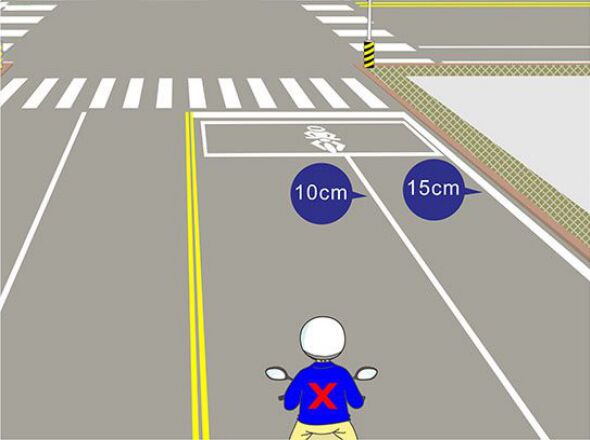 (A) Turn on the right turn signal 10 m before the intersection and change to the curbside lane, travel to the center of the intersection, and turn right. (B) Turn on the right turn signal 30 m before the intersection and change to the curbside lane slowly, travel to the intersection, and turn right. (C) Change to the curbside lane directly and turn right upon passing the stop-line.
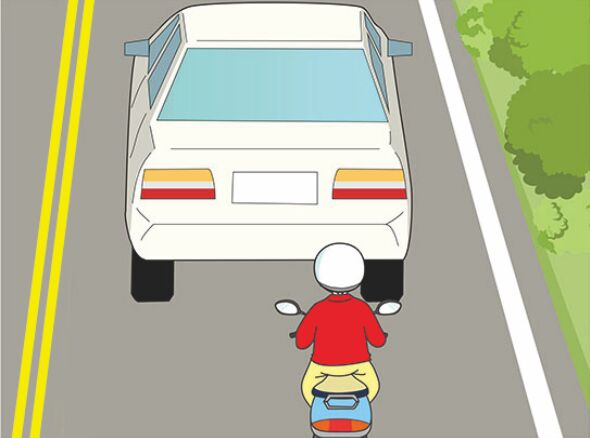 (A) No. (B) Pass the vehicle on the left side. (C) Pass the vehicle on the right side.
 (A) No. (B) Pass the vehicle on the right side. (C) Pass the vehicle on the left side.
 (A) No. (B) Yes, pass the vehicle on the right side. (C) Yes, just be careful.
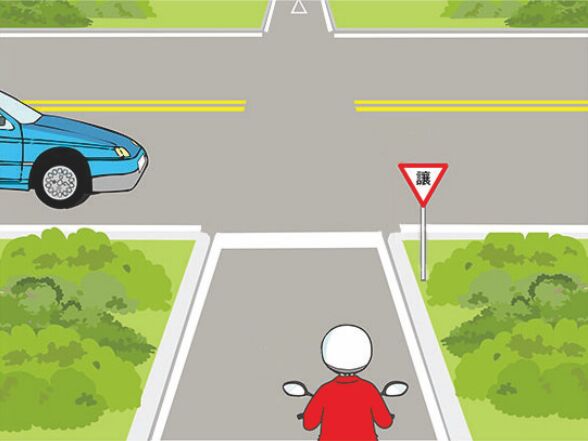 (A) The motorcycle should let the vehicle pass first. (B) The vehicle should let the motorcycle pass first. (C) Whichever is faster passes first.
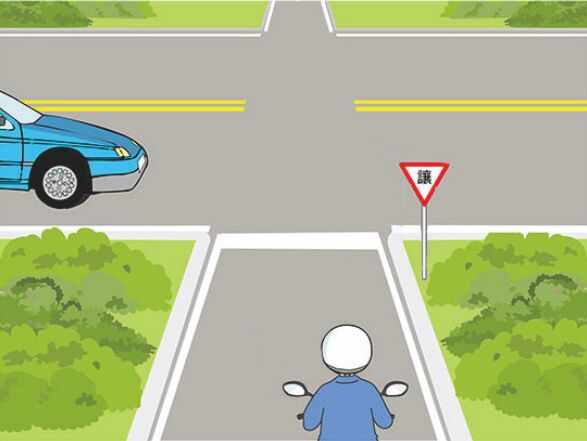 (A) The vehicle traveling on the road should let the motorcycle traveling on the branch road go first. (B) The motorcycle traveling on the branch road should let the vehicle traveling on the road go first. (C) The vehicle is faster.
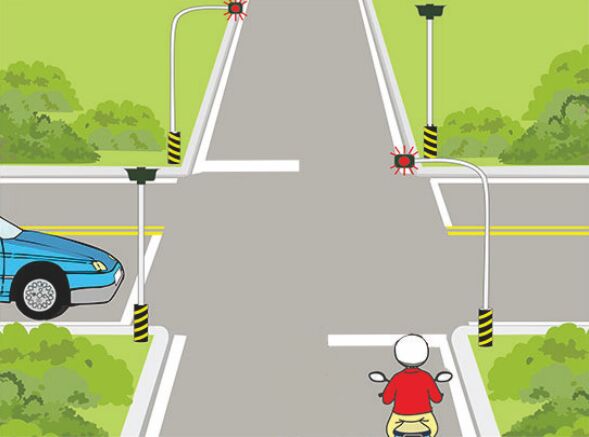 (A) Stop temporarily and check around and continue to travel after the vehicle passes. (B) Slow down and check around before passing through the intersection. (C) Honk the horn and pass through the intersection quickly without being concerned about markings.
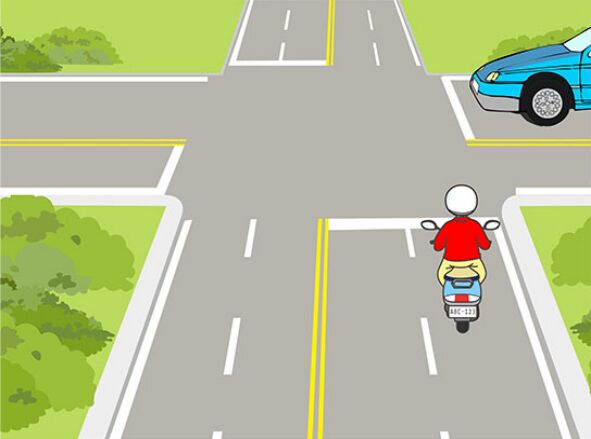 (A) The motorcyclist should slow down when approaching the intersection and pass through the intersection carefully. (B) The motorcyclist should stop at the intersection and continue to travel forward after the vehicle passes. (C) Honk the horn and pass through the intersection quickly without being concerned about markings.
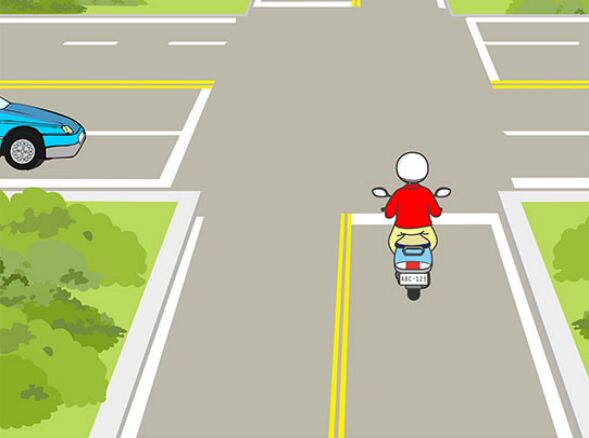 (A) Slow down and stop to let the vehicle pass first. (B) Honk the horn and pass the intersection directly. (C) Pass the intersection quickly without honking the horn.
 (A) Pass through the intersection directly without slowing down. (B) Slow down and check whether any vehicles are traveling on the road, and pass through the intersection. (C) Slow down and honk the horn before passing through the intersection.
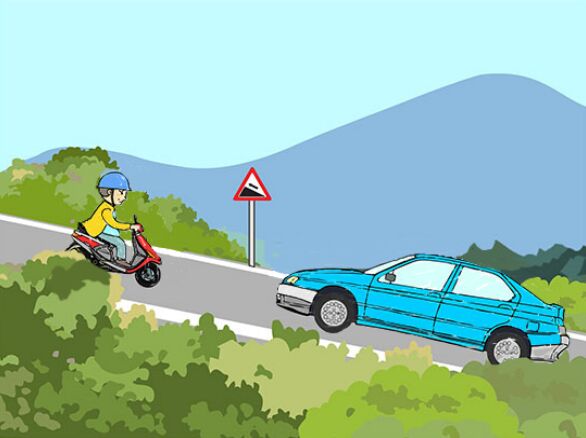 (A) The motorcyclist should stop at the roadside and let the vehicle go first. (B) The vehicle driver should move over and stop on the roadside and let the motorcyclist go first. (C) Honk the horn and pass the vehicle on the right side.
 (A) Brake the front wheel with the support of rear wheel braking. (B) Brake the rear wheel with the support of front wheel braking. (C) Brake the front wheel.
 (A) Brake the front wheel with the support of rear wheel braking. (B) Brake the rear wheel with the support of front wheel braking. (C) Open the throttle and brake the front wheel and rear wheel at the same time.
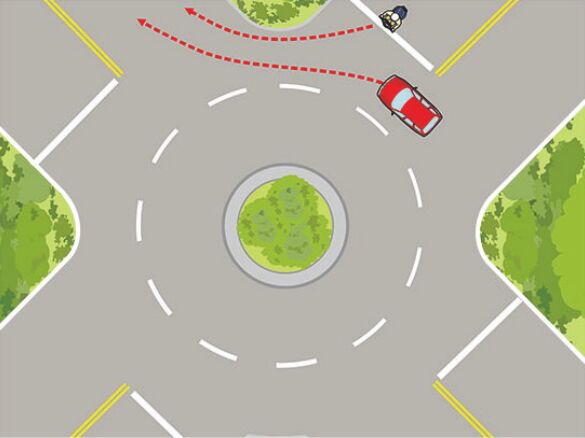 (A) Let the vehicle in the loop pass first and enter the loop afterwards. (B) Travel directly into the loop without stopping. (C) Honk the horn before passing through the loop.
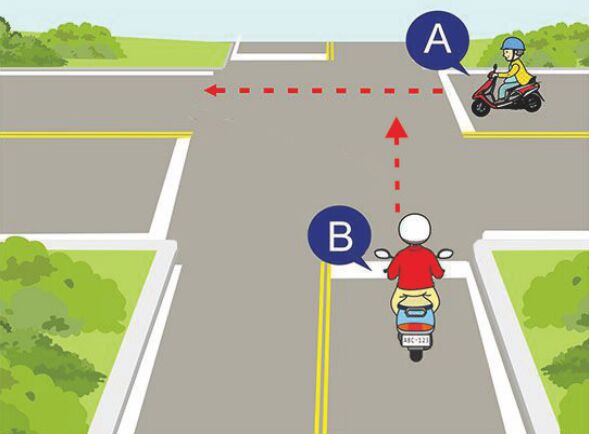 (A) Honk the horn and pass through the intersection first. (B) Stop and let Vehicle A pass first. (C) If Vehicle B has passed the stop-line, Vehicle B should go first.
 (A) Slow down and let the vehicle pass first. (B) Speed up to pass through the section. (C) Stay close to the vehicle and pass through the section.
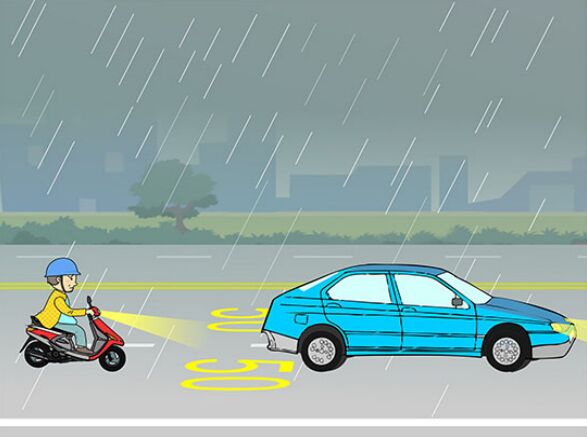 (A) Watch the front vehicle's lights due to the poor visibility, without turning on the motorcycle's headlight. (B) Slow down and keep a longer safety distance from the vehicle in front because of the slippery road. (C) Travel according to the speed limit on the road.
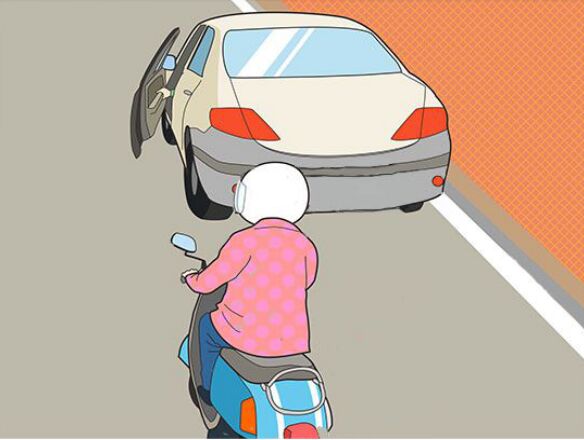 (A) Honk the horn, speed up and pass through quickly. (B) Slow down and stay close to the vehicle and pass it. (C) Slow down and keep a door's distance away from the vehicle at the roadside.
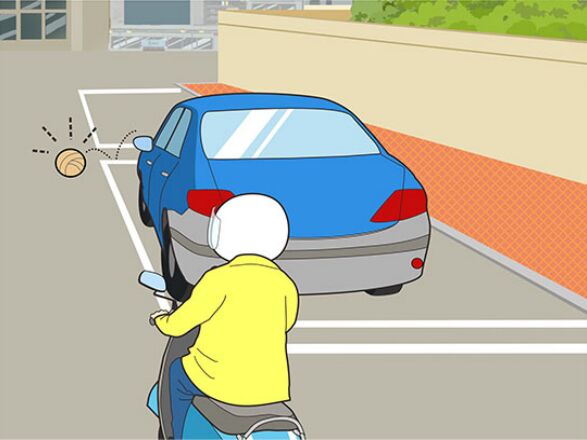 (A) Slow down and check conditions in front of the vehicle at any time due to the dead zonein front of it. (B) Honk the horn and continue to pass. (C) Travel at the same speed but switch on the light as a warning.
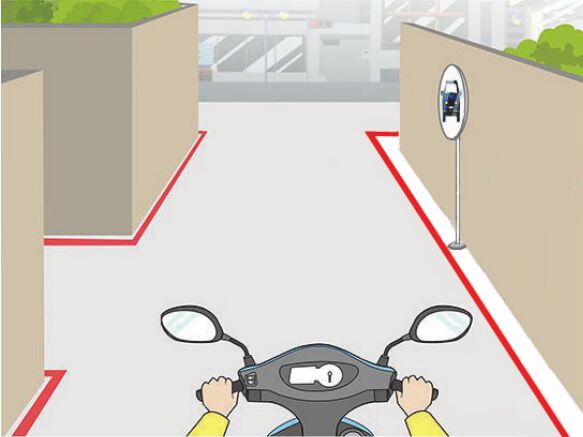 (A) Since the motorcyclist is travelling straight, he can pass first and continue to travel forward. (B) Slow down and observe the reflector and check whether there is a vehicle arriving from the left. (C) Honk the horn and continue to pass.
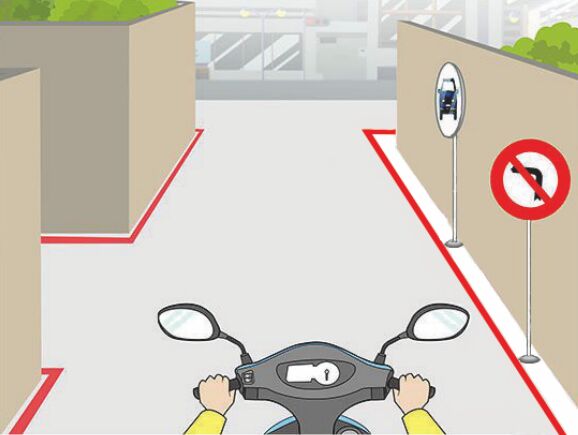 (A) Yes. (B) No. (C) Depending on the road conditions.
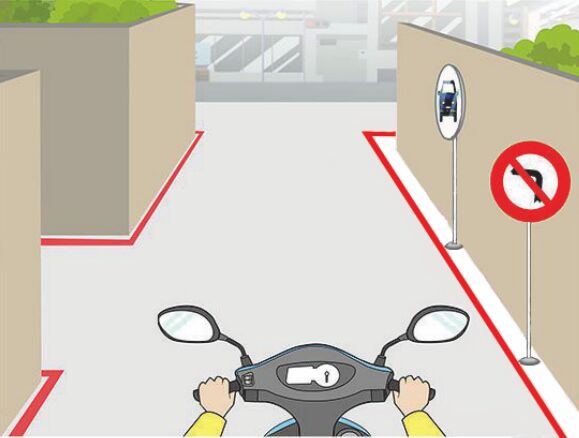 (A) The motorcyclist can use the reflector to observe the traffic in the alley. (B) The establishment of a reflector can prevent vehicles and motorcycles from parking on the roadside. (C) The reflector enlarges the space, making the alley wider and brighter.
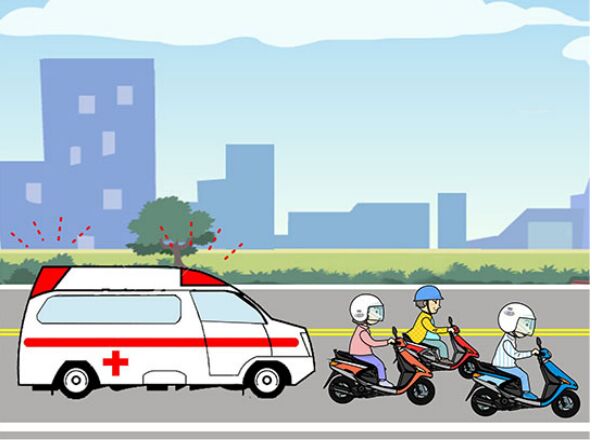 (A) Continue to travel according to the speed limit. (B) Move to the right side immediately to let the ambulance pass first. (C) Speed up immediately and travel continuously due to a rush.
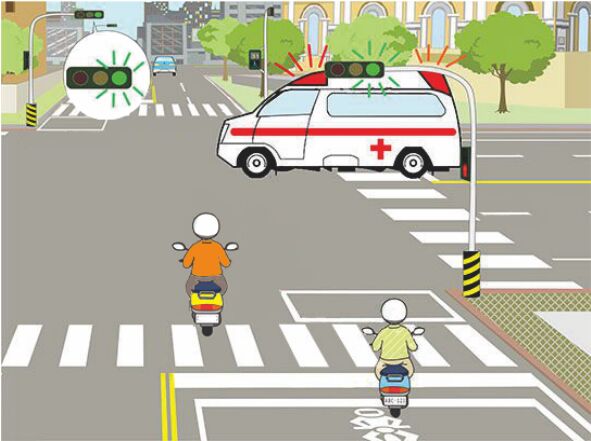 (A) The motorcyclist does not have to let the ambulance running a red light pass first. (B) Let the ambulance pass first regardless of the traffic signal. (C) Speed up and leave the intersection to avoid hindering the ambulance under operation.
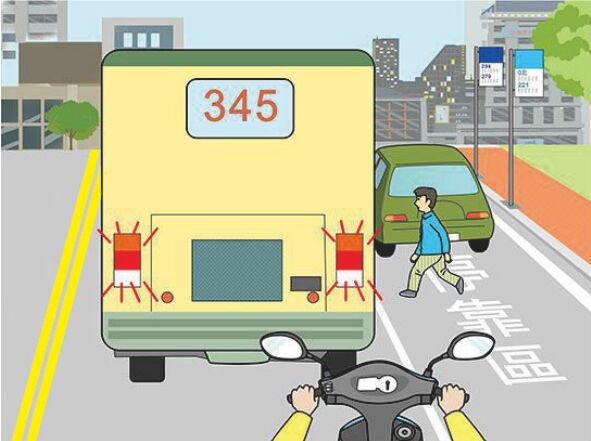 (A) Travel in the opposite lane to pass the bus. (B) Travel to the right side of the bus and honk the horn to pass by. (C) Wait until the bus leaves and continue travelling.
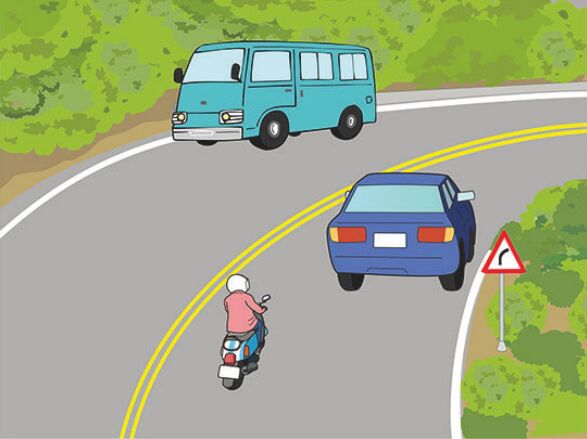 (A) Slow down to avoid slipping when making a turn. (B) Pass the vehicle ahead depending on the width of the curve. (C) Travel side by side with the vehicle according to the width of the curve.
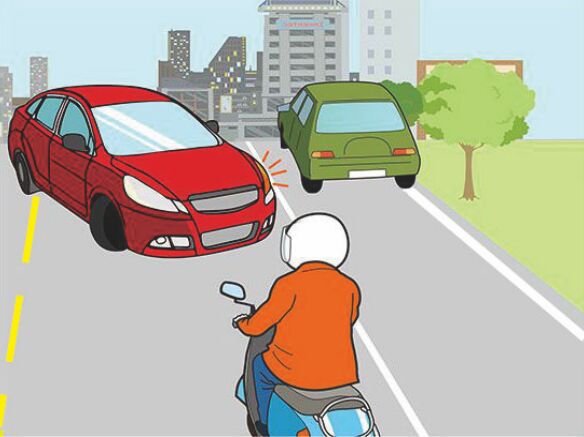 (A) Directly pass the vehicle on the left side. (B) Honk the horn to warn the vehicle driver ahead and pass the vehicle on the right side. (C) Slow down and stop and do not pass the vehicle arbitrarily.
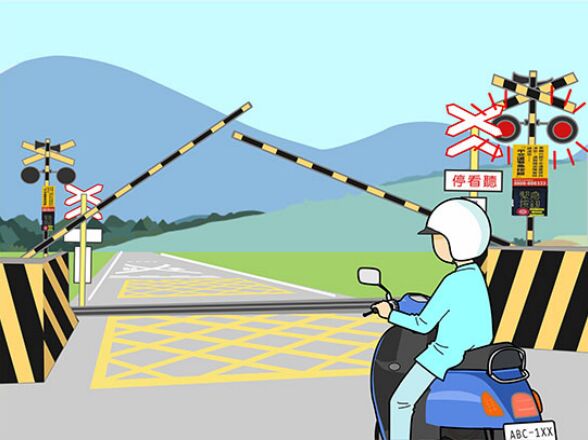 (A) Slow down and stop behind the railroad crossing gate. (B) Speed up and pass through the railroad crossing before the gate has fully dropped. (C) Avoid the gate and pass through the railroad crossing if the train can't be seen.
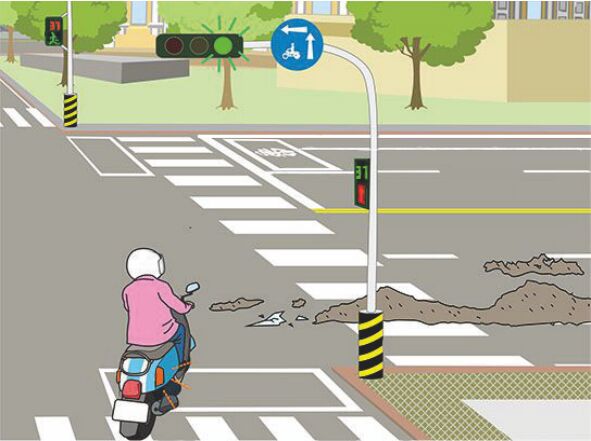 (A) Avoid or slow down as much as possible. (B) Speed up immediately, make the turn and pass along the road. (C) Brake suddenly.
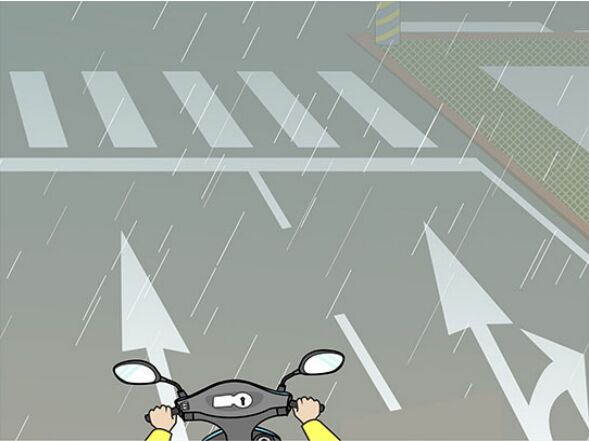 (A) Avoid markings as much as possible. (B) Travel according to the speed limit. (C) Avoid sudden brakes.
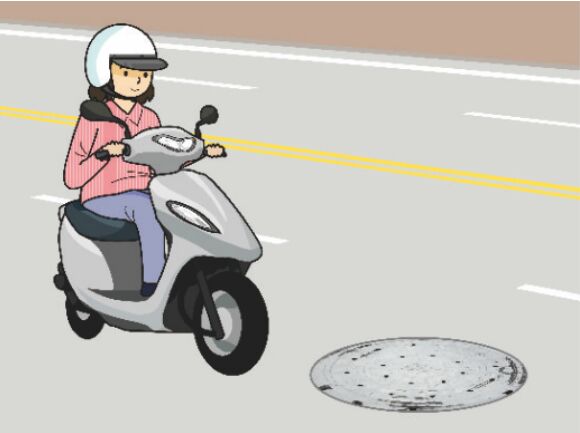 (A) Avoid it as much as possible or slow down. (B) Speed up immediately, make the turn and pass along the road. (C) Brake suddenly.
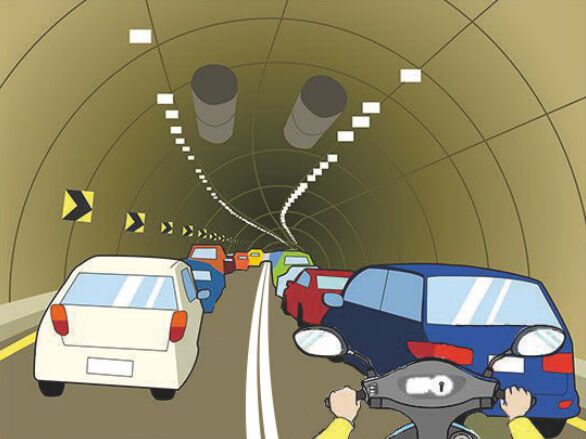 (A) No. (B) Yes. (C) It depends on the distance between vehicles.
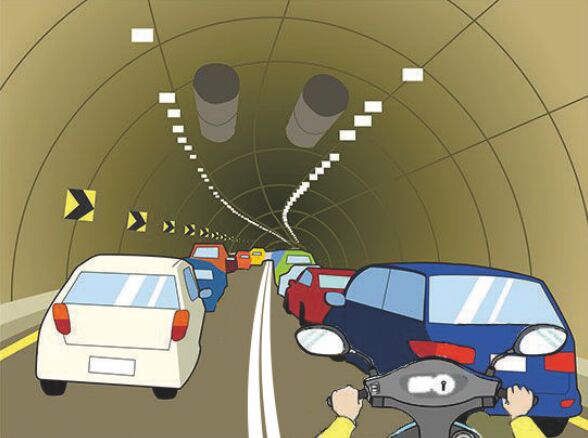 (A) The motorcyclist should keep an appropriate safe distance from the vehicle ahead and pay attention to changes in traffic. (B) The motorcyclist should turn on the headlights in a timely manner according to the road illumination. (C) The motorcyclist should turn on the headlights right through the tunnel.