所屬科目:研究所、轉學考(插大)◆無機化學
1. Which elements could be the p-type dopant in a silicon host? (A) Carbon (B) Germanium (C) Aluminum (D) Phosphorous (E) Sulfur
2. In a n-type semiconductor, how does doping affect the Fermi level? (A) It shifts the Fermi level toward the conduction band (B) It shifts the Fermi level toward the valence band (C) The Fermi level remains unchanged (D) It shifts the Fermi level out of the band gap entirely (E) It shifts the Fermi level to the middle of the band gap
3. Which of the following ligands is the least likely to participate in π-back donation with a metal center? (A) CO (B) NH3 (C) (D) (E) C2H4
4. Which of the following effects is the basis of p-n junction solar cells? (A) Photoelectric (B) Photoconductive (C) Photovoltaic (D) Photothermal (E) Photocatalytic
5. Which ligand has the highest field strength in the spectrochemical series? (A) H2O (B) NH3 (C) (D) (E)
6. Which interaction is spin-orbit coupling mainly caused by? (A) The interaction between the electron's magnetic field and the nucleus (B) The interaction between two electron spins within the same orbital (C) The interaction between the electron's spin and the external magnetic field (D) The interaction between the electron's spin and its orbital angular momentum (E) The interaction between electron spin and the crystal lattice
7. Which elements will you expect the strongest spin-orbit coupling? (A) Iodine (B) Iron (C) Oxygen (D) Carbon (E) Hydrogen
8. Which ligand most likely acts as a n-acceptor (π-acid) ligand in transition metal complexes? (A) NH3 (B) CO (C) H2O (D) (E)
9. transitions occur at 21,000, 33,000, and 43,000 , respectively. Which following transition is more likely? (A) Ligand-to-metal charge-transfer (B) Ligand-to-ligand charge-transfer (C) Metal-to-ligand charge-transfer (D) d-d (E) π-π*
10. Which configurations would be considered low-spin for a d6 ion in an octahedral ligand field? (A) t2g³ eg³ (B) t2g4 eg² (C) t2g5 eg¹ (D) t2g² eg4 (E) t2g6 eg0
11. In transition metal complexes, a high-spin configuration is most likely when: (A) The ligand field splitting energy is large (B) The ligands are strong-field (C) The ligand field splitting energy is tiny (D) The metal ion has a d¹º configuration (E) The metal has a very high oxidation state
12. What is the central concept behind Ligand Field Theory? (A) The effect of ligands on the energy levels of d orbitals in metal ions (B) The bonding characteristics in organic compounds (C) The behavior of free atoms without any external influence (D) The interaction between atomic nuclei and electrons (E) The analysis of metal-to-metal charge transfer interactions
13. Ligand Field Theory can explain which of the following properties in transition metal complexes? (A) Melting and boiling points (B) Acidity and basicity (C) Only solubility in water (D) Ionic bonding in salts (E) Magnetic and absorption properties
14. In the 18-electron rule, which type of metal complexes typically follow this guideline? (A) Covalent hydrides (B) High-spin transition metal complexes (C) Organometallic complexes of main group elements (D) Transition metal organometallic complexes (E) Lanthanide and actinide complexes
15. What is the formal oxidation state of iron in ferrocene (Fe(C5H5)2) commonly used as a standard in electrochemistry? (A) 0 (B)+1 (C) +2 (D) +3 (E) -1
16. Which of the following compounds shows Jahn-Teller distortion? (A) (B) (C) (D) (E)
17. Which structure is typical of a body-centered cubic (bcc) arrangement? (A) Atoms at the edges only (B) Atoms at the face centers only (C) Atoms at the corners and in the center of the unit cell (D) Atoms at both the corners and face centers of the unit cell (E) Atoms only at the corners of the unit cell
18. How many coordination numbers does each atom have in a close-packed structure? (A) 6 (B) 8 (C) 10 (D) 12 (E) 14
19. Please identify how many isomers of the following complexes: (a); (b) . (A)2;2 (B) 2;3 (C) 3;3 (D) 2;4 (E) none of the above
20. Which ion is most kinetically inert? (A) (B) (C) (D) (E)
21. Metal in contains two unpaired electrons. Please identify all the possible first-row transition metal(s). (A) (B)(C) (D) (E)
22. Which ion results in a strong Jahn-Teller effect? (A) d² (B) Low spin d4 (C) High spin d⁴ (D) d9 (E) d¹
23. Which of the following statements are correct regarding the magnetochemical series and its role in predicting magnetic behavior in transition metal complexes? (A). The magnetochemical series ranks ligands by their magnetic influence on metal ions, which can help predict high-spin or low-spin states in transition metal complexes. (B) Ligands higher in the magnetochemical series always produce stronger ligand fields, which leads to high-spin states. (C) The magnetochemical series is primarily used to determine electronic transitions in metal-ligand complexes. (D) Strong-field ligands in the magnetochemical series tend to produce low-spin complexes with smaller magnetic moments. (E) The magnetochemical series does not apply to determining spin states in metal-ligand complexes.
24. Which of the following statements about ligand binding and reactivity in organometallic complexes are CORRECT? Select all that apply. (A) Strong -acceptor ligands, such as CO, stabilize low-valent metal centers by withdrawing electron density from the metal. (B) Ligand exchange in organometallic complexes often depends on the relative binding affinities of incoming and outgoing ligands. (C) In the migratory insertion of CO into a metal-alkyl bond, the metal-carbon bond is formally cleaved during the reaction. (D) Chelating ligands enhance the thermodynamic stability of a metal complex by increasing the chelate effect. (E) ẞ-Hydride elimination requires a vacant coordination site on the metal to accommodate the hydride.
25. Which of the following statements accurately describe aspects of Tanabe-Sugano diagrams for octahedral transition metal complexes? (A) They plot the energy of electronic states relative to the Racah parameter B (B) They apply only to high-spin d-electron configurations. (C) They can illustrate spin-allowed and spin-forbidden transitions. (D) They are primarily used for predicting magnetic moments. (E) They provide information on ligand field splitting as a function of the ligand strength.
26. Sulfur tetrafluoride
27. B(OH)3, planar
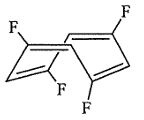
28. 1,3,5,7-tetrafluorocyclooctatetraene
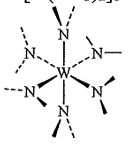
29. W[N(CH3)2]6 (ignore the H atoms of the methyl groups)
30. Ni(cyclobutadiene)2 staggered
 transitions occur at 21,000, 33,000, and 43,000
  , respectively. Which following transition is more likely? (A) Ligand-to-metal charge-transfer (B) Ligand-to-ligand charge-transfer (C) Metal-to-ligand charge-transfer (D) d-d (E) π-π*
 阿摩線上測驗
登入
阿摩線上測驗
登入
 (D)
(D)  (E) C2H4
 (D)
(D)  (E)
(E)
 (E)
(E)
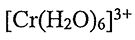 (B)
(B) 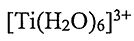 (C)
(C)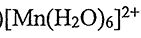 (D)
(D)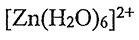 (E)
(E)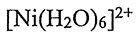
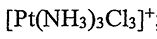 ; (b)
; (b) 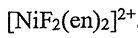 . (A)2;2 (B) 2;3 (C) 3;3 (D) 2;4 (E) none of the above
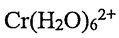 (B)
(B)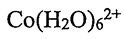 (C)
(C) 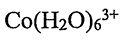 (D)
(D)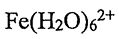 (E)
(E)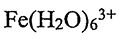
 contains two unpaired electrons. Please identify all the possible first-row transition metal(s). (A)
 (B)
(B) (C)
(C) (D)
(D) (E)
(E)