阿摩線上測驗
55.下列有關犬腎因性腦病(renal encephalopathy)與肝因性腦病(hepatic encephalopathy)之病變敘述,何者錯誤?
(A)皆會增加血腦障壁之通透性,導致中樞神經滲透壓調節異常
(B)皆會造成血管性水腫,導致腦實質海綿樣病變
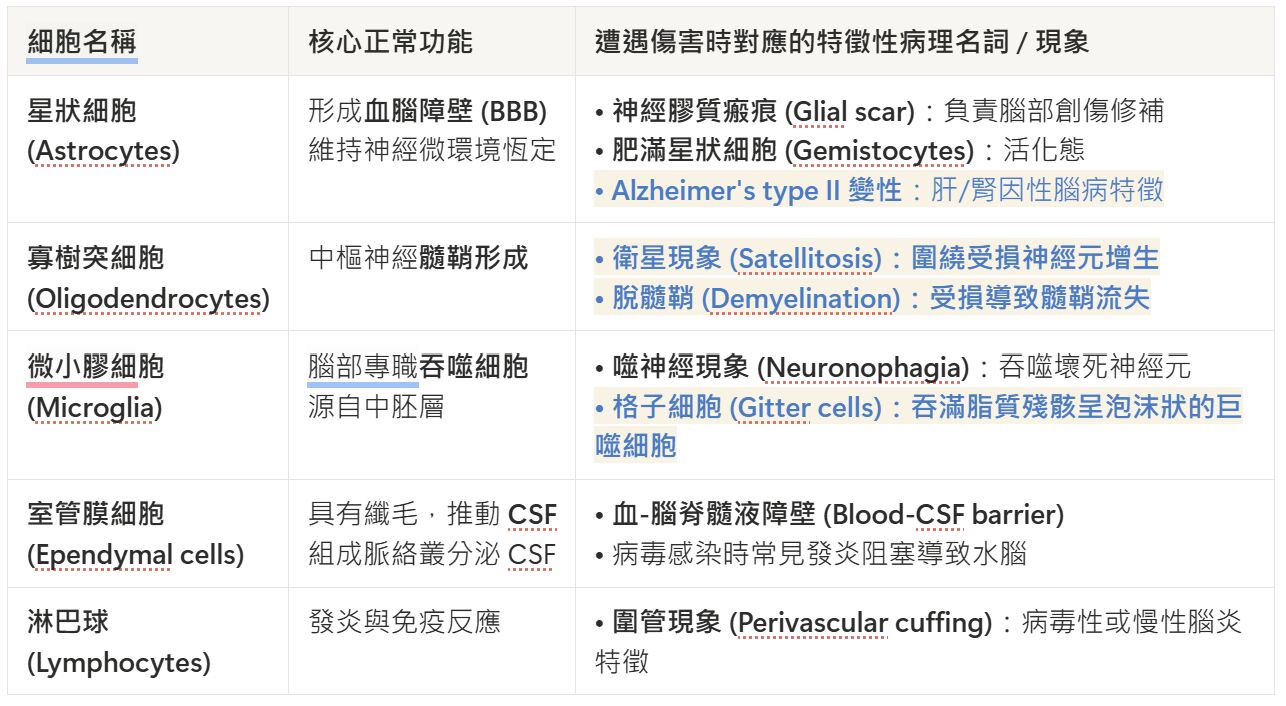
(C)兩者均可導致皮質部星狀細胞呈現腫大與空泡樣變性,稱為Alzheimer’s type II astrocytes
(D)腎因性腦病機制為酮血症中毒,而肝因性腦病則為氨血症中毒
統計: A(131), B(301), C(509), D(1184), E(0) #940660
詳解 (共 10 筆)



Animals with hepatic and, less commonly, renal encephalopathy can have a unique microscopic lesion in the brain affecting astrocytes of the cerebral cortices. In these types of encephalopathies, astrocytic nuclei tend to be in
pairs, triplets, quartets, or more occasionally with prominent central nucleoli and are surrounded by a clear space, which is the edematous cytoplasm. They are called Alzheimer's type II astrocytes (see Fig. 14-10, D).
病理第六版819


(D) 敘述錯誤:
-
肝因性腦病(Hepatic encephalopathy): 其核心致病機制確實是高氨血症(Hyperammonemia)。因為肝功能衰竭或門脈分流(PSS),導致腸道產生的氨(Ammonia)無法經由肝臟的尿素循環代謝,蓄積在血中並穿過血腦障壁。
-
腎因性腦病(Renal encephalopathy): 其機制主要是尿毒症(Uremia)所引起的代謝性毒素蓄積(如尿素、肌酸酐、中分子物質等),以及伴隨的酸中毒與電解質紊亂,進而干擾神經元功能。
-
酮血症(Ketoacidosis)通常是糖尿病或長期飢餓、反芻動物妊娠毒血症時,脂肪大量分解所產生的病變,並非腎因性腦病的主要機制。
-