阿摩線上測驗
73.2003年爆發新型冠狀病毒(SARS-CoV-1)引起的嚴重呼吸道症候群(SARS),其主要的傳染途徑不包括下列何者?
(A)直接接觸(direct contact)
(B)氣膠散布(aerosol droplet spread)
(C)空氣傳染(airborne transmission)
(D)院內感染(nosocomial infection)
統計: A(126), B(515), C(200), D(66), E(0) #3487691
詳解 (共 5 筆)

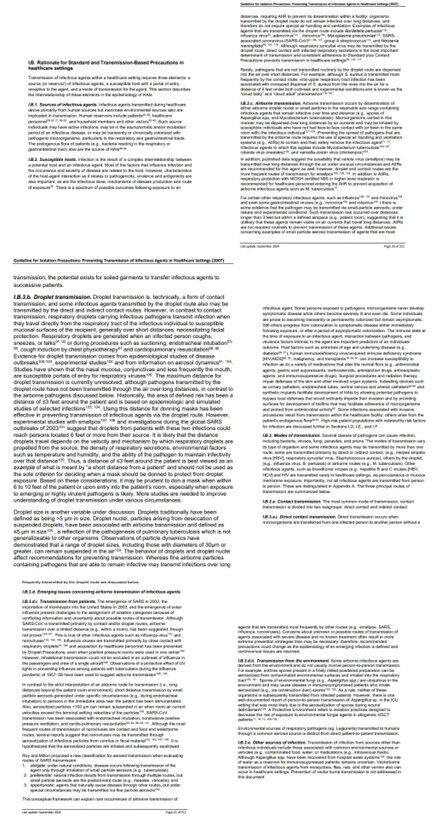
參考書目:CDC Guideline for Isolation Precautions: Preventing Transmission of Infectious Agents in Healthcare Settings作 者:Jane D. Siegel, MD; Emily Rhinehart, RN MPH CIC; Marguerite Jackson, PhD; Linda Chiarello, RN MS; the Healthcare Infection Control Practices Advisory Committee
出版年次: 2007 頁數: 17-22
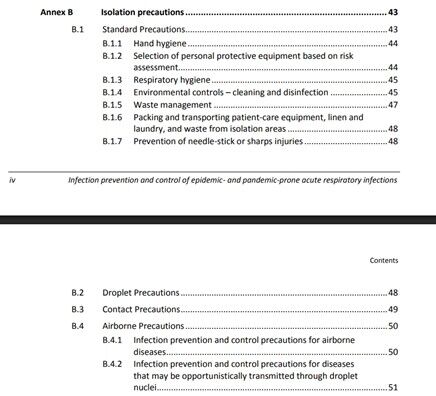
參考書目:Infection prevention and control of epidemic- and pandemic-prone acute respiratory infections in health care WHO Guidelines
出版年次: 2014
頁數: 5
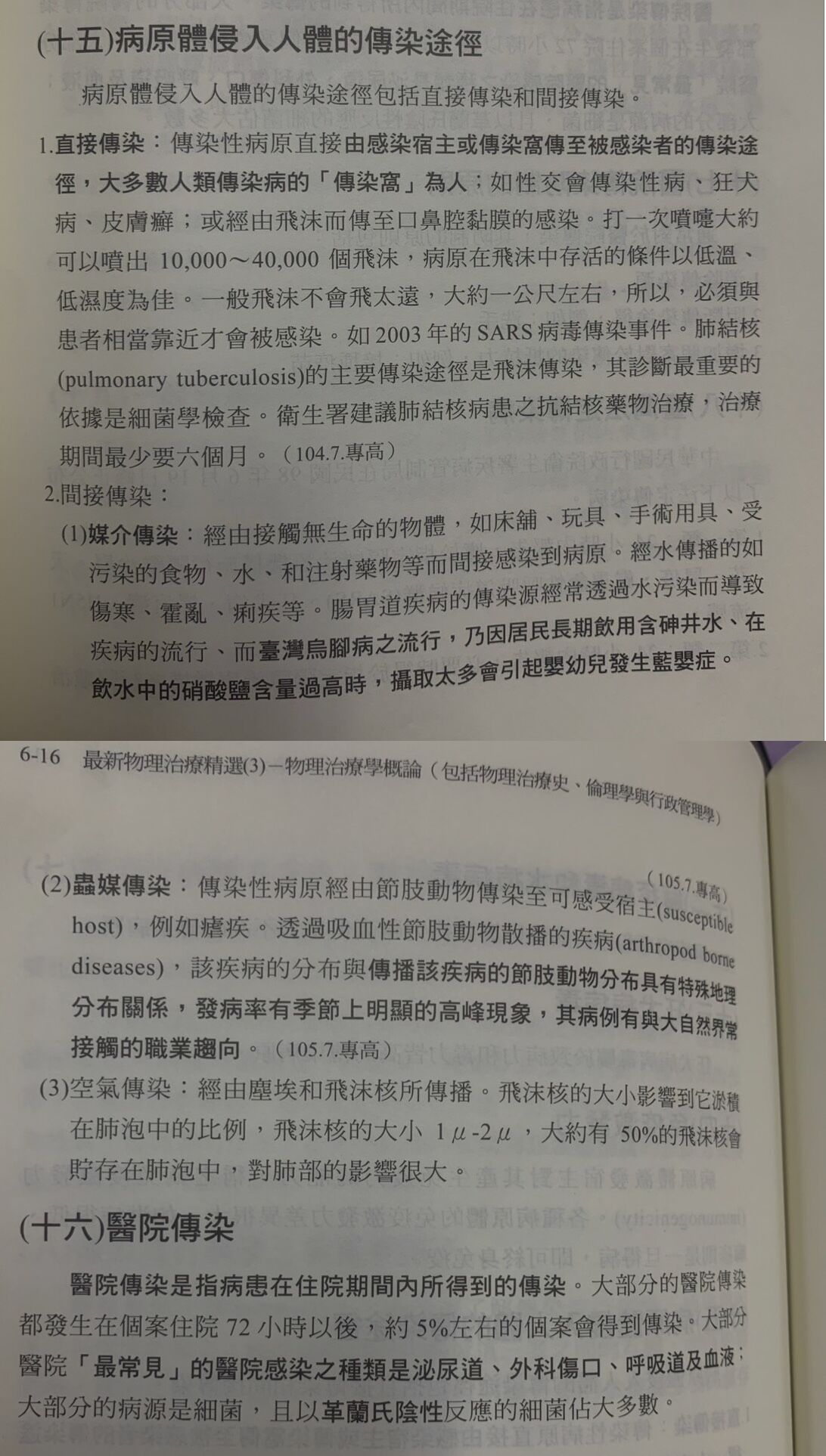
作者: 張梅蘭
出版年次: 2022
頁數: 6-15~16
參考書目:最新物理治療精選(3)物理治療學概論(包括物理治療史、倫理學與行政管理學
空氣傳染代表像麻疹、結核病那樣:
• 病毒可在空氣中長距離漂浮
• 不需要接觸或近距離也可能感染
SARS 並沒有證實具「真正的空氣傳染」能力,主要仍是飛沫 + 接觸。
(只有在進行插管、抽痰等會產生高濃度氣膠的醫療操作時,才可能增加類似空氣途徑,但不算「主要傳染途徑」。)