所屬科目:研究所、轉學考(插大)◆財務管理
1. If you are a typical, risk-averse investor with a well-diversified portfolio, which stock would you prefer? Why? (10分)
2. What are the expected return and standard deviation of a portfolio consisting of 75 percent of stock G and 25 percent of stock B? (10分)
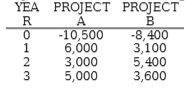
1. Chiayi, Inc., has the following mutually exclusive projects. Suppose Chiayi uses the NPV rule to rank these two projects. Which project should be chosen if the appropriate discount rate is 18 percent? (10分)
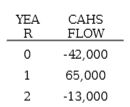
2. Jesus Mining is trying to evaluate a generation project with the following cash flows:Compute the IRR for this project. How many IRRs are there? If you apply the IRR decision rule, should you accept the project or not? What’s going on here? (10分)
1. Due to large losses incurred in the past several years, a firm has $3 billion in tax loss carryforwards. This means that the next $3 billion of the firm’s income will be free from corporate income taxes. Security analysts estimate that it will take many years for the firm to generate $3 billion in earnings. The firm has a moderate amount of debt in its capital structure. The firm’s CEO is deciding whether to issue debt or equity in order to raise the funds needed to finance an upcoming project. Which method of financing would you recommend? Why? (10分)
2. How do the existence of financial distress costs and agency costs affect Modigliani and Miller’s theory in a world where corporations pay taxes? (10分)
1. 說明股票購回(Stock Repurchases)的優缺點。 (10分)
2. 說明為何企業推動股票購回的動機,以及購回期間對股價的影響。 (10分)
1. 說明債券到期殖利率(yield to maturity)如何計算。(10分)
2. 說明影響債券到期殖利率的因素有那些,以及如何影響。(10分)
 阿摩線上測驗
登入
阿摩線上測驗
登入