所屬科目:研究所、轉學考(插大)◆生物化學
1. What is the post-translational modification of phosphorylation: (A) -CH2COO-, (B) -CH3, (C) –NH2, (D) -COOH, (E) -PO3.
2. What is nonprotein part of Nucleoprotiens (A) Lipids, (B) Carbohydrate group, (C) DNA, (D) Heme, (E) Metal.
3. Alpha helix and beta sheet are: (A) Primary structure, (B) Secondary structure, (C) Tertiary structure, (D) Quaternary structure, (E) Regular structure.
4. What is the overall net charge on the peptide Arg-Ala-Ile-Lys-Glu-Tyr-Asp at pH 7.0? (A) +2, (B) +1, (C) -2, (D) 0, (E) -1.
5. A Ramachandran plot illustrates (A) glycine always located at the sterically allowed region, (B) displayed by three torsion angles, (C) the sterically disallowed rotational angles between Ca and the amide nitrogen (-N), (D) the sterically allowed rotational angles between side chains and β-carbons in a peptide, (E) the sterically allowed region for the secondary structure of protein.
6. What can be carried out by Edman degradation: (A) decide the C-terminal amino acid by a carboxypeptidase, (B) cut the protein into a multitude of smaller peptides, (C) determine the N-terminal residue, (D) connect overlapping sets of peptide fragments, (E) make two different, but overlapping sets of peptide fragments?
7. Which equation defines a system at equilibrium? (A) AG > 0, (B)( ΔG° = AG, (C) AG = 0, (D) AG < 0, (E) AG = RT In ([products]/[reactants]).
8. All of the following statements about cyclic sugars are true EXCEPT: (A) The a-anomer has the -OH of the anomeric carbon positioned on the same side of the sugar ring from the -CH2OH, (B) The five and six membered rings are more frequently observed due to stability, (C) In a chair conformation, the predominant form has the bulkiest substituents occupying equatorial positions, (D) The carbonyl carbon becomes a chiral center, (E) They can be formed by the intramolecular reactions to hemiacetals or hemiketals.
9. What is the name of this glycosaminoglycans ? (A) Hyaluronate, (B) Keratan sulfate, (C) Dermatan sulfate, (D) Chondroitin-4-sulfate, (E) Heparin.
10. Which is the pro-R position in glycerol ? (A) 1, (B) 2, (C) 3, (D) 4.
11. Lipids that spontaneously form micelles, monolayers and bilayers have what property? (A) waxy, (B) amphipathic, (C) polar, (D) bipolar, (E) polyisoprenoid.
12. Nucleotides have a nitrogenous base linked to a sugar by a: (A) a-anhydride bond, (B) β-ester bond, (C) α-N-amide bond, (D) β-N-acetal (glycosidic) bond, (E) a-N-hemiacetal bond.
13. In eukaryotic cells, DNA is found principally in the nucleus, but it also occurs in _____ and in _____ . (A) ribosomes; mitochondria, (B) mitochondria; chloroplasts, (C) chloroplasts; peroxisomes, (D) peroxisomes; vacuoles, (E) vacuoles; mitochondria.
14. In passive diffusion, the transported species moves across the membrane in the _____ favored direction _____. (A) kinetically; using a transport protein, (B) kinetically; without a specific transport system/molecule, (C) thermodynamically; using a transport protein, (D) thermodynamically; without a specific transport system/molecule, (E) none of the above.
15. A plot of 1/V vs. 1/[S] for an enzyme catalyzed reaction gave a line with an equation of y = 0.5x +0.2. The same enzyme with an inhibitor present gave a line with an equation of y = 1.0x + 0.4. Which of the following statements is true? (A) the type of inhibition is competitive, (B) the type of inhibition is noncompetitive, (C) the type of inhibition is uncompetitive, (D) the Km with the inhibitor present has decreased.
16. Which of the following is true regarding the Briggs and Haldane steady state assumption? (A) It is defined by the equation E + S←→ ES ←→ E + P, (B) It states the rate of enzyme-substrate complex formation differs from the rate of enzyme-substrate disappearance, (C) The concentration of the enzyme-substrate complex reaches a constant value even in a dynamic system, (D) The enzyme-substrate complex will always dissociate to form E + P, (E) The total amount of enzyme is variable, depending on the amount of substrate available.
17. Enzymes have active sites which have the greatest complementarity to the: (A) substrate, (B) transition state, (C) product, (D) both substrate and product, (E) none of the above.
18. Because the enzymatic reaction rate is determined by the difference in energy between ES and _____ , the tighter binding of the substrate, the _____ the rate of reaction. (A) S; higher, (B) P; lower, (C) EX‡; lower, (D) EX‡; higher, (E) S; lower.
19. The catalytic mechanism below is an example of: (A) covalent nucleophilic catalysis, (B) covalent electrophilic catalysis, (C) specific base catalysis, (D) general base catalysis, (E) low barrier hydrogen bond catalysis.
20. Proinsulin is converted into insulin by: (A) proteolytic excision of a specific peptide, (B) allosteric binding of glucose, (C) phosphorylation to the active form, (D) removal of phosphate by converter enzymes, (E) none of the above.
21. All are characteristic of allosteric enzymes EXCEPT: (A) Effectors may show stimulatory or inhibitory activity, (B) They have multiple subunits, (C) They obey Michaelis-Menten kinetics, (D) The regulatory effect is by altering conformation and interaction of subunits, (E) Binding one subunit impacts binding of substrate to other subunits.
22. Which of the following chemicals is a substrate for the only membrane-bound enzyme complex in TCA cycle? (A) succinate, (B) pyruvate, (C) citrate, (D) malate, (E) a-ketoglutarate.
23. In the electron transport chain of mitochondria, the hydrophobic mobile carrier is (A) cytochrome a, (B) cytochrome c, (C) FAD, (D) ubiquinone, (E) Fe-S center.
24. The de-excitation pathways of an antenna chlorophyll molecule do not include (A) fluorescence, (B) heat release, (C) resonance energy transfer, (D) donation of an excited electron, (E) All of the above are correct pathways.
25. Complete the two blanks in the net equation of the Calvin Cycle: 6 CO2 + _ ATP _ NADPH + + 12 H2O → Glucose + x1 ADP + x2 Pi + x3NADP+ (A) 16, 12, (B) 18, 12, (C) 18, 18, (D) 18, 16, (E) 16, 16..
26. Which subunit of F0F1ATP synthase contains H⁺ channels? (A) α, (B) ε, (C) γ, (D) b, (E) c.
27. Succinyl-CoA of TCA cycle provides most of the carbon atoms in the biosynthesis of (A) steroids, (B) fatty acids, (C) porphyrins, (D) cysteine, (E) lysine.
28. The first reaction of glycolysis pathway is catalyzed by (A) hexokinase, (B) phosphofructokinase, (C) phosphoglucoisomerase, (D) pyruvate kinase, (E) aldolase.
29. Insulin in the bloodstream is a response to increased blood glucose, and: (A) stimulates gluconeogenesis, (B) inhibits glycolysis, (C) stimulates glycogen synthesis in muscle and liver, (D) stimulates glycogen breakdown in liver, (E) inhibits phosphoprotein phosphatase-1.
30. Two major tissues carrying out gluconeogenesis are: (A) brain; muscles, (B) muscles; kidneys, (C) kidneys; liver, (D) liver; red blood cells, (E) red blood cells; brain
31. Fatty acids are mobilized from adipose cells in response to all of the hormones EXCEPT: (A) ACTH (adrenocorticotropic hormone), (B) glucagon, (C) insulin, (D) epinephrine (adrenaline), (E) all are true.
32. For the complete oxidation of a saturated fatty acid with 16 carbons, how many times must the ẞ-oxidation cycle be repeated? (A) 4, (B) 7, (C) 8, (D) 6, (E) 16.
33. All of the following are characteristics of arachidonic acid EXCEPT: (A) it contains four cis-double bonds. (B) it is a precursor of leukotrienes and most prostaglandins. (C) it is an omega-6 fatty acid. (D) it can be synthesized from linoleic acid in mammals. (E) all are correct.
34. Dietary lipids are "packaged" in the intestine into ____ for transport in the blood stream. (A) chylomicrons, (B) HDL, (C) IDL, (D) VLDL, (E) LDL.
35. The function of NADPH is to: (A) provide reducing equivalents to synthesize glucose from CO2, (B) carry electrons from anabolic reactions, (C) provide a source of hydrogens for oxidative biosynthesis, (D) be reduced by hydride ions to form NAD+, (E) produce an oxidative product.
36. Ethanol metabolism in liver is characterized by all of the following EXCEPT: (A) decreased pH levels due to lactic acidosis, (B) two oxidation steps to convert ethanol to acetate, both reactions produce NADH, (C) decreased gluconeogenesis activity resulting in hypoglycemia, (D) decreased ratio in the cell, (E) increased acetaldehyde-protein adducts impairing protein function.
37. Fatty acids are released from adipocytes when: (A) insulin levels are high, (B) glycerol-3-phosphate levels are high, (C) adipose ATP levels are high, (D) blood glucose levels are low, (E) none are true.
38. Glucose is pivotal to adipocyte metabolism in all areas EXCEPT: (A) forms DHAP for reduction and esterification of fatty acids, (B) provides glucose-6-phosphate for generating NADPH from the pentose phosphate pathway, (C) synthesizes ketone bodies, (D) converts glucose to fatty acids for storage and export, (E) all are true.
39. What is the general order of available energy sources in muscles during strenuous exertion? (A) glycogen > ATP > glucose > fatty acids > phosphocreatine, (B) ATP > phosphocreatine > glycogen >glucose > fatty acids, (C) phosphocreatine > glucose > ATP > fatty acids > glycogen, (D) ATP > glycogen > phosphocreatine > fatty acids > glucose, (E) phosphocreatine > ATP fatty acids > glucose > glycogen.
40. All of the following are fuels for contracting muscles during strictly anaerobic metabolism EXCEPT: (A) ATP, (B) creatine phosphate, (C) glycogen, (D) glucose, (E) palmitic acid.
1. (A) Draw the titration plot of glycine,
(B) Write the equation of glycine titration, and
(C) Label the dissociation constant
(K) and isoelectric point (pI)
2. (A) Explain the differences between cell wall of Gram-positive bacteria and Gram-negative bacteria. How do these differences show in the reaction with Gram stain?
(B) The systematic name of Palmitoleic acid is 9-Hexadecenoic acid. Please draw the structure of cis-Palmitoleic acid.
(A)Please derive equation (1) (2%) and
(B) explain the meaning (and their units) of Vm and Km (2%)
We learn that inhibitor I can inhibit the reaction such that the inhibited kinetics follow the Lineweaver-Burk plot belowWhat kind of inhibition is this? Competitive, noncompetitive or uncompetitive (1%); Does the inhibitor compete the same binding site with the substrate or not? (1%) We chemically modify I into I'; now I' binds the enzyme even tighter than before. How are the lines in the figure going to shift? Compare [I'] with [I] at the same concentrations (2%). Describe two examples how enzymes regulate their activities in vivo? (2%)
4. Which physiological activities of erythrocytes are inhibited by 2,4-dinitrophenol? (10%)
(A) the carried lipids and
(B) the carried apolipoproteins. (10%)
(A) N⁵-methyl-THF
(B) -methylene- THF
(C) N¹⁰-formyl-THF
(D) N⁵-formyl-THF
(E) -methenyl-THF? (10%)
 阿摩線上測驗
登入
阿摩線上測驗
登入
 -N), (D) the sterically allowed rotational angles between side chains and β-carbons in a peptide, (E) the sterically allowed region for the secondary structure of protein.
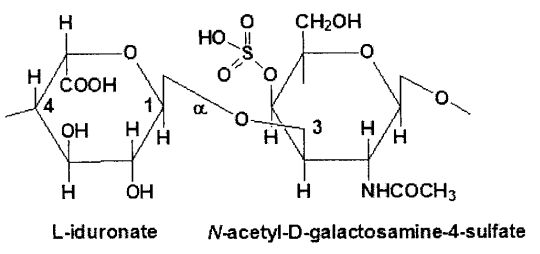 (A) Hyaluronate, (B) Keratan sulfate, (C) Dermatan sulfate, (D) Chondroitin-4-sulfate, (E) Heparin.
 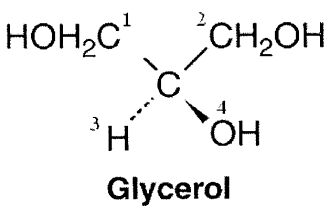 (A) 1, (B) 2, (C) 3, (D) 4.
  (A) covalent nucleophilic catalysis, (B) covalent electrophilic catalysis, (C) specific base catalysis, (D) general base catalysis, (E) low barrier hydrogen bond catalysis.
  + 12 H2O → Glucose + x1 ADP + x2 Pi + x3NADP+ (A) 16, 12, (B) 18, 12, (C) 18, 18, (D) 18, 16, (E) 16, 16..
 ratio in the cell, (E) increased acetaldehyde-protein adducts impairing protein function.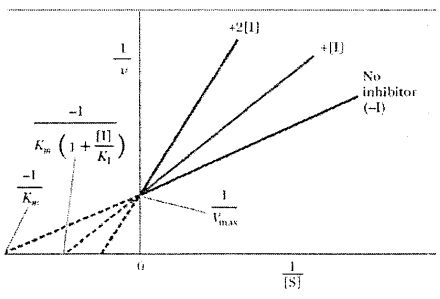
 -methylene- THF
 -methenyl-THF? (10%)