所屬科目:研究所、轉學考(插大)-微積分
1. A rectangle has its base on the x-axis and its upper two vertices on the parabola y = 6 - x². What is the largest area the rectangle can have? (A) (B) (C) 10 (D) 12 (E) None of the above
3. Find the limit: (A) 1 (B) e (C) e² (D) e⁴ (E) None of the above
1. Which of the following must be true? (A) (B) (C) (D)[ln(2n² + 1) - ln(n² + 1)] = 2
2. Suppose that f'(x) > 0 for all x ∈ R and that f(2) = 0. Let g(x) = f(t) dt. Which of the following must be true? (A) The graph of g is increasing on (0,2). (B) g is a nonnegative continuous function. (C) The graph of g has a horizontal tangent at x = 2. (D) The graph of g does not have any inflection point.
3. Suppose that series anxn converges when x = -3 and diverges when x = 5. Which of the following must be true? (A) an converges. (B) an(-2)nconverges. (C) an(-5)ndiverges. (D) an6ndiverges.
4. Let f(x, y) = 4 + x³ + y³ - 3xy. Which of the following must be true? (A) f has a local maximum at (0,0). (B) f has a local minimum at (1,1). (C) At the point P(1,0), f have the maximum rate of change in the direction (1,-1). (D) The maximum rate of change at the point P(1,0) is.
4. Let D be the region enclosed by y =, y = 0, x = 0, and x = 3. Find the volume of the solid obtained by rotating about the x-axis. ⇒__(d)__
5. Let F(x, y) be the vector field given by F(x, y) = . Calculate ∮C F ⋅ dr, where C is the unit circle centered at the origin and oriented counterclockwise. ⇒ __(e)__
2. (10 分) Let E be the solid bounded by the paraboloid z =- x² + y² and the surface z = and let S be the boundary surface of E, given with positive (outward) orientation. Sketch the solid E and use the Divergence Theorem to find ∬ F ⋅ dS for the vector field F(x, y, z) = (x³, y³, 3xy).
 阿摩線上測驗
登入
 (B)
 (C) 10 (D) 12 (E) None of the above
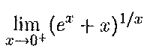 (A) 1 (B) e (C) e² (D) e⁴ (E) None of the above
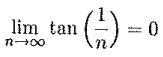 (B)
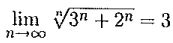 (C)
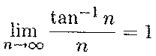 (D)
 [ln(2n² + 1) - ln(n² + 1)] = 2
 f(t) dt. Which of the following must be true? (A) The graph of g is increasing on (0,2). (B) g is a nonnegative continuous function. (C) The graph of g has a horizontal tangent at x = 2. (D) The graph of g does not have any inflection point.
 anxn converges when x = -3 and diverges when x = 5. Which of the following must be true? (A)
 an converges. (B)
 an(-2)nconverges. (C)
 an(-5)ndiverges. (D)
 an6ndiverges.
 (1,-1). (D) The maximum rate of change at the point P(1,0) is
 .
 dx. ⇒__(a)__
 , y = 0, x = 0, and x = 3. Find the volume of the solid obtained by rotating about the x-axis. ⇒__(d)__
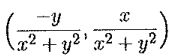 . Calculate ∮C F ⋅ dr, where C is the unit circle centered at the origin and oriented counterclockwise. ⇒ __(e)__
 - x² + y² and the surface z =
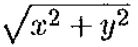 and let S be the boundary surface of E, given with positive (outward) orientation. Sketch the solid E and use the Divergence Theorem to find ∬ F ⋅ dS for the vector field F(x, y, z) = (x³, y³, 3xy).