所屬科目:研究所、轉學考(插大)◆普通化學
1. Which one of the following functional groups is aldehyde? (R = any alkyl groups) (A)–CHO (B)–COOH (C)–COOR (D)–R(CO)R (E)–NR3
2. How many σ bonds does a propylene molecule have? (A)5 (B)6 (C)7 (D)8 (E)9
3. The orbital hybridization of the carbon atom in carbon dioxide is (A)sp (B)sp² (C)sp³ (D)dsp³ (E)d²sp³
4. What is the important precaution observed in the storage of metallic sodium? (A)Leave the container uncovered (B)Store the sodium in kerosene (C)Store the sodium in water (D)Use an opaque container (E)Store the sodium in fridge
5. Which of the following compounds has the highest boiling point? (A)o-xylene (B)p-xylene (C)m-xylene (D)toluene (E)benzene
6. Which of the following is NOT classified as a Bronsted-Lowry base? (A)ammonia (B)trimethylamine (C)perchlorate ion (D)hydronium ion (E)none of the above
7. Which of the following electron configurations is inconsistent with Hund's rule of maximum multiplicity? (A)1s²2s²2px¹2py¹2pz¹ (B)1s²2s²2px²2py²2pz² (C)1s²2s²2px²2py¹2pz¹ (D)1s²2s²2px²2py²2pz¹ (E)1s²2s²2px²2py¹2pz⁰
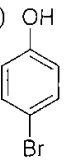
8. Which one of the following compounds has the most acidic proton? (A)(B)(C)(D)(E)
9. Express the number 0.05500 in scientific notation: (A)5.50 × 10⁻² (B)5.5 × 10⁻² (C)55 × 10⁻³ (D)5.500 × 10⁻² (E)0.55 × 10⁻¹
10. Which one of the following species does NOT have resonance structures? (A)acetate ion (B)carbonate ion (C)sulfonate ion (D)enolate ion (E)ethoxide ion
11. What is the oxidation number of the central metal atom in [Fe(CO)5]? (A)5 (B)3 (C)2 (D)1 (E)0
12. Of the following elements, which one has the lowest electronegativity? (A)Mg (B)Cl (C)Br (D)Ca (E)F
13. What is the central metal of chlorophyll (葉綠素)? (A)Mg (B)Cu (C)Co (D)Ni (E)Co
14. What kind of information will be provided by the UV/VIS absorption spectroscopy? (A)Molecule rotation (B)Nuclear spin (C)Nuclear vibration (D)Electronic transition (E)Electron spin
15. Esters undergo hydrolysis reactions with aqueous sodium hydroxide to give alcohols and acids. This well-known process is also called: (A)Hydrogenation (B)Oxidation (C)Saponification (D)Halogenation (E)Epoxidation
16. Which of the following is incorrectly named? (A)SO4²⁻, sulfate ion (B)Cr2O7²⁻, dichromate ion (C)PO4³⁻, phosphate ion (D)ClO⁻, chlorite ion (E)CN⁻, cyanide ion
17. A fuel-air mixture is placed in a cylinder fitted with a piston. The original volume is 0.320-L. When the mixture is ignited, gases are produced and 805 J of energy is released. To what volume will the gases expand against a constant pressure of 635 mmHg, if all the energy released is converted to work to push the piston? (A)9.19 L (B)6.96 L (C)9.83 L (D)9.51 L (E)1.59 L
18. Which statement is true of a process in which one mole of a gas is expanded from state A to state B? (A)When the gas expands from state A to state B, the surroundings are doing work on the system. (B)The amount of work done in the process must be the same, regardless of the path. (C)It is not possible to have more than one path for a change of state. (D)The final volume of the gas will depend on the path taken. (E)The amount of heat released in the process will depend on the path taken.
19. A sample of N2 gas is contaminated with a gas A of unknown molar mass. The partial pressure of each gas is known to be 200. torr at 25°C. The gases are allowed to effuse through a pinhole, and it is found that gas A escapes at 2 times the rate of N2. The molar mass of gas A is: (A)7.00 g/mol (B)56 g/mol (C)14.01 g/mol (D)112 g/mol (E)none of these
20. Which of the following effects will make PV/nRT less than one for a real gas? (A)The gas molecules are large enough to occupy a substantial amount of space. (B)A large number of molecules have speeds greater than the average speed. (C)The gas molecules have a very low molar mass. (D)The gas molecules attract one another. (E)None of these.
21. A solution contains the ions Ag+, Pb2+, and Ni2+. Dilute solutions of NaCl, Na2SO4, and Na2S are available to separate the positive ions from each other. In order to effect separation, the solutions should be added in which order? (A)Na2SO4, NaCl, Na2S (B)Na2SO4, Na2S, NaCl (C)Na2S, NaCl, Na2SO4 (D)NaCl, Na2S, Na2SO4 (E)NaCl, Na2SO4, Na2S
22. Consider the reaction 3A + B + C → D + E where the rate law is defined as
An experiment is carried out where [B]0 = [C]0 = 1.00 M and [A]0 = 1.00 × 10⁻⁴ M, and [A] = 3.26 × 10⁻⁵ M after 3.00 minutes. What is the half-life for this experiment? (A)111 s (B)87 s (C)60 s (D)17 s (E)none of these
23. At 500.0 K, one mole of gaseous ONCl is placed in a one-liter container. At equilibrium it is 5.5% dissociated according to the equation shown here: 2ONCl ⇌ 2NO + Cl2. Determine the equilibrium constant. (A)9.3 × 10⁻⁵ (B)1.7 × 10⁻³ (C)5.8 × 10⁻² (D)9.5 × 10⁻¹ (E)1.1 × 10⁴
24. Ammonia is prepared industrially by the reaction: N2(g) + 3H2(g) ⇌ 2NH3(g) for the reaction: ΔH° = −92.2 kJ and K (at 25°C) = 4.0 × 10⁸. When the temperature of the reaction is increased to 500°C, which of the following is true? (A)K for the reaction will be larger at 500°C than at 25°C. (B)At equilibrium, more NH3 is present at 500°C than at 25°C. (C)Product formation (at equilibrium) is not favored as the temperature is raised. (D)The reaction of N2 with H2 to form ammonia is endothermic. (E)None of the above is true.
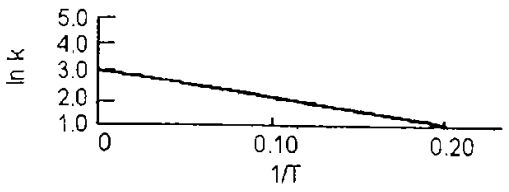
25. The equilibrium constant of a certain reaction was measured at various temperatures to give the plot shown below. What is ΔS° for the reaction in J/mol·K?
(A)0.20 (B)3.0 (C)25 (D)−50 (E)−8.3 × 10³
 阿摩線上測驗
登入
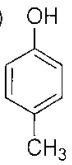 (B)
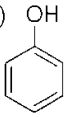 (C)
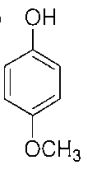 (D)
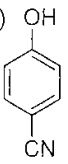 (E)

 (A)0.20 (B)3.0 (C)25 (D)−50 (E)−8.3 × 10³