所屬科目:研究所、轉學考(插大)◆生物化學
1. The following statements about cholesterol are true EXCEPT: (A) It is amphipathic (B) It is the precursors for all other animal steroids. (C) It is derived from terpenes (D) It contains four 6-membered rings (E) It is a component of animal plasma membrane
2. The following statements about membrane transport are true EXCEPT: (A) Oxygen molecules can pass through the membrane spontaneously (B) Active transport absolutely requires ATP hydrolysis (C) Facilitated diffusion can be saturated by substrates (D) The transport rate of facilitated diffusion usually is much faster than the rate of active transport (E) Conformational changes and energy consumption are coupled in the transport cycle of active transporters
3. Which of the following statements about phospholipids is TRUE: (A) Phosphatidic acid can be degraded into lysophospholipids by phospholipase D (B) Phosphatidylserine is the major component of the plasma membrane, especially in the outer leaflet (C) Phospholipase A2 can cleave phosphatidic acids to produce chemical signals (D)Phosphatidylinositol can be cleaved by phospholipase A1 to produce diacylglycerol and inositol phosphate (E) Phosphatidic acid is the precursors for all phospholipids
4. What is the glycosidic linkage that joins this disaccharide? (A) α-1, 4 (B)1, β-2 (C) 3, α-1 (D) α4, 1 (Ε) β-1, 4
5. Which of the following statements about the secondary structure of proteins is TRUE. (A) Proline is a helix breaker (B) The origin of helix dipoles comes from the hydrogen bonds between the side chains of polypeptides (C) The parallel β sheets have a better hydrogen bond geometry than the antiparallel β sheets (D) The a helix contains 10 atoms per turn (E) The N-terminus of the a helix can be stabilized by lysine residues
6. In mitochondria, where does the energy that drives ATP synthesis come from? (A) the proton gradient (B) and FAD (C) the electron gradient (D) the oxidation states of the complexes (E) molecular oxygen
7. Complex I and Complex II produce a common product which is: (A) (B) FAD (C) reduced coenzyme Q (D) reduced cyt c (E) reduced O2
8. All are physiological changes initiated by glucagon EXCEPT: (A) activation of glycogenolysis in liver (B) stimulation of liver gluconeogenesis (C) long-term maintenance of steady-state levels of glucose in the blood stream (D) activation of glycogenolysis in muscles (E) all are true
9. Entropy change, △S, is (A) the sum of heat absorbed and work (B) not a thermodynamic state function (C) a measure of disorder in a system (D) determined by pressure change at a constant temperature (E) equal to the heat transferred at constant pressure and volume
10. The amino acid with a side-chain pKa near neutrality and which therefore plays an important role as proton donor and acceptor in many enzyme catalyzed reactions is: (A) histidine (B) cysteine (C) proline (D) serine (E) methionine
11. All of the following are characteristics of phenylketonuria EXCEPT: (A) excretion of phenylpyruvate (B) air oxidation causes urine to turn dark on standing (C) treated by putting patient on a diet low in phenylalanine (D) untreated patients suffer severe mental retardation (E) deficiency or defect in phenylalanine hydroxylase
12. Many_____ and _____are inhibitors of purine and pyrimidine biosynthesis: (A) eicosanoids; aspirin (B) NSAIDs; antibiotics (C) antibiotics; eicosanoids (D) anticancer drugs; antibiotics (E) none of the above
13. Adenylosuccinase (adenylosuccinate lyase) catalyzes the reaction to remove_____ after _____has formed an amide with a carbonyl group in purine biosynthesis? (A) succinate; glutamate (B) succinate; aspartate (C) fumarate; alanine (D) fumarate; aspartate (E) α-ketoglutarate; glutamate
14. The fate of IMP is regulated by relative levels of _____and _____; and energy to drive AMP synthesis is provided by _____, and energy for GMP synthesis by _____? (A) IMP; PRPP; ATP; GTP (B) PRPP; ATP; ATP; GTP (C) AMP; ATP; GTP; ATP (D) AMP; GMP; GTP; ATP (E) none of the above
15. The immediate reducing power of ribonucleotide reductase is provided by: (A) thioredoxin (B) Ferredoxin (C) NADH (D) Fe-S complex (E) Cyt P-450
1. (A) Which ONE of the following saccharides cannot react with to produce red Cu2O precipitate in an alkaline solution? Glucose, sucrose, lactose, maltose, or cellulose.
(B) Please explain why this saccharide cannot react with . (10%)
2. Amino acids have different preferences for their locations in transmembrane helices. Please use ONE-letter code to name two amino acids that are commonly found in transmembrane helices and in the membrane interior. (10%)
3. Please explain the roles of iron-sulfur center and coenzyme Q in mitochondria electron transport. (10%)
4. Membrane proteins become very important targets for clinical therapy. The protein sequences also show very different properties than that of soluble proteins. Can you explain how we could predict membrane protein depending on their sequences? Please explain your strategy based on different perspectives, such as residue property, hydrophobicity and membrane thickness. (10%)
5. How can the current mass spectrometry be used for protein identification in proteomic analysis? (10%)
6. What is the start building block of cholesterol? (2%) What is the control enzyme for cholesterol biosynthesis? (2%) How the cells manipulate the oversupply of cholesterol? (6%)
7. What kinds of cofactors are responsible for one carbon transferring in metabolic pathways? List at least 3 cofactors (10%)
 阿摩線上測驗
登入
阿摩線上測驗
登入
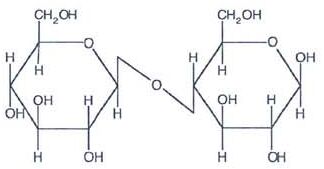 (A) α-1, 4 (B)1, β-2 (C) 3, α-1 (D) α4, 1 (Ε) β-1, 4
 and FAD (C) the electron gradient (D) the oxidation states of the complexes (E) molecular oxygen
 (B) FAD (C) reduced coenzyme Q (D) reduced cyt c (E) reduced O2
 to produce red Cu2O precipitate in an alkaline solution? Glucose, sucrose, lactose, maltose, or cellulose.
 . (10%)