所屬科目:學士後西醫-化學
21. One mole of an ideal gas at 20 °C is expanded isothermally and reversibly from 100 L to 200 L. Which statement is correct? (A)△ Sgas = 0 (B) △ Ssurr = 0 (C) △ Suniv = 0 (D) △ Sgas = Rln2 (E) △ Sgas = △Ssurr
62. Which of the statements below correctly describes the combustion of glucose, shown below? (A) Hydrogen in C6H12O6 is being reduced. (B) Oxygen in O2 is being oxidized. (C) Hydrogen in C6H12O6 is the reducing agent. (D) Oxygen in C6H12O6 is the oxidizing agent. (E) Carbon in C6H12O6 is being oxidized.
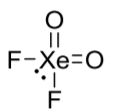
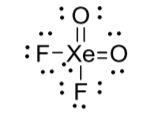
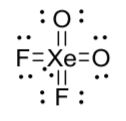
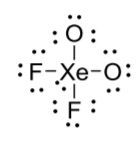
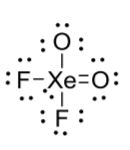
64. Select the Lewis structure for XeO2F2 which correctly minimizes formal charges. (A) (B) (C) (D) (E)
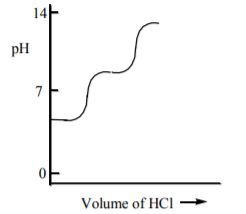
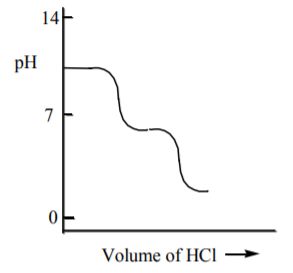
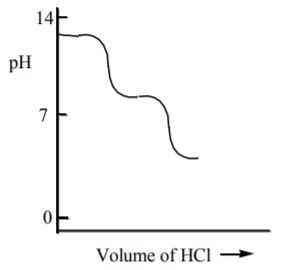
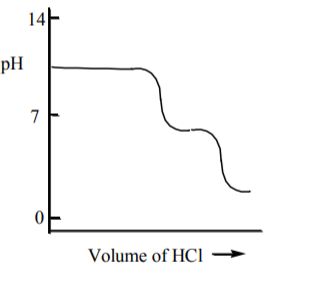
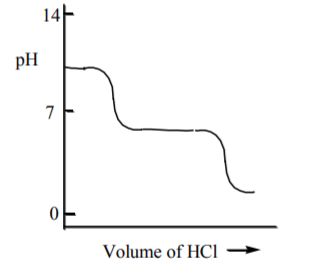
68. A diprotic acid H2A has Ka1 = 1 x 10⁻⁴ and Ka2 = 1 x 10⁻⁸ . The corresponding base A2– is titrated with aqueous HCl, both solutions being 0.1 mol/L. Which one of the following diagrams best represents the titration curve which will be seen? (A)(B) (C) (D) (E)
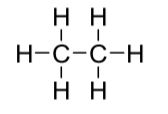
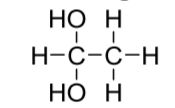
72. Which of the following molecules is an optically active molecule? (A) (B) (C) (D) (E) None of the above.
73. The structure below is the repeating unit of a (A) homopolymer formed by an addition reaction. (B) homopolymer formed by a condensation reaction. (C) copolymer formed by an addition reaction. (D) copolymer formed by a condensation reaction. (E) polyester formed by an addition reaction.
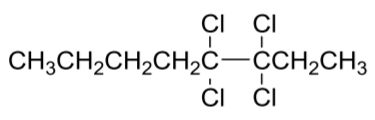
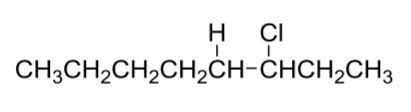
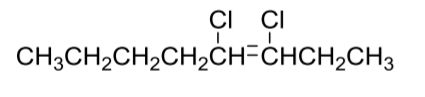
74. Identify the products of the reaction of 3-octene with chlorine. (A) (B) (C) (D) (E)
76. Consider the following reaction:. The equilibrium constant K is about 0.0196 at 115 °C. Calculate Kp at this temperature? (A) 0.196 (B) 0.624 (C) 0.285 (D) 22.9 (E) 2.9
77. The equilibrium constant for reaction (A) K 4 (B) 4K (C) 1/4 K (D) 1/K4 (E) - K 4
79. How long will it take to produce 18.2 g of Ag (atomic mass = 107.87 amu) from a solution of AgNO3 using a current of 10.00 amp? (F = 96500 C/mol) (A) 3.26✖103 s (B) 8.14✖102 s (C) 4.88✖103 s (D) 1.63✖103 s (E) 5.43✖103 s
81. Calculate E°cell and indicate whether the overall reaction shown is spontaneous or nonspontaneous. Overall reaction: MnO4–(aq) + 2H2O(l) + 3Co2+ (aq)MnO2(s) + 3Co3+(aq) + 4OH– (aq) (A) E°cell = –1.23 V, spontaneous (B) E°cell = –1.23 V, nonspontaneous (C) E°cell = 1.23 V, spontaneous (D) E°cell = 1.23 V, nonspontaneous (E) E°cell = –0.05 V, nonspontaneous
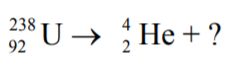
83. Identify the missing particle in the following equation:(A) (B) (C) (D)(E) None of the above.
 阿摩線上測驗
登入
 (A) Hydrogen in C6H12O6 is being reduced. (B) Oxygen in O2 is being oxidized. (C) Hydrogen in C6H12O6 is the reducing agent. (D) Oxygen in C6H12O6 is the oxidizing agent. (E) Carbon in C6H12O6 is being oxidized.
 (B)
 (C)
 (D)
 (E)
 (B)
 (C)
 (D)
 (E)
 (B)
 (C)
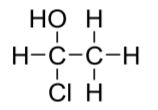 (D)
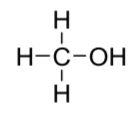 (E) None of the above.
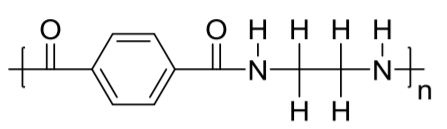 (A) homopolymer formed by an addition reaction. (B) homopolymer formed by a condensation reaction. (C) copolymer formed by an addition reaction. (D) copolymer formed by a condensation reaction. (E) polyester formed by an addition reaction.
 (A)
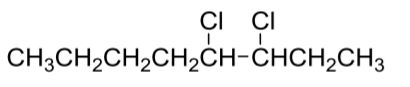 (B)
 (C)
 (D)
 (E)

 . The equilibrium constant K is about 0.0196 at 115 °C. Calculate Kp at this temperature? (A) 0.196 (B) 0.624 (C) 0.285 (D) 22.9 (E) 2.9
 (A) K 4 (B) 4K (C) 1/4 K (D) 1/K4 (E) - K 4
 Overall reaction: MnO4–(aq) + 2H2O(l) + 3Co2+ (aq)
 MnO2(s) + 3Co3+(aq) + 4OH– (aq) (A) E°cell = –1.23 V, spontaneous (B) E°cell = –1.23 V, nonspontaneous (C) E°cell = 1.23 V, spontaneous (D) E°cell = 1.23 V, nonspontaneous (E) E°cell = –0.05 V, nonspontaneous
 (A)
 (B)
 (C)
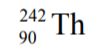 (D)
 (E) None of the above.