所屬科目:研究所、轉學考(插大)◆生物化學
1. Prokaryotic DNA polymerase III: (A) contains a 5' to 3' proofreading activity to improve the fidelity of replication. (B) does not require a primer molecule to initiate replication. (C) has a β-subunit that acts as a circular clamp to improve the processivity of DNA synthesis. (D) synthesizes DNA in the 3' to 5' direction. (E) synthesizes only the leading strand; DNA polymerase I synthesizes the lagging strand.
2. Which of these enzymes is not directly involved in methyl-directed mismatch repair in E. coli? (A) DNA glycosylase (B) DNA helicase II (C) DNA ligase (D) DNA polymerase III (E) Exonuclease I
3. Which of the following enzymes contains reverse transcriptase activity except (A) HIV polymerase (B) Helicase (C) Telomerase (D) HBV polymerase (E) All contain reverse transcriptase activity
4. Which of the following polymerases is critical for the biosynthesis of ribosomal RNA in eukaryotes? (A) DNA-dependent RNA polymerase I (B) DNA-dependent RNA polymerase II (C) DNA-dependent RNA polymerase III (D) RNA-dependent DNA polymerase (E) DNA-dependent DNA polymerase
5. Which of the following small nuclear RNAs (snRNA) binds to the intron at a position encompassing the A residue? (A) U1 (B) U2 (C) U4 (D) U5 (E) U6
6. Which of the following transcriptional factors recognizes TATA box in eukaryotes? (A) TFIIA (B) TFIIB (C) TFIID (D) TFIIE (E) TFIIH
7. Which of the following statements regarding structural proteins is true? (A) silk fibroin is made from a repeat of three amino acids where each third amino acid is Gly (B) a-keratin is composed of peptides that contain mostly a-helical structure with the exception of short sequences where the peptide folds back on itself (C) collagen has its own helical structure where three individual peptides are wound around each other in a left-handed helix (D) generally speaking, structural proteins are soluble in water (E) none of the above
8. A fast and common method for determining the concentration of protein in aqueous solution is: (A) tandem mass spectrometry. (B) salting in with ammonium sulfate. (C) drying a portion and weighing the solid. (D) measuring light absorption at 280 nm. (E) Edman degradation.
9. Hydrolysis of a peptide bond produces: (A) an alcohol and an amine (B) an amine and a carboxylic acid (C) a carboxylic acid and an anhydride (D) an amide and a carboxylic acid (E) an alcohol and an amide
10. The peptide hormone insulin is composed of two peptide held together primarily by what mechanism? (A) disulfide bonds between cysteine residues (B) charge-charge interactions between acidic and basic amino acids (C) extensive hydrogen bonding due to the relatively high serine and glutamine content (D) hydrophobic interactions (E) an amide bond formed from the R-groups of a glutamic acid residue and a lysine residue
11. By the end of last year, 76 antibodies (name with~mab) have been approved by the US Food and Drug Administration (FDA) for the treatment of human diseases. What is the molecular weight range of these antibodies (most of them if not all)? (A) 5 kDa to 9 kDa (B) 10 kDa to 30 kDa (C) 40 kDa to 80 kDa (D) 90 kDa to 120 kDa (E) 130 kDa to 180 kDa
12. Thromboxane is a vasoconstrictor and a potent hypertensive agent, and it facilitates platelet aggregation. Which of the following compounds is the substrate of cyclooxygenase for thromboxane production? (A) oleic acid (B) linoleic acid (C) palmitoleic acid (D) arachidonic acid (E) phosphatidylinositol
13. After binding to the activating ligand, cholecalciferol receptor performs an impressive array of functions. Which of the following events is not associated with cholecalciferol receptor activation? (A) The receptors are in the nucleus. (B) The receptors will be tyrosine-phosphorylated. (C) The receptors could bind to DNA and regulating gene expression. (D) Activated PPAR will associate with other cofactor/transcription factor. (E) The receptors will dimerize with RXR and illicit signal transduction.
14. Which of the following amino acids is not the precursor of hormones or neurotransmitters? (A) tyrosine (B) histidine (C) threonine (D) glutamate (E) tryptophan
15. Lecithin-cholesterol acyltransferase deficiency often associated with: (A) high LDL-cholesterol (B) low LDL-cholesterol (C) high HDL-cholesterol (D) low HDL-cholesterol (E) hyperglycemia
16. Which enzyme is the major regulatory enzyme in cholesterol biosynthesis? (A) acetyl-CoA carboxylase (B) 7α-hydroxylase (C) HMG-CoA reductase (D) HMG-CoA lyase (E) acyl-CoA synthetase
17. Familiar hypercholesterolemia has been associated with mutations in the genes encoding: (A) apolipoprotein B (APOB) (B) LDL receptor (LDLR) (C) proprotein convertase subtilisin/kexin type 9 (PCSK9) (D) Autosomal recessive hypercholesterolaemia (ARH) (E) all of above
18. In the fasting state, free fatty acids are predominantly generated within the adipocyte by the action of: (A) acyl-CoA synthetase (B) fatty acid synthase (C) hormone sensitive lipase (D) lipoprotein lipase (E) pancreatic lipase
19. According to the Michaelis-Menten equation, the apparent rate constant of an enzymatic reaction at very low substrate concentration corresponds to (A) (B) (C) (D)(E)
20. The presence of an inhibitor may affect the of an enzyme. A competitive inhibitor is expected to (A) increase both (B) decrease both (C) increase but decrease (D) increase unchanged (E) decrease unchanged
21. According to the enzyme nomenclature and classification system suggested by the International Union of Biochemistry, "kinases" and "phosphatases" are classified as _____and _____, respectively. (A) ligase and lyase (B) hydrolase and oxidoreductase (C) transferase and oxidoreductase (D) lyase and transferase (E) transferase and hydrolase
22. The maximum velocity of an enzymatic reaction is proportional to (A) substrate concentration [S] (B) total enzyme concentration (C) (D) (E)
23. Which descriptions about the compound above are correct? (A) proteoglycan (B) can up to 50,000 disaccharides per chain (C) the usual attach site in the protein core is ser/thr (D) can bind to protein by ionic interaction (E) chondroitin sulfate
24. Which descriptions about the compound above are NOT correct? (A) sensitive to chondroitinase treatment (B) serve as leukocytes homing molecules (C) can be degraded by hyaluronidase (D) existing in joint fluid (E) a type of glycosaminoglycans
25. The enzyme is involved in synthesizing the compounds above is (A) oligo-peptide transferase (B) Polymerase (C) Hyaluronic acid synthase (HAS) (D) GSK3 beta (E) chondroitinase
26. The biological functions of the above compound regulating a wide variety of biological activities, including (A) apoptosis (B) anti-angiogenesis (C) blood coagulation (D) tumor metastasis (E) protein sorting
27. Which following protein contains a calcium-binding domain? (A) hexokinase (B) glucokinase (C) phosphorylase phosphatase (D) phosphorylase (E) phosphorylase kinase
28. What enzyme can generate products of GDP and CO2? (A) UDP-glucose pyrophosphorylase (B) phosphoenolpyruvate carboxykinase (C) pyruvate dehydrogenase (D) pyruvate carboxylase (E) glutamate carboxylase
29. What is a critical enzyme for the conversion of galactose to glucose in the galactose metabolism? (A) phosphogalactomutase (B) phosphoglucomutase (C) UDP-galactose 4-epimerase (D) galactose 1-phosphate uridyl transferase (E) galactose convertase.
30. What hormone often functions as a paracrine? (A) eicosanoid hormones (B) catecholamine hormones (C) steroid hormones (D) corticotropins (E) oxytocin.
31. Which of the following mutations is most likely to cause a loss of gene function? (A) A change from a TAA codon to a TGA codon in the coding region (B) A silent mutation in the open reading frame (C) A nonsense mutation in the open reading frame (D) A missense mutation in the open reading frame (E) A sequence change in the 3' untranslated region.
32. Which of the following processes does not occur in the mitochondria of mammalian cells? (A) fatty acid biosynthesis (B) DNA synthesis (C) protein synthesis (D) the citric acid cycle (E) beta oxidation of fatty acids.
33. Which one of the following descriptions is WRONG ? (A) Caffeine is a trimethylxanthine (B) Theobromine is the hypoxanthine derivative of cocoa (C) Theophylline is a dimethylxanthine (D) Theobromine and theophylline are similar but lack the methyl group at N-1 and at N-7, respectively (E) None of them.
34. Which one of the following characteristics of histones is right? (A) H1 histones are the ones most tightly bound to chromatin (B) H2A, H2B, H3, and H4 form a tetramer (C) Acetylation of histones H2A and H2B is associated with the activation or inactivation of gene transcription (D) Acetylation of core histones is associated with chromosomal assembly during DNA replication (E) all are wrong.
35. Which of the molecule pair contains three carbon atoms? (A) pyruvate and alanine (B) oxaloacetate and aspartate (C) alpha-keto glutarate and glutamate (D) glucose and galactose (E) palmitic acid and hexadecanoic acid.
36. Which of the molecule stimulates carbamoyl phosphate synthetase I? (A) glutamate (B) N-acetyl glutamate (C) aspartate (D) N-acetyl aspartate (E) urea.
37. Which of the molecule is NOT involved in nitrogen fixation? (A) dinitrogenase (B) ferredoxin (C) ATP (D) acetoacetyl-CoA (E) pyruvate.
38. People on ketogenic diet obtain energy mainly from which of the molecule? (A) protein (B) lipid (C) carbohydrate (D) DNA (E) RNA.
39. A 42-year-old man is diagnosed with Arsenic poisoning, that inhibits which of the following enzymes of TCA cycle? (A) Citrate synthase (B) Malate dehydrogenase (C) Aconitase (D) a-ketoglutarate dehydrogenase (E) none of the above
40. NADH is produced during (A) Glycolysis (B) the oxidation of pyruvate (C) the Krebs cycle (D) all of the above (E) none of the above
41. Which of the following is an epimeric pair? (A) Glucose and fructose (B) Glucose and galactose (C) Galactose and mannose (D) Lactose and maltose (E) none of the above
42. Which of the following enzyme is NOT involved to metabolize fructose? (A) triose kinase (B) triose phosphate isomerase (C) hexokinase (D) fructokinase (E) none of the above
43. In prokaryotes, the Shine-Dalgarno sequence is required in which process: (A) transcription initiation. (B) transcription termination. (C) translation initiation. (D) translation elongation. (E) DNA replication.
44. In eukaryotic cells, amino-terminal signal sequences are important for targeting proteins to where: (A) nucleus. (B) proteasome. (C) cytosol. (D) cytoskeleton. (E) endomembrane system.
45. Tetracycline is an antibiotic that inhibits: (A) lipid synthesis. (B) ATP generation. (C) DNA repair. (D) protein translation. (E) DNA replication.
46. Codons can be recognized by anticodons of which molecule: (A) ribosomal RNA. (B) transfer RNA. (C) micro RNA. (D) amino acids. (E) initiation factors.
47. The force that drives an ion through a membrane channel depends upon: (A) the charge on the membrane. (B) the difference in electrical potential across the membrane. (C) the size of the channel. (D) the size of the ion. (E) the size of the membrane.
48. Most transduction systems for hormones and sensory stimuli that involve trimeric G proteins have in common all of the following except: (A) cyclic nucleotides. (B) nuclear receptors. (C) receptors that interact with a G protein. (D) receptors with multiple transmembrane segments. (E) self-inactivation.
49. Which one of the following statements about membranes is true? (A) Most plasma membranes contain more than 70% proteins. (B) Sterol lipids are common in bacterial plasma membranes. (C) Sterol lipids are common in human cell plasma membranes. (D) Sterol lipids are common in plant cell plasma membranes. (E) The plasma membranes of all cell types within a particular organism have basically the same lipid and protein composition.
50. One distinction between peptide and steroid hormones is that peptide hormones: (A) act through nonspecific receptors, whereas steroid hormones act through specific receptors. (B) are generally water-insoluble, whereas steroid hormones are water-soluble. (C) are more stable than steroid hormones. (D) bind to cell surface receptors, whereas steroid hormones bind to nuclear receptors. (E) bind to their receptors with high affinity, whereas steroid hormones bind with low affinity.
 阿摩線上測驗
登入
 (B)
 (C)
 (D)
 (E)
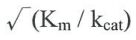
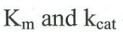 of an enzyme. A competitive inhibitor is expected to (A) increase both
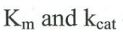 (B) decrease both
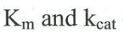 (C) increase
 but decrease
 (D) increase
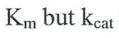 unchanged (E) decrease
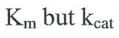 unchanged
 of an enzymatic reaction is proportional to (A) substrate concentration [S] (B) total enzyme concentration (C)
 (D)
 (E)
