所屬科目:研究所、轉學考(插大)◆普通化學
1. Equimolar amounts of the gases N2 and H2 are mixed in a closed container fitted with a piston (allowing the volume of the container to change, thus keeping the pressure constant). Calculate the ratio of the final volume of the container to the initial volume of the container when the reaction N2 + 3H2 → 2NH3 goes to completion. (A)2/3 (B)3/2 (C)1 (D)1/3 (E)none of these
2. The wavelength of light associated with the n = 2 to n = 1 electron transition in the hydrogen spectrum is 1.216 × m. By what coefficient should this wavelength be multiplied to obtain the wavelength associated with the same electron transition in the ion? (A)1/3 (B)3 (C)1/4 (D)9 (E)1/9
3. How many of the following 0.10 M solutions (CaBr2, KNO2, NH4C1O4, NH4NO2, NH4CN) are acidic? (A)3 (B)2 (C)1 (D)4 (E)5
4. Samples of the gases H2 and SO2 have equal masses and are at the same temperature and volume. Calculate the ratio of rates of impact with the walls (H2: SO2). (A)1 (B)6 (C)32 (D)90 (E)180
5. Sodium oxide (Na2O) crystallizes in a structure in which the ions are in a face-centered cubic lattice and the Nat ions are in tetrahedral holes. What is the number of ions in the unit cell? (A)2 (B)4 (C)6 (D)8 (E)none of these
6. What's (in M) in a 1.0 x M HNO3 solution? (A)1.4 (B)1.6 (C)1.72 (D)1.85 (E)2.0
7. Calculate (in M) in a 2.0 M solution of Na2CO3. (A)2.0 (B)3.0 (C)5.0 (D)7.0 (E)9.0
8. How many unpaired electrons are found in (square planar)? (A)0 (B)1 (C)2 (D)4 (E)5
9. Which of the following shows the bonds in order of decreasing polarity? (A)N-CI, P-Cl, As-C (B)P-C1, N-Cl, As-Cl (C)As-Cl, N-C1, P-Cl (D)P-Cl, As-Cl, N-Cl (E)As-Cl, P-Cl, N-CI
10. A 50.0-mL sample of 2.0 x M CuNO3 is added to 50.0 mL of 4.0 M NaCN. reacts with to form the complex ion :
What's (in M) at equilibrium? (A)0.5 (B)1.0 (C)1.3 (D)1.5 (E)2.0
11. What's equilibrium (in M) in Problem 10? (A)1.2 (B)2.0 (C)3.6 (D)5.1 (E)7.4
12. For how many of the following species (Be2, Si2, H2, O2) does the bond order decrease if one electron is added? (A)0 (B)1 (C)2 (D)3 (E)4
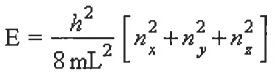
13. The energy equation for a particle in a cubic box of dimensions is E = h²/8mL²
How many degenerate energy levels have energy equal to 14 h²/8mL2? (A)1 (B)3 (C)6 (D)8 (E)12
14. How many of the following molecules (IF5, PF5, SOF4, BrF3, SF4) have trigonal bipyradimal structures? (A)1 (B)2 (C)3 (D)4 (E)5
15. How many molecules in Problem 14 have a hybridization of dsp³ on the central atom? (A)1 (B)2 (C)3 (D)4 (E)5
16. What's the total number of structural and geometric isomers of C3H4? (A)3 (B)2 (C)5 (D)6 (E)4
17. Which of the following is paramagnetic? (A) (strong field) (B) (C) (strong field) (D) (strong field) (E)
18. Consider the following reduction potentials:
For a galvanic cell employing the Cu, and Pb, couples, calculate the maximum amount of work (in kJ) that would accompany the reaction of 1 mol of lead under standard conditions. (A)-22.6 (B)-34.5 (C)-90.7 (D)-45.3 (E)-69.0
19. At a particular temperature, N2O5 decomposes according to a first-order rate law with a half-life of 3.0 s. If the initial concentration of N2O5 is 1.0 x molecules/cm³, what will be the concentration (in molecules/cm³) after 12.0 s? (A)6.25 (B)25.0 (C)12.5 (D)50.0 (E)3.13
20. For the reaction 2 A + B → products
the following mechanism is proposed:
A+BM⇌ (rate constant: k₁ and )
A + M → products (rate constant k2)
Use the steady-state approximation to determine the rate law. (A) (B)(C)(D) (E)
21. For the reaction CH3CHCH2(g) + HCl(g) → CH3CHC1CH3(g)
a possible mechanism is
2 HCl ⇌(HCl)2 (rate constant: k₁ and k-1, fast equilibrium)
CH3CHCH2 + HCl ⇌Complex (rate constant: k2 and , fast equilibrium)
Complex + (HCl)2 →CH3CHCICH3 + 2HCl (rate constant k3, slow)
What's the rate law for this reaction? (A)(B) (C) (D) (E)
22. The H-NMR spectra for a certain molecule have a triplet signal and a quartet signal, with area ratio 3:2. Which of the following molecules is possible? (A)CH3OCH2Cl (B)CH2CICHCl2 (C)CHC12OCH3 (D)CH3CH2Cl (E)CH3CH2COOH
23. A student gave a molecule the following name: 3-methyl-4-isopropylpentane. What is the correct IUPAC name? (A)4-isopropyl-3-methylpentane (B)2-isopropyl-3-methylpentane (C)1,1,2,3-tetramethylpentane (D)2,3,4-trimethylhexane (E)3,4-dimethylheptane
24. When C4H8 is treated with water and H2SO4, a tertiary alcohol is produced. Which of the following structures could represent C4H8 in this reaction? (A)CH3CH=CHCH3 (B)CH3CH2CH=CH2 (C)(CH3)2C=CH2 (D)CH3CH2CH2CH3 (E)none of these
25. What's the total number of aldehydes and ketones that have the formula ? (A)6 (B)5 (C)9 (D)8 (E)7
二、計算題: 1. The observed solubility of the salt MX in 4.0 M strong acid is 2.0 x M. The Ka value for the acid HX is 1.0 x . Calculate the value of Ksp for the salt MX.
(a)(in atm L),
 阿摩線上測驗
登入
 m. By what coefficient should this wavelength be multiplied to obtain the wavelength associated with the same electron transition in the
 ion? (A)1/3 (B)3 (C)1/4 (D)9 (E)1/9
 ions are in a face-centered cubic lattice and the Nat ions are in tetrahedral holes. What is the number of
 ions in the unit cell? (A)2 (B)4 (C)6 (D)8 (E)none of these
 (in
 M) in a 1.0 x
 M HNO3 solution? (A)1.4 (B)1.6 (C)1.72 (D)1.85 (E)2.0
 (in
 M) in a 2.0 M solution of Na2CO3. (A)2.0 (B)3.0 (C)5.0 (D)7.0 (E)9.0
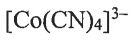 (square planar)? (A)0 (B)1 (C)2 (D)4 (E)5
 M CuNO3 is added to 50.0 mL of 4.0 M NaCN.
 reacts with
 to form the complex ion
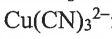 :

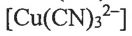 (in
 M) at equilibrium? (A)0.5 (B)1.0 (C)1.3 (D)1.5 (E)2.0
 (in
 M) in Problem 10? (A)1.2 (B)2.0 (C)3.6 (D)5.1 (E)7.4
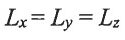 is E = h²/8mL²
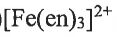 (strong field) (B)
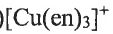 (C)
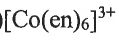 (strong field) (D)
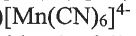 (strong field) (E)
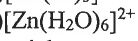

 and Pb,
 couples, calculate the maximum amount of work (in kJ) that would accompany the reaction of 1 mol of lead under standard conditions. (A)-22.6 (B)-34.5 (C)-90.7 (D)-45.3 (E)-69.0
 molecules/cm³, what will be the concentration (in
 molecules/cm³) after 12.0 s? (A)6.25 (B)25.0 (C)12.5 (D)50.0 (E)3.13
 )
 (B)
 (C)
 (D)
 (E)

 , fast equilibrium)
 (B)
 (C)
 (D)
 (E)

 ? (A)6 (B)5 (C)9 (D)8 (E)7
 M. The Ka value for the acid HX is 1.0 x
 . Calculate the value of Ksp for the salt MX.
 (in atm L),
 (in R),
 (in atm L), and