所屬科目:研究所、轉學考(插大)◆普通化學
3. How many protons, neutrons, and electrons are in ? (A)25 protons. 32 neutrons, 27 clectrons (B)27 protons, 25 neutrons, 32 electrons (C)25 protons, 27 neutrons, 32 electrons (D)27 protons, 32 neutrons, 25 clectrons (E)32 protons, 27 neutrons. 30 electrons
4. A compound contains 49.48% C. 5.15% H, 16.50% O, and 28.87% N by mass. What is the empirical formula of this compound? (A)C4H5N2O (B)C6H5O3N (C) (D)C4H8O3N (E)
6. At a temperature, a 5 liter flask contains 5 moles of Cl2 gas, 1.5 mole of NOCI gas, and mole of NO gas at chemical equilibrium. What is the for the following reaction? (A) (B) (C)(D) (E)
7. At 25°C, what is the pH of 1 x M NaOH aqueous solution? (A)4(B)7 (C)10 (D)12 (E)14
8. What is the percent dissociation of 0.5 M acetic acid at 25°C ?(at 25°C acetic acid Ka=) (A)0.2% (B)0.4% (C)0.6% (D)0.8% (E)1.0%
9. At 25°C, which of the following substance has an standard enthalpy of formation equal to zero ? (A)O2(g) (B)H2O(g) (C)CH4(g) (D)CI(g) (E)CO(g)
12. An aqueous solution is prepared by adding 50.0 mL of 0.050 M HBr aqueous solution to 150.0 mL of 0.10 M HI aqueou us solution. Calculate the of this aqucous solution(M)? (HBr and HI are both considered strong acids) (A)0.022 (B)0.044 (C)0.066 (D)0.088 (E) 0.11
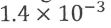
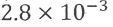
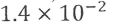
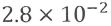
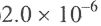
13. Ascorbic acid, or vitamin C (C6H8O6), is an essential vitamin. If a typical tablet contains 500.0 mg vitamin C, what amount (moles) of v ntained in 5 tablets? (A) (B)(C) (D) (E)0.14
14. At temperature 1000 K, equilibrium constant Kp=0.25 for the reaction What is the value of equilibrium constant K(Ke) at this temperature? (A)10.3(B)20.5 (C)30.1 (D)40.1 (E)50.2
15. A buffered solution is made by adding 40.1 g NH4CI to 1.00 L of a 0.75 M solution of NH3, Calculate the pH of the final solution. (Assume no volume change.) ((A)8.25 (B)9.25 (C)10.25 (D)11.25(E)12.25
19. Which of the following would you expect to have the lowest v vapor pressure at 25°C? (A)CH3OCH3 (B)CH3CH2OH (C)CH3CH2CH3(D)CH3CH2CH2CH3(E)H2O
21. The reaction 2A+B→C has the following proposed mechanism. step 1: A+B⇌D (fast equilibrium) step 2:D+B→E step 3:E+A→C+B If step 2 is the rate-determining step, what should be the rate of formation of C? (A)k[A](B)k[A]2[B](C)k[A][B]2 (D)k[A][B](E)k[A]2[B]2
22. Which of the following is diamagnetic? (A)N2 (B) (C)O2 (D) (E)
23. Which of the following statements is true? (A) a triple bond is composed of two a bonds and one x bond. (B)σ bonds result from the head-to-head overlap of atomic orbitals. (C) Free rotation may occur about a double bond. (D) x bonds have electron density on the internuclear axis. (E) the Lewis structure for C2H2 shows single bonds and one double bond.
26. How many resonance structures does the have? (A)0 (B)1 (C)2 (D)3 (E)4
28. For any operating concentration cell, which of the following statements is true? (A)E and E°must both be positive. (B)E must be zero and E°must be positive (C)E° must be zero and E must be positive. (D)E and E° must both be negative. (E)E° must be positive and E must be negative.
29. For any galvanic cell to operate, which of the following statements is true? (A)△G° and E° must both be positive. (B)△G° must be negative and E° must be positive. (C)△G° and E' must both be negative. (D)△G° must be positive and E° must be negative. (E)△G° must be zero and E° must be negative.
30. In which case must a reaction be spontaneous at all temperatures? (A)△H is positive, and △S is positive. (B)△H is negative. and △S is negative. (C)△H is positive, and △S is negative. (D)△H is negative, and △S is positive. (E)△H = 0, and △S = 0.
31. Which is the percent dissociation of HF in a solution containing both 1.0 M HF and 1.0 M NaF ? (A)0.072%(B)0.27% (C)0.72% (D)2.7%(E)7.2%
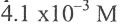
33. Consider a solution madc by mixing 500.0 mL of 4.0 M NH3 and 500.0 mL of 0.20 M Which is the concentration of Ag at equilibrium ? (A)0.4M (B)0.20M (C)0.10M(D) (E)
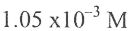
34. Calculate the of a 1.0 M H2SO4 aqucous solution? (A)2.024M (B)2.0M (C)1.24M (D)1.012 M. (E)M
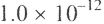
35. At 25°C. the equilibrium constant for A + 2B⇌3C is 1.0 x . Which is the equilibrium constant for 6C⇌2A+ 4B at same temperature? (A) (B) (C) (D)(E)
39. What is the general formula for superoxides? (A)MO (B)M2O2(C)M2O (D)M2O3(E)MO2
 阿摩線上測驗
登入
 ? (A)25 protons. 32 neutrons, 27 clectrons (B)27 protons, 25 neutrons, 32 electrons (C)25 protons, 27 neutrons, 32 electrons (D)27 protons, 32 neutrons, 25 clectrons (E)32 protons, 27 neutrons. 30 electrons
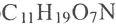 (D)C4H8O3N (E)
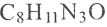
 mole of NO gas at chemical equilibrium. What is the
 for the following reaction?
 (A)
 (B)
 (C)
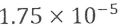 (D)
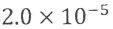 (E)
 M NaOH aqueous solution? (A)4(B)7 (C)10 (D)12 (E)14
 ) (A)0.2% (B)0.4% (C)0.6% (D)0.8% (E)1.0%
 of this aqucous solution(M)? (HBr and HI are both considered strong acids) (A)0.022 (B)0.044 (C)0.066 (D)0.088 (E) 0.11
 (B)
 (C)
 (D)
 (E)0.14

 What is the value of equilibrium constant K(Ke) at this temperature? (A)10.3(B)20.5 (C)30.1 (D)40.1 (E)50.2

 (A)8.25 (B)9.25 (C)10.25 (D)11.25(E)12.25
 (C)O2 (D)
 (E)

 have? (A)0 (B)1 (C)2 (D)3 (E)4
 (A)0.072%(B)0.27% (C)0.72% (D)2.7%(E)7.2%

 at equilibrium ? (A)0.4M (B)0.20M (C)0.10M(D)
 (E)
 of a 1.0 M H2SO4 aqucous solution?
 (A)2.024M (B)2.0M (C)1.24M (D)1.012 M. (E)
 M
 . Which is the equilibrium constant for 6C⇌2A+ 4B at same temperature? (A)
 (B)
 (C)
 (D)
 (E)
