所屬科目:研究所、轉學考(插大)-有機無機
1. What is the bond angle between the two N,N-dimethyl groups of N,N-dimethylpropionamide? (A) 90° (B) 107° (C) 109.5° (D) 120° (E) 180°
2. Which of the following compounds possess the most acidic C-H bond (as highlighted). (Image of 5 compounds A-E)(A)(B)(C)(D)(E)
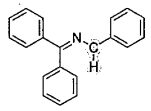
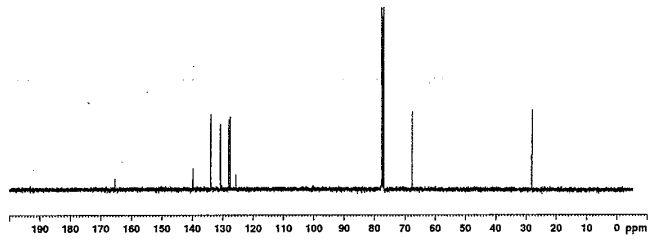
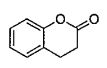
3. Determine the identity of the compound based on 13C NMR shown below. (Image of 13C NMR spectrum and 5 compounds A-E)(A) (B)(C)(D)(E)
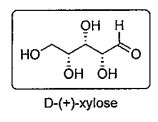
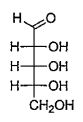
4. Which of the following is a valid Fischer projection for D-(+)-xylose? (Image of D-(+)-xylose and 5 Fischer projections A-E)(A)(B)(C)(D)(E)
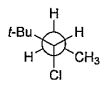
5. Which of the following Newman projections represents the lowest energy conformation of (S)-3-chloro-2,2-dimethylpentane? (Image of 5 Newman projections A-E)(A)(B)(C)(D)(E)
Part II: Written Questions (Total: 40 points) Note: 6. The electron configuration of Mn is (A) [Ar]4s03d⁷ (B) [Ar]4s¹3d⁵ (C) [Ar]4s¹3d⁶ (D) [Ar]4s²3d⁵ (E) [Ar]4s²3d6
7. Which of the following n' → n transitions in the emission spectrum of atomic hydrogen belong to the Balmer series? (A) 5→4 (B) 5→3 (C) 4→3 (D) 3→2 (E) 4→1
8. Which of the following water solution is more acidic? (A) 1M HCl (B) 1M HNO₃ (C) 1M H₂SO₄ (D) 1M CH₃COOH (E) 1M NaOH
9. Regarding "ionic liquid", which of the following is incorrect ? (A) it is a green solvent beneficial to the environment (B) it is a kind of salt (C) its melting point is generally below room temperature (D) its structure has a significantly low symmetry (E) it is highly stable with negligible vapor pressure
10. There are three types of cubic unit cells, including simple cubic (SC), face-centered cubic (FCC), and body-centered cubic (BCC). Which of the following is correct ? (A) BCC has 4 atoms per unit cell (B) FCC has the largest unit cell (C) The coordination number of SC is 8 (D) FCC is alternatively called hexagonal close-packed structure (E) In BCC, the atomic packing factor is 0.68
11. Which of the following statements is correct ? (A) The conductivity of metal raises with the increase of temperature (B) the addition of boron into the silicon forms the n-type semiconductor (C) the decrease of temperature enhances the conductivity of semiconductors (D) because both valence band and conduction band are full, the electrons can not move so that the insulator is not conductive (E) because all the valence electrons of carbon form the covalent bonds, the diamond is not conductive
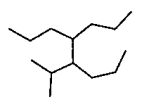
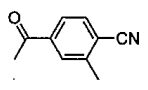
12. How many of the following molecules or ions contain a C3 axis and a plane?
(A) 4 (B) 3 (C) 2 (D) 1 (E) 0
13. What is the formal charge of oxygen in carbon monoxide? (A) +2 (B) +1 (C) 0 (D) -1 (E) -2
14. The following diagram summarizes the reduction potentials (εº) of different chromium species. Please calculate the ε from to Cr (Value of X).
(A) -2.22 (B) -1.32 (C) -0.74 (D) -0.66 (E) -0.44
15. There are two groups of solutions: group A includes the water solutions of 0.01M AgNO₃, 0.01M Pb(NO₃)₂, 0.01M Ba(NO₃)₂, and 0.01M Ni(NO₃)₂. Group B includes the water solution of 0.01M NaCl, 0.01M Na₂SO₄, and 0.01M Na₂S. If we take each solution in group A to mix with equal volume of each solution in group B, which of the following statements is correct ? (A) There are 8 solutions with precipitation (B) there are 5 solutions with no precipitation (C) there are 4 solutions with black precipitation (D) there are 5 solutions with white precipitation (E) none of the mixtures with Ni(NO₃)₂ has the precipitation
(a)
(b)
(c)
(d)
(e)
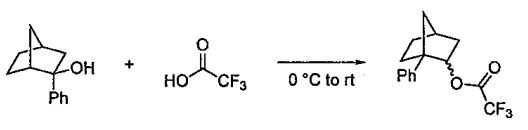
(a) Draw the lowest energy conformations of 5-A and 5-(B)
(b) Assuming that the reaction proceeds through an SN2 reaction, which bromohydrin (5-A or 5-B) reacts at a faster rate and why?
(A) According to the fact, please draw the most possible Lewis structure of "Sulfur dioxide" and determine the bond order of S-O bond.
(B) Qualitatively explain why the S-O bonds are shorter in Sulfur dioxide than in sulfur monoxide.
(C) What is the point group of "Sulfur dioxide"?
(D) Please construct the character table of the point group of "Sulfur dioxide".
(E) How many vibration modes are IR active?
2. (A) Determine the possible microstates for a d⁴ configuration and use them to prepare a microstate table.
(B) Reduce this table to its component free-ion terms, and identify the ground-state term.
 阿摩線上測驗
登入
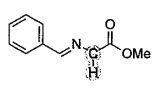 (B)
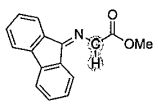 (C)
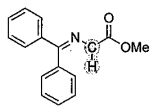 (D)
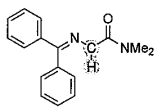 (E)
 (A)
 (B)
 (C)
 (D)
 (E)
 (A)
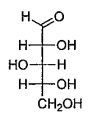 (B)
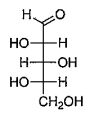 (C)
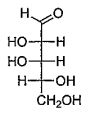 (D)
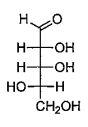 (E)
 (B)
 (C)
 (D)
 (E)
 plane?
 (A) 4 (B) 3 (C) 2 (D) 1 (E) 0
 to Cr (Value of X).
 (A) -2.22 (B) -1.32 (C) -0.74 (D) -0.66 (E) -0.44