所屬科目:研究所、轉學考(插大)-有機無機
1.What is the IUPAC name of the following compound? (A) 1,4-dimethylbicyclo[3.3.0]octane (B)2,5-dimethylbicyclo[3.3.0]octane (C) 2,7-dimethylbicyclo[3.3.0]octane (D)1,6-dimethylbicyclo[3.3.0]octane (E) 3,8-dimethylbicyclo[3.3.0]Joctane
2.Which of the following choices represents the wedge/dash drawing of the Fischer projection shown on the left? (A)I (B) II (C) II] (D) IV (E) V
4.Describe the major product(s) of the reaction below.
(A) only one stereoisomer. (B) an equal mixture of enantiomers. (C) a mixture of diastereomers and their enantiomers. (D) a mixture of constitutional isomers. (E) a mixture of constitutional isomers and their enantiomers.
6.Explain whether the major product(s) of the following reaction is optically active and why this is the case. (A) The product is optically acive because a chiral center is created at the right side vertex of the ring. (B) The product is optically active because it has a chiral center at a terminal carbon. (C) The product is not optically active because it has a chiral center that is part of the ring. (D) The product is not optically active because its chiral center is not part of the ring. (E) The product is not optically active because it has no chiral centers.
9.What reagents are needed to carry out the conversion shown? (A) i) SOCl2(pyridine; ii) LiAIH4; ii) H2O. (B) i) NaCN; it) LiAIH4; iii) H2O. (C)i) NaN3: i) LiAIH4; ii) H2O. (D) i) SOCI2; ii) excess NH3; ili) excess LiAIH4; iv) H2O. (E) i) HNO3/H2SO4; ii) Ha/Pt.
15. Predict the major product for the reaction shown. (A)1-ethylcyclohexanol (B)2-ethoxy-1-ethylcyclohexane (C)1-ethoxy-2-ethylcyclohexane (D) 2-ethyicyclohexanol (E)1-ethoxy-1-ethylcyclohexane
18. What is the point group of the below complex shown? [2 pts] (A)C2 (B) C2v (C) C3v (D) D2h (E) Oh
19. Organometallic complexes of the late transition metals tend not to obey the 18-electron rule; many of them follow a 16- electron rule. Which of the complexes below is a 16-electron species? [2 pts] (A)1 and 2 (B) 2 and 3 (C) 3 and 4 (D) 4 and 5 (E) 1 and 5
20. In which of the following complexes is there a 1-electron donor ligand? [2 pts] (A)1 and 2 (B) 3 and 4 (C) 1 only (D) 2 only (E) 3 only
21. N2 can act as a ligand in a similar way as CO. In comparison to CO, which of the following is true?[2 pts] (A)It is a better σ donor and i acceptor. (B) It is a better σ donor but poorer tt acceptor. (C) It is a poorer σ donor but a better x acceptor. (D) It is a poorer σ donor and it acceptor. (E) None of above is correct
22. Which of the following diphosphine is BINAP? (BINAP = 2,2-bis(diphenylphosphino)-1, 1'-binaphthy) [2 pts] (A)1 (B)2 (C) 3 (D) 4
25. In β-Hydrogen elimination, the following are true except: [2 pts] (A)The metal center must have 18 valence electrons (B) The metal center must have a vacant site (C) There must be a hydrogen atom at the B position (D) The M-C-C-H unit must be able to achicve coplanarity (E) None of above is correct
26 Which of the following geometry isomers is correct?[2 pts] (A) I (B) II (C) III (D)IV
27. What are the ALL possible magnetic moments of Co(Il) in tetrahedral, octahedral, and square-planar complexes? [2 pts] I. Co(Ⅱ) is d7. Il. In tetrahedral complexes, it is generally high spin and has 3 unpaired electrons;Ⅲ. In octahedral complexes, it is also typically high spin and also has 3 unpaired electrons; in square planar complexes, it has 1 unpaired electron. IV. The magnctic moments can be calculated as μ = n(h+1) = 3.9, 3.9, and 1.6 mB, respectively. (A) I, II (B) I, II, II (C) I, II, II, IV (D) II, II, IV
28. Which of the following spin arrangement is NOT correct? [2 pts] (A) II, II(B) I, III (C) I, IV (D) II, IV
29. NF is a known molecule.Which of the following description is correct? [2 pts] (A) I, II, Ⅲ (B) II, III, IV (C) I, III, IV (D) I, II, IV
30. Predict the products of these reactions [2 pts]I. (a) is cis-[PtCl2(NO2)(NH3)]- II. (b) is trans-[PtCI(NO2)2(NH3)]-III. CI- has a larger trans effect than NH3, but smaller trans influence than NH3IV. NO2- has a larger trans effect than either Cl- or NH3. (A) I and II (B) I, II, III (C) I, I, IV (D) I, I, II, and IV III. IV.
(a)
(b)
(c)
1.Sketch the products of the reaction when the following complex loses (a) one PPh3 or (b) one CO. It is important to note that losing one CO can result in two possible products. Draw all products.
2. Suggest plausible products for the following reaction:
3. The complex Rh(Me)(PPh3)3 reacts with D2 to produce Rh(D)(PPh3)2(PPh2 {C6H4D}) and CH4. Give reactions that explain by naming Reaction A, Reaction B, Reaction C, and drawing Structure A below.
 阿摩線上測驗
登入
 (A) 1,4-dimethylbicyclo[3.3.0]octane (B)2,5-dimethylbicyclo[3.3.0]octane
(C) 2,7-dimethylbicyclo[3.3.0]octane (D)1,6-dimethylbicyclo[3.3.0]octane
(E) 3,8-dimethylbicyclo[3.3.0]Joctane
 (A)I (B) II (C) II] (D) IV (E) V
 (A) only one stereoisomer.
(B) an equal mixture of enantiomers.
(C) a mixture of diastereomers and their enantiomers.
(D) a mixture of constitutional isomers.
(E) a mixture of constitutional isomers and their enantiomers.
 (A) The product is optically acive because a chiral center is created at the right side vertex of the ring.
(B) The product is optically active because it has a chiral center at a terminal carbon.
(C) The product is not optically active because it has a chiral center that is part of the ring.
(D) The product is not optically active because its chiral center is not part of the ring.
(E) The product is not optically active because it has no chiral centers.
 (A) i) SOCl2(pyridine; ii) LiAIH4; ii) H2O.
(B) i) NaCN; it) LiAIH4; iii) H2O.
(C)i) NaN3: i) LiAIH4; ii) H2O.
(D) i) SOCI2; ii) excess NH3; ili) excess LiAIH4; iv) H2O.
(E) i) HNO3/H2SO4; ii) Ha/Pt.
 (A)1-ethylcyclohexanol
(B)2-ethoxy-1-ethylcyclohexane
(C)1-ethoxy-2-ethylcyclohexane
(D) 2-ethyicyclohexanol
(E)1-ethoxy-1-ethylcyclohexane
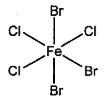 (A)C2 (B) C2v (C) C3v (D) D2h (E) Oh
 (A)1 and 2 (B) 2 and 3 (C) 3 and 4 (D) 4 and 5 (E) 1 and 5
 (A)1 and 2 (B) 3 and 4 (C) 1 only (D) 2 only (E) 3 only
 (A)1 (B)2 (C) 3 (D) 4
 (A) I (B) II (C) III (D)IV
 (A) II, II(B) I, III (C) I, IV (D) II, IV
 (A) I, II, Ⅲ (B) II, III, IV (C) I, III, IV (D) I, II, IV


