阿摩線上測驗
登入
首頁
>
研究所、轉學考(插大)-有機無機
>
113年 - [非官方正解]113 國立臺灣大學_碩士班招生考試:有機無機#119944
> 試題詳解
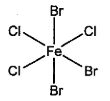
18. What is the point group of the below complex shown? [2 pts]
(A)C
2
(B) C
2v
(C) C
3v
(D) D
2h
(E) O
h
答案:
登入後查看
統計:
尚無統計資料
詳解 (共 1 筆)
木公診間裝潢中
B1 · 2025/04/17
#6376802
What is the point gr...
(共 69 字,隱藏中)
前往觀看
0
1
相關試題
19. Organometallic complexes of the late transition metals tend not to obey the 18-electron rule; many of them follow a 16- electron rule. Which of the complexes below is a 16-electron species? [2 pts] (A)1 and 2 (B) 2 and 3 (C) 3 and 4 (D) 4 and 5 (E) 1 and 5
#3240018
20. In which of the following complexes is there a 1-electron donor ligand? [2 pts] (A)1 and 2 (B) 3 and 4 (C) 1 only (D) 2 only (E) 3 only
#3240019
21. N2 can act as a ligand in a similar way as CO. In comparison to CO, which of the following is true?[2 pts] (A)It is a better σ donor and i acceptor. (B) It is a better σ donor but poorer tt acceptor. (C) It is a poorer σ donor but a better x acceptor. (D) It is a poorer σ donor and it acceptor. (E) None of above is correct
#3240020
22. Which of the following diphosphine is BINAP? (BINAP = 2,2-bis(diphenylphosphino)-1, 1'-binaphthy) [2 pts] (A)1 (B)2 (C) 3 (D) 4
#3240021
23. One of the following complexes does not contain a dihydrogen ligand. Which is likely? (note: dppe = 1,2-bis(diphenylphosphino)ethane; Ph = phenyl;iPr = isopropyl) [2 pts] (A)MoH2(CO)(dppe)2 (B) WH2(CO)(dppe)2 (C) RuH4(PPh3)3 (D) [ReH2(PiPr3)3(CO)3]+
#3240022
24. The primary decomposition pathway for transition metal alkyls is: [2 pts] (A)a-Hydrogen elimination (B) B-Hydrogen elimination (C) v-Hydrogen elimination (D) Reductive elimination (E) Oxidation addition
#3240023
25. In β-Hydrogen elimination, the following are true except: [2 pts] (A)The metal center must have 18 valence electrons (B) The metal center must have a vacant site (C) There must be a hydrogen atom at the B position (D) The M-C-C-H unit must be able to achicve coplanarity (E) None of above is correct
#3240024
26 Which of the following geometry isomers is correct?[2 pts] (A) I (B) II (C) III (D)IV
#3240025
27. What are the ALL possible magnetic moments of Co(Il) in tetrahedral, octahedral, and square-planar complexes? [2 pts] I. Co(Ⅱ) is d7. Il. In tetrahedral complexes, it is generally high spin and has 3 unpaired electrons;Ⅲ. In octahedral complexes, it is also typically high spin and also has 3 unpaired electrons; in square planar complexes, it has 1 unpaired electron. IV. The magnctic moments can be calculated as μ = n(h+1) = 3.9, 3.9, and 1.6 mB, respectively. (A) I, II (B) I, II, II (C) I, II, II, IV (D) II, II, IV
#3240026
28. Which of the following spin arrangement is NOT correct? [2 pts] (A) II, II(B) I, III (C) I, IV (D) II, IV
#3240027
相關試卷
114年 - [非官方正解]114 國立臺灣大學_碩士班招生考試:有機無機#125983
2025 年 · #125983
113年 - [非官方正解]113 國立臺灣大學_碩士班招生考試:有機無機#119944
2024 年 · #119944
112年 - 112 臺灣聯合大學系統_碩士班招生考試_化學類:有機化學#119334
2023 年 · #119334
110年 - [非官方正解]110 國立臺灣大學_碩士班招生考試_化學研究所化學組:有機無機#102186
2021 年 · #102186
 阿摩線上測驗
登入
阿摩線上測驗
登入
阿摩線上測驗
登入
阿摩線上測驗
登入