所屬科目:研究所、轉學考(插大)◆普通化學
1. Which among the following represent a set of isotopes? Atomic nuclei containing
I. 20 protons and 20 neutrons. II. 21 protons and 19 neutrons. III. 22 neutrons and 18 protons. IV. 20 protons and 22 neutrons. V. 21 protons and 20 neutrons. (A) I, II, III ; (B) III, IV ; (C) I, V ; (D) I, IV and II, V ; (E) No isotopes are indicated.
2. Which of the following is not the correct chemical formula for the compound named? (A) Al(OH)2 aluminum hydroxide; (B) LiCN lithium cyanide; (C) Fe2O3 iron(III) oxide; (D) ZnS zinc sulfide ; (E) Mg(C2H3O2)2 magnesium acetate
3. Indium has atomic number 49 and atomic mass 114.8 g. Naturally occurring indium contains a mixture of indium-112 and indium-115 in an atomic ratio of approximately(A) 25/75. ; (B) 6/94. ; (C) 50/50. ; (D) 94/6. ; (E) 75/25.
4. Which of the following compounds has the same percent composition by mass as styrene, C8H8? (A) acetylene, C2H2; (B) benzene, C6H6; (C) cyclobutadiene, C4H4; (D) a-ethyl naphthalene, ; (E) all of these.
5. When the equation NH3 + O2 → NO + H2O is balanced with the smallest set of integers, the sum of the coefficients is (A) 4 ; (B) 12; (C) 14 ; (D) 19 ; (Ε) 24
6. What is the net ionic equation for the reaction of aqueous sodium hydroxide with aqueous nitric acid? (A) (B)(C)(D)(E)
7. Which of the following reactions does not involve oxidation-reduction? (A) CH4 + 2O2 → 2H2O + CO2 ; (B) Mg + 2HI → MgI2 + H2; (C) 2Na + 2H2O → 2NaOH + H2 (D) MnO2 + 4HI → I2 + 2H2O + MnI2 ; (E) LiOH + HCl → H2O + LiCl
8. How many of the following gases at STP are less dense than air at STP?
NH3, He, Kr, and F2 (A) 1 ; (B) 2 ; (C) 3 ; (D) 4 ; (E) 0
9. The ratio of average kinetic energies per ideal gas molecule (H2: SO2) at the same temperature and pressure. (S: 32; O: 16; H: 1) (A) 1.0; (B) 0.18 ; (C) 32 ; (D) 5.6; (E) none of these.
10. Consider the equation 2A(g) ⇌ 2B(g) + C(g). At a particular temperature, K = 1.6 × 10⁴. If you mixed 5.0 mol B, 0.10 mol C, and 0.0010 mol A in a 1-L container, in which direction would The reaction initially proceeds? (A) To the left. ; (B) To the right. ; (C) The above mixture is the equilibrium mixture. ; (D) We cannot tell from the information given. ; (E) none of these.
11. The acids HC2H3O2 and HF are both weak, but HF is a stronger acid than HC2H3O2. HCl is a strong acid. Order the following according to base strength. (A) (B) (C) (D)(E) none of these.
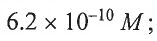
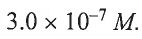
12. Calculate in a 0.012 M solution of HCN, (A) (B)(C) (D) (E)
13. Methyl orange is an indicator with a . Its acid form, , is red, while its base form, In, is yellow. At pH 6.0, the indicator will be (A) red.; (B) orange. ; (C) yellow. ; (D) blue. ; (E) not enough information.
14. Suppose you add 45 J of heat to a system, let it do 10. J of expansion work, and then return the system to its initial state by cooling and compression. Which statement is true for this process? (A) ΔΗ < ΔΕ ; (B) ∆H = 70. J ; (C) The change in the internal energy for this process is zero. (D) The work done in compressing the system must exactly equal the work done by the system in the expansion step. ; (E) All the statements are false.
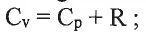
15. Which of the following statements is true for a monatomic ideal gas? (A)(B)(C)(D) is temperature dependent ; (E) none of these.
16. Consider the dissociation reaction of the acid HF. HF(aq) ⇌ Why is △S negative? (A) Each HF molecule produces two ions when it dissociates. ; (B) The ions are hydrated.; (C) The reaction is expected to be exothermic, and △S thus should be negative. ; (D) The reaction is expected to be endothermic, and △S thus should be negative. ; (E) none of these.
17. is _____ for exothermic reactions and _____ for endothermic reactions. (A) > 0, < 0 ; (B) < 0, > 0 ; (C) < 0, < 0 ; (D) > 0, > 0 ; (E) cannot tell.
18. For the reaction A + B → C + D, ∆H° = +40 kJ and AS° = +50 J/K. Therefore, the reaction under standard conditions is (A) spontaneous at temperatures less than 10 K.; (B) spontaneous at temperatures greater than 800 K.; (C) spontaneous only at temperatures between 10 K and 800 K.; (D) spontaneous at all temperatures ; (E) nonspontaneous at all temperatures.
19. If a reducing agent M reacts with an oxidizing agent to give and Q, and the equilibrium constant for the reaction is 1.0, then what is the Eº value for the oxidation-reduction reaction at 25°C? (A) −1.0 V ; (B) 1.0 V ; (C) 0.03 V ; (D) 0.0 V; (E) – 0.03 V
20. The standard potential for the reaction Zn + + 2Ag is 1.56 V. Given that the standard reduction potential for Ag+ + e → Ag is 0.80 V, determine the standard reduction potential for → Zn. (A) 0.76 V ; (B) 0.04 V ; (C) -0.38 V ; (D) –0.04 V; (E) –0.76 V
21. On a planet where the temperature is so high, the ground state of an electron in the hydrogen atom is n = 3. What is the ratio of ionization energy on this planet to that on earth? (A) 1:3; (B) 3 : 1 ; (C) 1 : 9 ; (D) 9 : 1; (E) 1 : 1
22. How many electrons can be described by the quantum numbers n = 3, l = 1, = −1 ? (A) 0 ; (B) 2; (C) 4 ; (D) 9 ; (E) 1
23. An element has the electron configuration [Kr]. The element is a(n) (A) lanthanide.; (B) actinide. ; (C) transition element. ; (D) nonmetal. ; (E) metal.
24. Which of the following molecules has a nonzero dipole moment? (A) CH4; (B) SiF4 ; (C) CS2 ; (D) SO3; (E) PBr3
25. As indicated by Lewis structures, which of the following would probably not exist as a stable molecule? (A) C3H4; (B) CH3OH ; (C) C2H2; (D) CH3O; (E) CH2O.
26. How many of the following compounds exhibit resonance?
O3 SO2 NF3 CCl4 (A) 0 ; (B) 1 ; (C) 2 ; (D) 3 ; (E) 4
27. Which statement about N2 is false? (A) The oxidation state is +3 on one N and -3 on the other. ; (B) It is a gas at room temperature. ; (C) It has one sigma bond and two pi bonds between the two atoms. ; (D) It can combine with H2 to form NH3. ; (E) It has two pairs of nonbonding electrons.
28. Which of the following is paramagnetic? (A) (B) (C) O2 ; (D) N2. ; (E) At least two of these are paramagnetic.
29. For a reaction aA → products, [A]0 = 4.0 M, and the first three successive half-lives are 48, 96, and 192 min. The order of this reaction in A is (A) 0 ; (B) 1 ; (C) 2 ; (D) 3 ; (E) none of these.
30. The rate law for a reaction is found to be Rate = k[A]2[B]. Which of the following mechanisms gives this rate law?
I. A+B ⇌ E (fast); E+ B → C + D (slow)
II. A + B ⇌ E (fast); E+A→C+D (slow)
III. A + A → E (slow); E+B→C+D (fast) (A) I only; (B) II only ; (C) III only ; (D) II and III. ; (E) I and III.
31. Which of the following is the correct order of boiling points for NaNO3, C2H5OH, C2H6, and Ne? (A) Ne < C2H5OH < C2H6 <NaNO3; (B) NaNO3 < C2H5OH < C2H6 <Ne ; (C) Ne < C2H6 <NaNO3 < C2H5OH; (D) Ne < C2H6 < C2H5OH < NaNO3; (E) C2H6 < Ne < C2H5OH < NaNO3.
32. The normal boiling point of liquid X is less than that of Y, which is less than that of Z. Which of the following is the correct order of increasing vapor pressure of the three liquids at STP? (A) X, Y, Z (B) Y, X, Z ; (C) X, Z, Y ; (D) Z, Y, X ; (E) Y, Z, X.
33. The triple point of CO2 is at 5.2 atm and -57°C. Under atmospheric conditions of P = 630 torr, T=23° C, solid CO2 will (A) sublime. ; (B) melt. ; (C) remain solid. ; (D) boil. ; (E) in equilibrium with liquid.
34. A liquid-liquid solution is called an ideal solution if
I. it obeys PV=nRT.;
II. it obeys Raoult's law.
III. solute-solute, solvent-solvent, and solute-solvent interactions are very similar.
IV. solute-solute, solvent-solvent, and solute-solvent interactions are quite different. (A) I, II, III ; (B) I, II, IV ; (C) I, II ; (D) I, IV ; (E) II, III.
35. When a nonvolatile solute is added to a volatile solvent, the solution vapor pressure _____, the boiling point _____ , the freezing point _____ and the osmotic pressure across a semipermeable membrane _____. (A) decreases, increases, decreases, increases. ; (B) decreases, decreases, increases, decreases. ; (C) increases, decreases, increases, decreases. ; (D) increases, increases, decreases, increases. ; (E) decreases, increases, decreases, decreases.
36. Which of the following complexes shows geometric isomerism? (A) [Co(H2O)5Cl]SO4 ; (B) [Co(H2O)6]Cl3 ; (C) [Co(H2O)5Cl]Cl2 ; (D) K[Co(H2O)2Cl4]; (E) Na3 [CoC16]
37. How many unpaired electrons are there in the complex ion? For this ion, the nitrate ligands produce a very strong crystal field. (Co: [Ar] 3d7 4s²) (A) 5; (B) 3 ; (C) 1 ; (D) 2 ; (E) 4
38. The Cs-131 nuclide has a half-life of 30 years. After 120 years, about 3 g remain. The original mass of the Cs-131 sample is closest to (A) 96; (B) 48; (C) 36 ; (D) 24 ; (E) 12
39. In which of the following lists do all members have a C=O bond? (A) ester, aldehyde, secondary alcohol, ketone; (B) any alcohol, ether, ester; (C) secondary alcohol, ketone, aldehyde ; (D) carboxylic acid, ether, tertiary alcohol ; (E) ester, aldehyde, ketone
40. What is the complementary nucleic acid sequence for the DNA sequence GAC TAC GTT GGC? (A) GAC TAC GTT GGC ; (B) TCA GCA TGG CTA ; (C) CGA GTG CAT CAG; (D) CTG ATG CAA CCG ; (E) GCG AAG GGG TTG
 阿摩線上測驗
登入
 ; (E) all of these.
 (B)
 (C)
 (D)
 (E)

 (B)
 (C)
 (D)
 (E) none of these.
 in a 0.012 M solution of HCN,
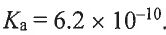 (A)
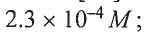 (B)
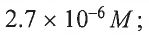 (C)
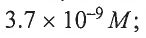 (D)
 (E)
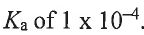 . Its acid form,
 , is red, while its base form, In, is yellow. At pH 6.0, the indicator will be (A) red.; (B) orange. ; (C) yellow. ; (D) blue. ; (E) not enough information.
 (B)
 (C)
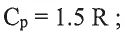 (D)
 is temperature dependent ; (E) none of these.
 Why is △S negative? (A) Each HF molecule produces two ions when it dissociates. ; (B) The ions are hydrated.; (C) The reaction is expected to be exothermic, and △S thus should be negative. ; (D) The reaction is expected to be endothermic, and △S thus should be negative. ; (E) none of these.
 is _____ for exothermic reactions and _____ for endothermic reactions. (A) > 0, < 0 ; (B) < 0, > 0 ; (C) < 0, < 0 ; (D) > 0, > 0 ; (E) cannot tell.
 to give
 and Q, and the equilibrium constant for the reaction is 1.0, then what is the Eº value for the oxidation-reduction reaction at 25°C? (A) −1.0 V ; (B) 1.0 V ; (C) 0.03 V ; (D) 0.0 V; (E) – 0.03 V
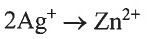 + 2Ag is 1.56 V. Given that the standard reduction potential for Ag+ + e → Ag is 0.80 V, determine the standard reduction potential for
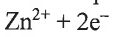 → Zn. (A) 0.76 V ; (B) 0.04 V ; (C) -0.38 V ; (D) –0.04 V; (E) –0.76 V
 = −1 ? (A) 0 ; (B) 2; (C) 4 ; (D) 9 ; (E) 1
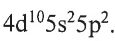 . The element is a(n) (A) lanthanide.; (B) actinide. ; (C) transition element. ; (D) nonmetal. ; (E) metal.
 (B)
 (C) O2 ; (D) N2. ; (E) At least two of these are paramagnetic.
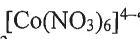 ? For this ion, the nitrate ligands produce a very strong crystal field. (Co: [Ar] 3d7 4s²) (A) 5; (B) 3 ; (C) 1 ; (D) 2 ; (E) 4