所屬科目:研究所、轉學考(插大)◆普通化學
1. What concentration of magnesium chloride: (MgCl2) in water is needed to produce an aqueous solution having an osmotic pressure of 17.2 atm at a temperature of 27°C? (A) 0.176 M, (B) 0.235 M, (C) 0.353 M, (D) 0.705 M, (E) 1.41 M
2. A general reaction is the formation of molecule C from two reactant molecules, A and B.
A + B → C
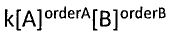
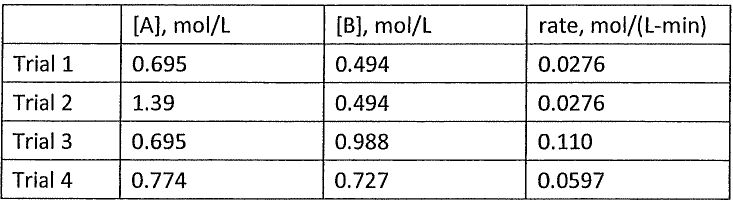
The reaction was run multiple times at constant temperature using different initial concentrations of the two reactants. The initial rates obtained are included in the table below. The rate equation is of the form: Rate =
Determine the reaction orders with respect to A and B. (A) 1 & 1, (B) 2 & 1, (C) 0 & 1, (D) 0 & 2, (E) 1 & 2
3. Under what conditions does a real gas exhibit nearly ideal behavior? (A) high temperature and high pressure, (B) high temperature and low pressure, (C) low temperature and high pressure, (D) low temperature and low pressure, (E) it is independent on temperature and pressure
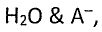
4. What are the major species in an acidic solution (general formula: HA) that is 2.50% dissociated? (A) (B)(C) HA & H₂O, (D)(E)
5. Which of the following is not a state function? (A) pressure, (B) internal energy, (C) volume, (D) enthalpy, (E) work
6. Which of the following molecules has no dipole moment? (A) SO3, (B) H2O, (C) HF, (D) O3, (E) CO
7. Which of the following titration combinations would have a pH less than 7 at the equivalent point? (A) HNO3(aq) is titrated with NaOH(aq), (B) CH3COOH(aq) is titrated with NaOH(aq), (C) KOH(aq) is titrated with HCl(aq), (D) H2SO4(aq) is titrated with KOH(aq), (E) NH3(aq) is titrated with HCl(aq)
8. Which of the following is the strongest base? (A) (B)(C)(D) H2O, (E)
9. The vapor pressure of liquid ethane thiol, C2H5SH, is 100 mmHg at 260 K. A sample of C2H5SH is placed in a closed, evacuated 557 mL container at a temperature of 260 K. It is found that all of the C2H5SH is in the vapor phase and that the pressure is 69 mm Hg. If the volume of the container is reduced to 213 mL at constant temperature, how many of the following statements are correct? ▪Only ethane thiol vapor will be present
▪Some of the vapor present before reducing the volume will condense
▪Liquid ethane thiol will be present
▪The pressure in the container will be 100 mmHg
▪No condensation will occur (A) 1, (B) 2, (C) 3, (D) 4, (E) 5
10. Which of the following laws describes "The entropy of the universe is always increasing" ? (A) First Law of Thermodynamics, (B) Second Law of Thermodynamics, (C) Third Law of Thermodynamics, (D) Fourth Law of Thermodynamics, (E) Hess's Law
11. What is the formula for the compound that crystallizes with a cubic closest packed array of sulfur ions, and that contains zinc ions in of the tetrahedral holes and aluminium ions in of the octahedral holes? (A) ZnAlS, (B) ZnAlS2, (C) Zn8Al2S, (D) ZnAl2S4, (E) ZnAl4S8
12. Two drops of indicator HIn , where HIn is yellow and In⁻ is blue, are placed in 100.0 mL of 0.10 M HCl. The solution is titrated with 0.10 M NaOH. At what pH will the color change (yellow to greenish yellow) occur? (A) 5.0, (B) 6.0, (C) 7.0, (D) 8.0, (E) 9.0
13. Which of the following molecules has a central atom that is dsp³ hybridized? (A) CO₂, (B) C₂H₂, (C) NH₃, (D) PCl₅, (E) SF₆
14. How many principal energy levels contain electrons in a manganese atom? (A) 1, (B) 2, (C) 3, (D) 4, (E) 5
15. What is the bond order for a C₂ molecule? (A) 0, (B) 1, (C) 2, (D) 3, (E) 4
16. Which of the following molecules is an exception to the octet rule? (A) BF₃, (B) H₂O, (C) KBr, (D) CF₄, (E) N₂
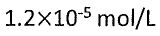
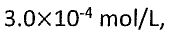
17. Calculate the solubility of solid Ag₂SO₄ in a AgNO₃ solution of 0.20 M. (A) (B) 0.20 mol/L, (C)(D) (E)
18. Which of the following electromagnetic radiations has the largest wavelength? (A) X ray, (B) Infrared, (C) γ ray, (D) Visible light, (E) Ultraviolet
19. What information below is needed to calculate the wavelength of a hydrogen atom excited from level n=2 to n=5?
(i) the electromagnetic spectrum; (ii) the change in energy from n = 2 to n = 5;
(iii) Planck's constant (iv) mass of the hydrogen electron; (v) the speed of light
(A) (i) & (iii) & (v), (B) (ii) & (iii) & (v), (C) (i) & (ii) & (iv), (D) (ii) & (iii) & (iv) & (v), (E) all of them
20. Which of the following solutions shows negative deviations from Raoult's Law? (A) CH₃OCH₃ & H₂O, (B) CH₃OH & CCl₄, (C) C₂H₅OH & H₂O, (D) C₇H₁₆ & C₆H₁₄, (E) C₇H₁₆ & H₂O
 阿摩線上測驗
登入
 (B)
 (C) HA & H₂O, (D)
 (E)

 (B)
 (C)
 (D) H2O, (E)

 of the tetrahedral holes and aluminium ions in
 of the octahedral holes? (A) ZnAlS, (B) ZnAlS2, (C) Zn8Al2S, (D) ZnAl2S4, (E) ZnAl4S8
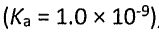 , where HIn is yellow and In⁻ is blue, are placed in 100.0 mL of 0.10 M HCl. The solution is titrated with 0.10 M NaOH. At what pH will the color change (yellow to greenish yellow) occur? (A) 5.0, (B) 6.0, (C) 7.0, (D) 8.0, (E) 9.0
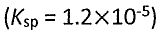 in a AgNO₃ solution of 0.20 M. (A)
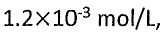 (B) 0.20 mol/L, (C)
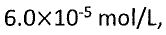 (D)
 (E)