阿摩線上測驗
4.一位中年患者口底部及下顎齒槽嵴,出現粒狀腫塊及潰瘍病灶(如圖一所示),病灶切片顯示整片組織球夾雜 多個多核巨細胞及部分區域之組織壞死(如圖二所示),Acid-fast stain顯示病灶內有散佈的紅色桿狀微生物 (如圖三圈處),您的診斷是下列何者? 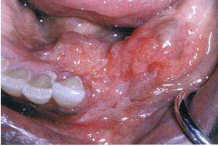 圖一
圖一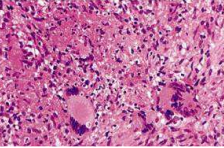 圖二
圖二 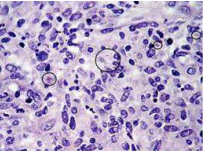 圖三
圖三
(A)梅毒(syphilis)
(B)結核病(tuberculosis)
(C)麻瘋(leprosy)
(D)巨細胞肉芽腫(giant cell granuloma)
圖一 圖二 圖三(A)梅毒(syphilis)
(B)結核病(tuberculosis)
(C)麻瘋(leprosy)
(D)巨細胞肉芽腫(giant cell granuloma)
統計: A(65), B(1649), C(91), D(180), E(0) #1845494
詳解 (共 4 筆)




補充 CGCG central giant cell granuloma
CGCG is the most common giant cell lesion of the jaws. These lesions are localised fibrous tissue tumours which contain osteoclasts and are usually several centimetres across. Frequently, a painless swelling that grows and expands rapidly is present.[2] This growth can also erode through bone including the alveolar ridge, resulting in a soft tissue swelling that is purple in colour.[3] Paresthesia of the lip has also been observed.[1][2] Resorption of tooth roots is seen in 37% of cases compared to displacement of teeth in 50%.[1] Two-thirds of lesions are found anterior to molars in the mandible, where teeth have deciduous predecessors.
Central giant-cell granuloma (CGCG) is a localised benign condition of the jaws. It is twice as common in females and is more likely to occur before age 30. Central giant-cell granulomas are more common in the anterior mandible, often crossing the midline and causing painless swellings
Multiple CGCGs can be found in individuals with Noonan syndrome. Mutations in PTPN11 or RAS pathway genes are seen