 阿摩線上測驗
46 What is the passage mainly about?
(A) Different types of physical barrier.
(B) Barrier signals on social occasions.
(C) Functions of the body-cross movement.
(D) Dominant actions in a social encounter.
統計: A(239), B(945), C(208), D(102), E(0) #1359572
詳解 (共 10 筆)
body-cross movement :身體交叉的動作。
類似雙手抱胸,但是又不能做的太明顯(無意識下的動作),所以文中才會提到偽裝一詞,偽裝種類因人而異,例如:男性客人為了掩飾他的不安,在走到主人的面前之前,會舉起他的右手,繞過身體,將左手袖扣或錶帶作最後的調整,才走向主人的面前。類似場合的女性,則會用右手繞過身體,略微移動手提包的位置或重新整理左手手臂上的短大衣。而緊張程度達到最高峰的情況下,會有身體部位的交叉,在雙方之間構築出一道障礙。(第二段的大意)

整理一下生字
occasion 場合
encounter 遇到、碰見;衝突
urge 驅使
unconsciously 無意識
disguise 偽裝、掩飾
cuff-link 袖扣
strap 皮帶
reveal 流露、揭示
invade 入侵
self-assured 自我保證
dominance 支配地位
subordinate 下屬

People feel safer behind some kind of physical barrier. Each social occasion involves us in encounters. If a social encounter is in any way threatening, then there is an immediate urge to set up such a barricade. The more formal the occasion and the more dominant or unfamiliar our social companions, the more worrying the moment of encounter becomes. Watching people under these conditions, we can observe the many small movements and postures in which they try to “hide behind their mothers’ bodies” as they did in their childhood. It is these that are the barrier signals of about life.
本篇其實說的是肢體動作(應類似肢體語言)。本段說在不同場合會出現不同自我保護的姿勢或手勢或動作等訊號。
The most popular form of barrier signals is the body-cross. In this, one arm makes contact with the other across the front of the body. The action is performed unconsciously and, if asked about it immediately afterwards, the person will not be able to remember having made the gesture. The action is always disguised in some way, and the disguise it wears varies from person to person. For example, a male guest may lift his right hand, reach across his body and make a last-minute adjustment to his left cuff-link or the strap of his wristwatch when he walks toward his host. A female on a similar occasion may reach across her body with her right hand and slightly shift the position of her handbag or reposition a coat held over her left arm. In all case, at the peak moment of nervousness, there is a body-cross to construct a barrier between two people.
本段說的是身體上的交叉body-cross或稱肢體交叉,這包含arm cross,disguised arm-cross(男生假裝調整袖扣<cuff-link>或手錶帶< the strap of his wristwatch>,女生調整手上的皮包等),因人因情況而異。(第47題的答案)
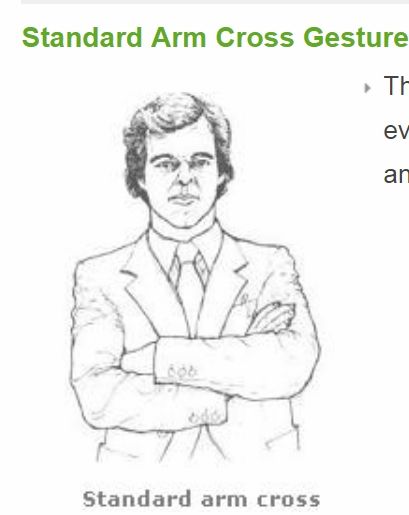
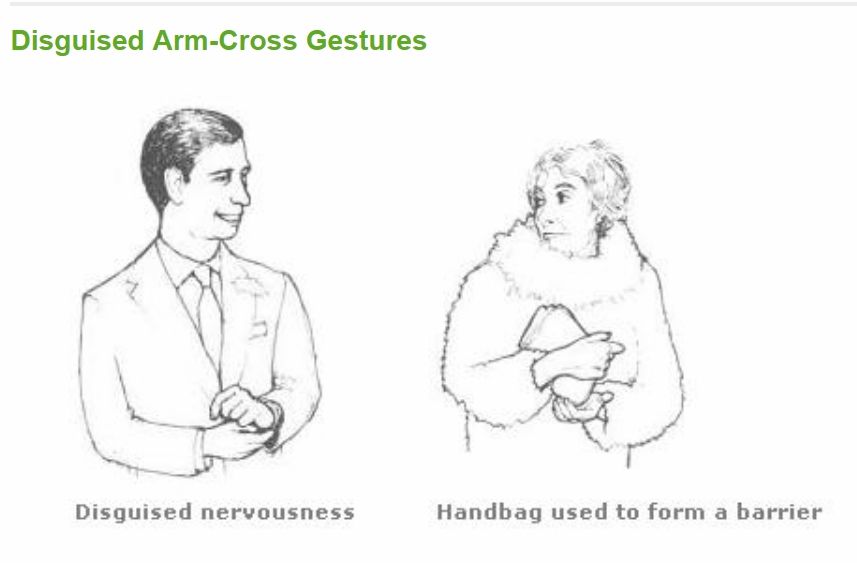
Interestingly, field observations reveal that in a social encounter it is most unlikely that both the greeter and the greeted will perform such action. Regardless of status, it is nearly always the new arrival who makes the body-cross movement, because it is he or she who is invading the home territory of the greeters. The greeters are there first and have at least temporary territorial “rights” over the place. This gives them a self-assured dominance at the moment of the greeting. Only if they are extremely subordinate to the new arrival will there be a likelihood of them taking the body-cross role.
本段說的是招呼者(greeter)與被招呼者(greeted)間的肢體動作,幾乎都是"剛到者"<the new arrival>,即"被招呼者")才會有肢體動作,例外的是若"招呼者"是剛到者的下屬。
Re:
https://www.indiabix.com/body-language/arm-barriers-gestures/
body-cross:身體交叉。
body-cross movement :身體交叉的動作。
barrier signal:屏障信息。

謝謝樓上的翻譯,我當初那段看好久,怎麼想像就是不懂。


英文好像越來越難了~以前英文都能在題目或答案中找到相同句子~現在好像線索都不好找~~