阿摩線上測驗
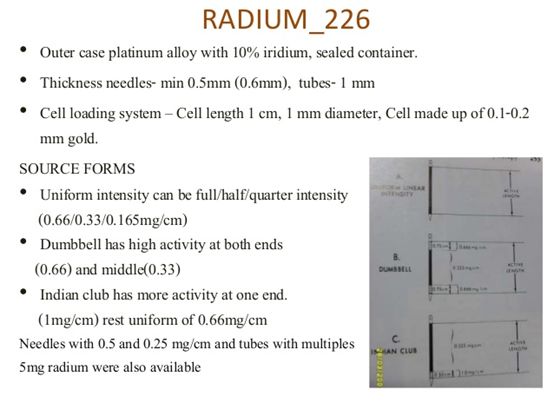
60.下圖為何種射源?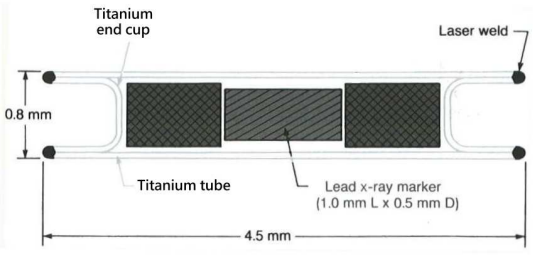
(A)Ra-226(dumbbell)
(B)I-125 seed(model 6711)
(C)Pd-103 seed(model 200)
(D)I-125 seed(model 6702)
統計: A(243), B(358), C(1323), D(185), E(0) #1529658
詳解 (共 4 筆)


Iodine-125
125I has gained a wide usenfor permanent implants in radiation therapy (18,19). The advantages of this isotope overnradon and 198Au are its longnhalf-life (59.4 days), which is convenient for storage, and its low photonnenergy, which requires less shielding. However, the dosimetry of 125I is much morencomplex than the conventional interstitial sources.
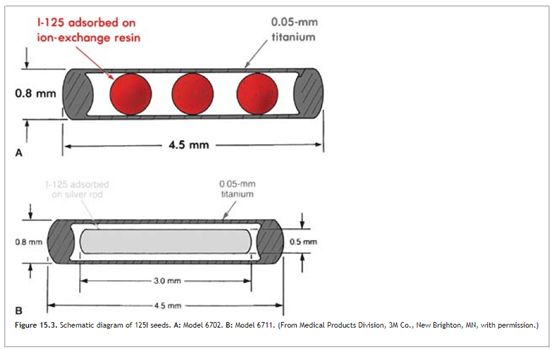
Three 125I seed models,ndesignated 6701, 6702, and 6711, have been manufactured,2 which are identical in size and encapsulation but differnin the active source design. The earlier model 6701 is now obsolete. Figure 15.3 shows the design of the currentlynused seeds. The encapsulation consists of a 0.05-mm-thick titanium tube weldednat both ends to form a cylindrical capsule of dimensions 4.5 × 0.8 mm. Thenmodel 6702 seed contains ion-exchange resin beads, which are impregnated with 125I in the formnof the iodide ion. The model 6711 seed contains a silver wire with the activenmaterial, silver iodide (AgI), adsorbed on its surface.
In the new seedndesign, namely model 6711, the silver wire is readily visible on radiographsnand shows seed position as well as orientation. The model 6702 seed isnradiographically less visible, although the titanium end welds can be seen whennsurrounded by reduced thickness of tissue. 125I decays exclusively by electron capture to annexcited state of 125Te, whichnspontaneously decays to the ground state with the emission of a 35.5-keV γnphoton. Characteristic x-rays in the range of 27 to 35 keV also are producedndue to the electron capture and internal conversion processes. Titaniumnencapsulation serves to absorb liberated electrons and x-rays with energiesnless than 5 keV. The model 6711 seed emits two additional photons at 22.1 keVnand 25.2 keV energies. These are fluorescent (characteristic) x-rays producednby the interaction of 125I photons with the silver wire (20).
Palladium-103
103Pd seeds have recentlynbecome available for use in brachytherapy. Their clinical applications arensimilar to those of 125I. Having a shorter half-life (17 days) than thatnof 125I (59.4 days), 103Pd may providena biologic advantage in permanent implants because the dose is delivered at anmuch faster rate (22).
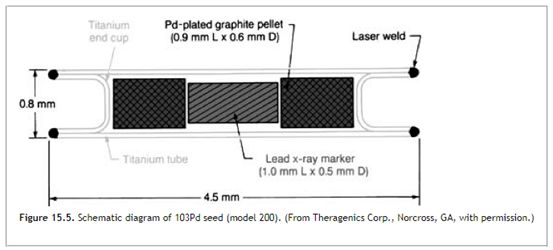
The palladium-103nseed model 2003 consists of a laser-welded titanium tube containing twongraphite pallets plated with 103Pd (Fig. 15.5).nA lead marker between the pallets provides radiographic identification.
以上引用自: https://radiologykey.com/brachytherapy-4/
A.Ra-226(dumbbell)
以上引用自:https://www.slideshare.net/sugash/radioisotopes-and-clinical-uses