阿摩線上測驗
登入
首頁
>
研究所、轉學考(插大)◆生物化學
>
108年 - [非官方正解]112 國立清華大學碩士班考試入學試題_生命科學院甲組:生物化學#118786
> 申論題
題組內容
1.
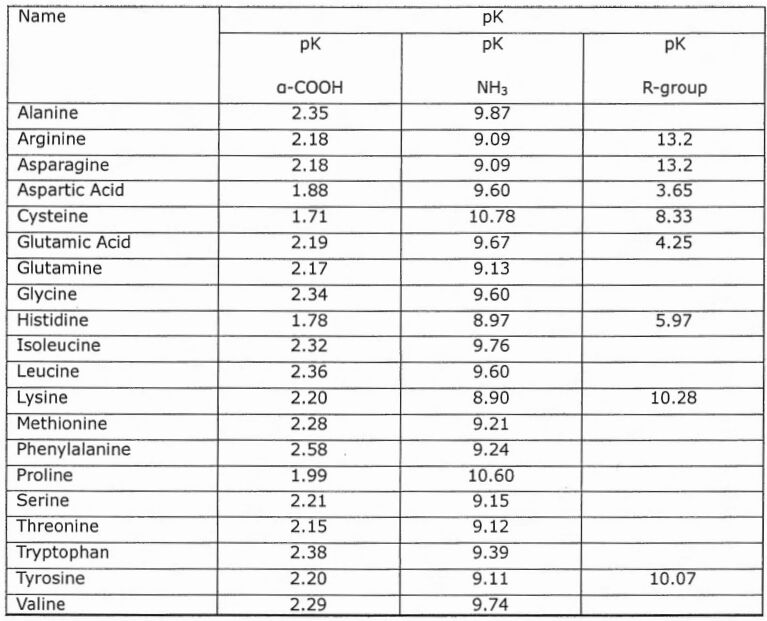
(A) What is the pI for the following peptide: Ala-Glu-Val-Asp-Lys-Leu? (6%)
相關申論題
(B) What is the C-terminal amino acid in this peptide? (3%)
#506423
2. If an enzyme-catalyzed reaction with a KM of 3.5 mM has a velocity of 5 mM/min at a substrate concentration of 0.5 mM, what is the Vmax? (6 %)
#506424
3. This is a cycle of the B-oxidation of saturation fatty acid. Please calculate how many ATP can be generated in a complete oxidation of Myristic-CoA (C14:0-CoA) (if you consider one NADH produces 2,5 ATP, one FADH2 produces 1.5 ATP and one Acetyl-CoA produces 10 ATP)? (10%)
#506425
4. Please explain the mechanism of how F1F0-ATPase produces ATP in mitochondria. You need include the teams of proton gradient, c subunit of F0, and a and B subunits ofF1.(5%)
#506426
5. Please draw a potential energy diagram for the exothermic reaction A→B and explain why the enzyme-catalyzed reaction is faster than the uncatalyzed reaction. (10%)
#506427
6. Please explain why the transmembrane domains of integral membrane proteins mostly have a high secondary structure content. (5%)
#506428
7.what is the key enzyme for the biosynthesis of deoxyribonucleotides? catalytic activity of the enzyme is turned on and off in response to need for dNTPs? general, this reaction involved oxidation-reduction cycle through two re gulatory enzymes which deliver reducing equivalents. Please write names of these two enzymes? (10 %)
#506429
8.How does the completion of human genome project contribute to curr proteomic studies? (5 %)
#506430
11.
#506431
12.
#506432
相關試卷
115年 - [無官方正解]115 亞洲大學_學士後獸醫學系招生試題:生物化學#145002
115年 · #145002
115年 - [無官方正解]115 國立清華大學_碩士班考試入學試題_生命科學暨醫學院甲組(生物與醫學科學組)﹕生物化學#142711
115年 · #142711
115年 - [無官方正解]115 國立臺灣大學_轉學生招生考試試題:生物化學概論#142642
115年 · #142642
115年 - 115 台灣聯合大學系統_碩士班招生考試_化學類:生物化學#139667
115年 · #139667
115年 - [無官方正解]115 國立臺灣大學_ 碩士班招生考試試題:生物化學(C)#137643
115年 · #137643
115年 - [無官方正解]115 國立臺灣大學_ 碩士班招生考試試題:生物化學(A)#137641
115年 · #137641
115年 - [無官方正解]115 國立臺灣大學_ 碩士班招生考試試題:生物化學(一般生物化學)#137622
115年 · #137622
115年 - 115 國立臺灣大學_ 碩士班招生考試試題:生物化學(B)#137619
115年 · #137619
114年 - [無官方正解]114 國立中興大學_碩士班招生考試試題_生物醫學研究所:生物化學#139094
114年 · #139094
114年 - [無官方正解]114 國立中正大學_碩士班招生考試試題_生物醫學科學系:生物化學#138415
114年 · #138415
 阿摩線上測驗
登入
阿摩線上測驗
登入