阿摩線上測驗
登入
首頁
>
研究所、轉學考(插大)-微積分
>
103年 - 103 國立臺北大學_學士班暨進修學士班轉學生招生考試試題_資訊工程學士、通訊工程學系學士班二年級:微積分#119732
>
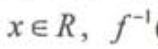
1. If f(x)=x
2
+x for
(2) = __(la) (1%)__ and f(f
-1
(I)) =__(1b) (1%)__
其他申論題
I. Translation(每題 10 分,共 20 分)1. Ediger聲稱,在閱讀教學中,有多種方法可以鼓勵學生學習,例如測驗和測量、主題方法、學生決策和情感維度以及問題解決程序。其中,Ediger建議問題解決程序應該受到重視,因為閱讀教學的最終目標是讓學習者解決重要的個人和社會問題。
#510482
2. Tech neck can cause issues beyond your neck and shoulders. Extra spinal pressure in your neck can lead to lower back pain, headaches and herniated disks. Altered neck muscles and poor posture also can strain jaw joints and muscles. To prevent tech neck, one tip is placing pillows on your lap allowing your forearms to be supported on those pillows. Holding the phone at more of an upright, angled position is also helpful.
#510483
II. Essay Question(20 分) Campus safety has been the focus of public debate recently in Taiwan. Some even call for legislative amendments for better campus safety. Please write a short essay to elaborate on how campus safety can be addressed holistically.
#510484
III. Activity Design(20 分) 請根據以下這篇文章,設計一個素養導向的教學活動,並且是課堂上就可以完成的活動,請以英文 說明活動內容並設計學習單。 As a central part of life, bathing practices throughout history have reflected changing ideals around personal care and health. In ancient times, particularly within the Roman Empire, bathing was almost entirely a public affair. Only the wealthiest few had their own private baths, while everyone else participated in the ritual of communal bathing, which often took place in sprawling bath complexes and included massages, libraries, and even food and drink. “There’s lots of artistic illustrations showing parties and things going on in the baths and people having dinner in the bath,” says Virginia Smith, a historian and author of Clean: A History of Personal Hygiene and Purity. For the ancient Greeks, bathing was often a ritualistic self-purification before religious rites or welcoming guests, according to Katherine Ashenburg, author of The Dirt on Clean: An Unsanitized History. Traditional Japanese-style bathhouses were used for both therapeutic and religious purposes, and later as social gathering places. Russian banyas and Turkish hammams were also historically important hubs of social and religious activity. “Bathing was not always connected in people’s minds with cleanliness,” Ashenburg says. “Sometimes getting in water was thought to be, not just doing nothing for you in terms of becoming clean, but was actually dangerous to your health.” During the Black Death, for instance, public baths closed because Medieval Europeans believed that opening the pores with hot water would allow the plague to enter through the skin. Though this thinking was incorrect, there were hygiene concerns in public baths, according to James Hamblin, a physician and lecturer at Yale University and author of Clean: The New Science of Skin and the Beauty of Doing Less. “Some accounts of ancient bath houses…described layers of slime across the surface of the water,” he says. “If anything, you were exposing yourself to pathogens.”
#510485
2. Express the following function p(x) in the form of f。g。h p(x)=Constraints: functions f, g, h are exponential, power, and linear functions, respectively. Find f(x) =__(2a) (1%)__, g(x)= __(2b) (1%)__, h(x)=__(2c) (1%)__
#510487
3.Ifs(x)=x3+=__(3) (4%)__.
#510488
4.=__(4)(2%)__
#510489
5. = __(5) (3%)__
#510490
(a) domain= __(6a) (1%)__
#510491
(b) first derivative, i.e. f'(x)=__(6b) (2%)__
#510492