所屬科目:研究所、轉學考(插大)◆生物化學
1. Please select which RNA transcript is synthesized from the DNA template (5')AAACGCTATAGCG(3'). (A) (5')UUUGCGAUAUCGC(3') (B) (5')UUUGUGAUAUUGU(3') (C) (5')CGCUAUAGCGUUU(3') (D) (5')UGUUAUAGUGUUU(3') (E) (5')AAACGCUAUAGCG(3')
2. Which subunit of E. coli RNA polymerase ensures the polymerase binds to DNA in a stable manner only at promoters? (A) α (B) β (C) γ (D) δ (E)σ
3. Which eukaryotic DNA-dependent RNA polymerase is sensitive to low concentration of a-amanitin? (A) Pol I (B) Pol II (C)Pol III (D)telomerase (E)RNA helicase
4. Please select which codon is correspond to tRNA anticodon (5')UGA(3'). (A) (5')ACU(3') (B) (5')AUU(3') (C) (5')UUA(3') (D) (5')UCG(3') (E) (5')UUG(3')
5. Please select which mutation is so called "transition". (A) A to G (B) T to G (C) T to A (D) A to T (E) G to C
6. Which one of the following amino acids would be considered most polar? (A) Methionine (B) Threonine (C) Leucine (D) Tryptophan (E) Proline
7. The major conformation of myoglobin belongs to (A) a-helix (B) ẞ-sheet (C) random coils (D) ẞ-turn (E) none of the above
8. The molecule 2,3-bisphosphoglycerate (BPG) is present in red blood cells in which it binds noncovalently to hemoglobin. Which functional groups in hemoglobin can make the strongest noncovalent interactions with BPG at a pH value of 7.0? (A) sulfhydryl groups (B) Alcoholic hydroxyl groups (C) Hydrocarbon groups (D) Amino groups (E) Carboxy groups
9. A peptide has the sequence Glu-His-Trp-Ser-Gly-Leu-Arg-Pro-Gly, This oligopeptide has a pI close to (A) 4.3 (B) 5.1 (C) 6.0 (D) 7.8
10. Heparin can bind plasma protein antithrombin III. What amino acid residues of an antithrombin III are likely to interact with heparin ? (A) Methionine (B) Serine (C) Lysine (D) Aspartate (E) Tyrosine
11. For an enzyme-catalyzed reaction to reach 90% saturation , the substrate concentration [S] should be (A)(B)(C)(D)(E)
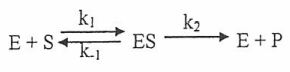
12. For the kinetic scheme shown below, Km can be used to approximate the dissociation constantof ES complex only when
(A) k1 << k2 (B)(C)(D)(E) k2 << k1
13. Which of the following statements regarding the following reaction scheme is NOT correct?
(A) The NH2 group of Ala is transferred directly to KG to form Glu. (B) The binding of KG to active site happens after Pyr release. (C) This is an example of transamination reaction. (D) This scheme represents a ping-pong mechanism. (E) E-CH2NH2 represents a covalently modified enzyme.
14. For a plasmid to be successfully replicated in both E. coli and yeast, this plamid must contain (A) SD (Shine-Dalgarno) and ori sequences (B) CEN and ori sequences (C) T7 promoter and T7 terminator (D) T7 promoter and ori sequence (E) SD (Shine-Dalgarno) and CEN sequences
15. The production of recombinant DNA (DNA cloning) involves the following 4 steps. Please put them into correct experimental order.
I. Insertion of foreign DNA fragment into a cloning vector.
II. Preparation of fragments of vector and foreign DNA with compatible ends.
III. Introduction of recombinant DNA into a recipient cell for replication.
IV. Selection of cells containing the correct recombinant DNA. (A) I→II→III→IV (B) II→I→III→IV (C) II→III→I→IV (D) II→III→I→IV (E) II→I→III→IV
16. Which of the following compounds can mediate the transfer of one-carbon units? (A) thiamin (B) riboflavin (C) nicotinic acid (D) pyridoxal (E) folic acid
17. Which of the following compounds can activate enzyme directly? (A) ATP (B) GTP (C) CTP (D) TTP (E) UTP
18. GSK-3 is a (an): (A) enzyme (B) receptor (C) chaperone (D) transcription factor (E) substrate inhibitor
19. Which of the following compounds contains fifteen carbons? (A) sterol (B) retinol (C) farnesol (D) inositol (E) tocopherol
20. Which of the following proteins has the largest molecular weight? (A) thyroglobulin (B) insulin receptor (C) sodium channel (D) immunoglobulin G (E) epinephrine receptor
21. Which of the following is not found in the membrane? (A) cholesterol (B) phosphatidylcholine (C)triacylglycerol (D) sphingomyelin (E)plasmalogen
22. Which of the following fatty acid produce largest amount of ATP when fully oxidized in the cell? (A) linoleic acid (B) a-linolenic acid (C) oleic acid (D) stearic acid (E) palmitic acid
23. Which of the following enzyme is responsible for synthesis of PGH2? (A) lipoxygenase (B) cyclooxygenase (C) acetyl-CoA carboxylase (D) HMG-CoA reductase (E) Δ6 desaturase
24. Which of the following provides reducing equivalents for the fatty acid synthesis pathway? (A) NADPH (B) NADH (C) FADH2 (D) ATP (E) GSH
25. Which of the following protein binds to LDL receptor? (A) Apo Al (B) Apo B-48 (C) Apo C-II (D) Apo D (E) Apo E
26. What are the products of phosphorylase and debranching enzyme? (A) glucose 6-phosphate and glucose 1-phosphate (B) glucose 1-phosphate and fructose 6-phosphate (C) glucose 1-phosphate and glucose (D) glucose 6-phosphate and UDPGlc (E) glucose 1-phosphate and 1→6 linked glycogen.
27. Which following reaction has a negative free energy physiologically? (A) Glucose 6-phosphate + ADP → Glucose + ATP (B) Fructose 1,6-bisphosphate + ADP → fructose 6-phosphate + ATP (C) 1,3-Bisphosglycerate + ADP → 3-phosphoglycerate + ATP (D) Phosphoenolpyruvate + ADP → pyruvate + ATP (E) Carbonyl phosphate + ADP → CO2 + ATP
28. Which two enzymes are located in mitochondria? (A) Carbamoyl phosphate synthase I and ornithine transcarbamoylase (B) Argininosuccinate synthase and argininosuccinase (C) Carbamoyl phosphate synthase I and argininosuccinate synthase (D) Argininosuccinase and arginase (E) Carbamoyl phosphate synthase I and arginase.
29. What enzyme is responsible for the conversion between serine and glycine? (A) Convertase (B) Serine hydroxylase (C) Glycine methyltransferase (D) Serine methylase (E) Serine hydroxymethyltransferase.
30. What amino acid catabolism needs α-keto acid decarboxylase? If the decarboxylase is defect, it will cause maple syrup urine disease. (A) alanine (B) valine (C) tryptophan (D) phenylalanine (E) tyrosine.
31. According to the table above, which of the following DNA sequences is the putative coding region of the peptide? (A) ATG CCT TAC GAT GTG CCT GAT TAT GCT (B) TAA CCC TAT GAT GTA CCC GAC TAC GCC (C) TAT CCA TAA GAC GTC CCA GAT TAT GCA (D) TAC CCG TAT GAC GTC CCG GAC TAC GCG (E) TAG CCG TAC GAT GTT CCT GAT TAT GCC
32. To isolate the full-length gene, Wen-Liang will design synthetic DNA probes with 18 nucleotides to screen cDNA libraries prepared from viral infected serum. According to the table above, which of the following peptides will minimize the number of DNA probes for the screening?
(A) YPYDVP (B) PYDVPD (C) YDVPDY (D) DVPDYA (E) All are the same
33. When he designs the PCR primer pairs that contain the restriction enzyme cutting sequences, which of the following primer pairs is his best choice? (A) the forward primer with BamH I; the reverse primer with Xho I (B) the forward primer with Xho I; the reverse primer with EcoR I (C) the forward primer with BamH I; the reverse primer with Hind III (D) the forward primer with EcoR I; the reverse primer with Xho I (E) the forward primer with Hind III; the reverse primer with BamH I
34. When Wen-Liang transfects the subcloned plasmid into the HEK 293T cell line and checks the gene expression by running the SDS-PAGE, what is the protein size he will expect to observe on the gel? (A) 293 ka (B) 64 ka (C) 1734 ka (D) 578 ka (E) 193 ka
35. To further confirm the gene expression, Wen-Liang can use the following methods EXCEPT (A) Southern blot (B) Northern blot (C) Western blot (D) Quantitative real-time PCR (E) None of them
36. In terms of chemical properties, which of the following amino acids is lysine most similar to? (A) Arginine (B) Phenylalanine (C) Serine (D) Aspartic acid (E) Proline
37. Chymotrypsin preferentially cleaves after amino acids tryptophan, tyrosine, and phenylalanine in a protein. To a lesser extent, it may also cleave after leucine, methionine, and histidine. Which of the following peptides is NOT a product of chymotrypsin? (A) RSIAF (B) NWPQALPSVL (C) QIAM (D) EPDTDW (E) SIAFSR
38. SDS-PAGE is a method in which proteins coated with negatively charged detergent SDS are separated along a gel matrix in the presence of an electric field. The method separates proteins based on relative molecular weights of proteins. Which of the following statements about SDS-PAGE is TRUE? (A) Larger proteins bind more negatively charged SDS and run faster (B) Larger proteins run slower because they are heavier (C) Larger proteins run slower because they face a greater resistance (D) Proteins run from anode to cathode (E) Larger proteins separate better in a higher percentage SDS-PAGE gel
39. The figure on the right summarizes the effects of pH on oxygen binding affinity of hemoglobin (the Bohr effects). Based on the figure, which of the following statement is TRUE? (A) Curve A represents binding in the highest pH (B) Curve B represents binding in the highest pH (C) Curve C represents binding in the highest pH (D) Curve A has the highest affinity (E) Curve A bind the highest amount of oxygen for a given oxygen pressure
40. Which of the following statements about isoelectric point is TRUE? (A) An isoelectric point is the pH where a molecule has equal negative and positive charges (B) Proteins have isoelectric points but amino acids do not (C) Positive charges of a protein increase as pH increases (D) At the isoelectric point, a molecule moves to the anode in an electric field (E) Since proteins carry zero charges at isoelectric points, electrophoresis cannot separate different proteins based on isoelectric points
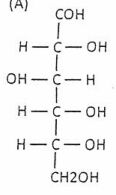
41. Which of the following structure is the correct Fischer projection of D-galactose ? (A)(B)(C)(D)(E)
42. Which of the following monosaccharide is not a component of the carbohydrate moiety of proteoglycans and glycoproteins? (A) Galactose (B) Glucose (C) Mannose (D) Ribose (E) Xylose
43. How many molecules of ATP are invested in the preparatory phase and "harvested" in the pay-off phase of glycolysis from one molecule of glucose, respectively? (A) 2, 4 (B) 4, 2 (C) 2, 2 (D) 2, 32 (E) 2, 6
44. Which small RNA is not involved in gene silencing? (A) miRNA (B) snRNA (C) piRNA (D) siRNA (E) None of the above.
45. Which of the following coenzymes is/are required for citric acid cycle?
(1) Coenzyme A, (2) Flavin adenine dinucleotide (FAD), (3) Biotin, (4) Nicotinamide adenine dinucleotide (A) 1,3,4 (B) 1, 2, 4 (C) 2,4 (D) 1,2,3 (E) 1, 2, 3, 4
46. The Km (Michaelis constant) of an enzyme for a substrate is defined operationally as
(A) half the substrate concentration at which the reaction rate is maximal (B) the substrate concentration at which the reaction rate is half maximal (C) the dissociation constant of the enzyme substrate complex (D) the dissociation constant of the enzymeproduct complex (E) the rate constant of the reaction at saturation
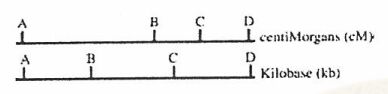
47. The uppermost figure above shows the locations of four genes on the genetic map of an organism; the lower figure shows the locations of the same four genes on a physical map derived from the nucleotide sequence of the DNA of that organism. The maps are not identical because (A) there is no relationship between the position of genes in a genetic map and their positions on the DNA (B) recombination frequencies per kb of DNA are not uniform throughout a chromosome (C) the farther apart two genes are, the more likely they are to recombine (D) the closer two genes are, the more likely they are to recombine (E) some genes contain introns
48. Consider the average in vivo turnover rates for proteins, DNA, and mRNA. Which of the following orders best describes the turnover rate from fastest (shortest average lifetime) to slowest (longest average lifetime)? (A) mRNA > DNA > proteins (B) mRNA > proteins > DNA (C) Proteins > mRNA > DNA (D) Proteins > DNA > mRNA (E) DNA > mRNA > proteins
49. SNARE proteins are found in the membranes of all of the following compartments EXCEPT (A) Mitochondria (B) Golgi complex (C) Early endosome (D) Endoplasmic reticulum (E) Synaptic plasma membrane
50. The ion product for liquid water, Kw, varies with temperature (T), as indicated by the change in pKw shown in the table above. The definition of neutrality is [H+] = [OH-]. Which of the following is the pH of water at neutrality at 50°C ? (A) 6.35 (B) 6.64 (C) 7.00 (D) 7.40 (E) 13.28
 阿摩線上測驗
登入
阿摩線上測驗
登入
 , the substrate concentration [S] should be (A)
 (B)
(B) (C)
(C) (D)
(D) (E)
(E)
 of ES complex only when
  (A) k1 << k2 (B)
 (C)
(C) (D)
(D) (E) k2 << k1
 (A) The NH2 group of Ala is transferred directly to KG to form Glu. (B) The binding of KG to active site happens after Pyr release. (C) This is an example of transamination reaction. (D) This scheme represents a ping-pong mechanism. (E) E-CH2NH2 represents a covalently modified enzyme.
 (A) YPYDVP (B) PYDVPD (C) YDVPDY (D) DVPDYA (E) All are the same
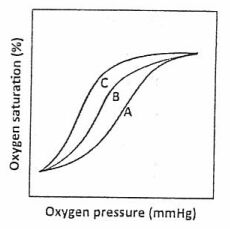 (A) Curve A represents binding in the highest pH (B) Curve B represents binding in the highest pH (C) Curve C represents binding in the highest pH (D) Curve A has the highest affinity (E) Curve A bind the highest amount of oxygen for a given oxygen pressure
 (B)
(B)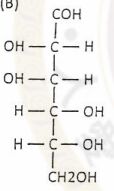 (C)
(C)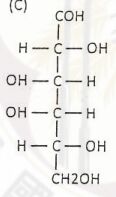 (D)
(D)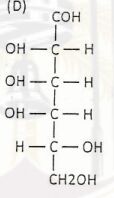 (E)
(E)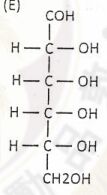
 (A) 1,3,4 (B) 1, 2, 4 (C) 2,4 (D) 1,2,3 (E) 1, 2, 3, 4
 (A) half the substrate concentration at which the reaction rate is maximal (B) the substrate concentration at which the reaction rate is half maximal (C) the dissociation constant of the enzyme substrate complex (D) the dissociation constant of the enzymeproduct complex (E) the rate constant of the reaction at saturation