所屬科目:研究所、轉學考(插大)◆生物化學
1. What functional groups are present on this molecule?
(A) Hydroxyl and ketone (B) Hydroxyl and aldehyde (C) Hydroxyl and carboxylic acid (D) Hydroxyl and ester (E) Ether and aldehyde
2. The PCR reaction mixture does not include: (A) all four deoxyribonucleotides triphosphates. (B) DNA containing the sequence to be amplified. (C) DNA ligase. (D) heat-stable DNA polymerase. (E) oligonucleotide primer(s).
3. Ubiquitin is a: (A) component of the electron transport system. (B) protease. (C) protein kinase. (D) protein phosphorylase. (E) protein that tags another protein for proteolysis.
4. Gene silencing by RNA interference acts by _____ of the target gene. (A) inhibiting transcription (B) inhibiting translation (C) inhibiting splicing (D) degradation of the mRNA (E) inhibiting polyadenylyation
5. All of the following are considered "weak" interactions in proteins, except: (A) hydrogen bonds. (B) hydrophobic interactions. (C) ionic bonds. (D) peptide bonds. (E) van der Waals forces.
6. A good transition-state analog: (A) binds covalently to the enzyme. (B) binds to the enzyme more tightly than the substrate. (C) binds very weakly to the enzyme. (D) is too unstable to isolate. (E) must be almost identical to the substrate.
7. The biological role of restriction enzymes is to: (A) aid recombinant DNA research. (B) degrade foreign DNA that enters a bacterium. (C) make bacteria resistant to antibiotics. (D) restrict the damage to DNA by ultraviolet light. (E) restrict the size of DNA in certain bacteria.
8. Current estimates indicate that humans have about _____ genes. (A) 3,000 (B) 10,000 (C) 30,000 (D) 100,000 (E) 300,000
9. The inner (plasma) membrane of E. coli is about 75% lipid and 25% protein by weight. How many molecules of membrane lipid are there for each molecule of protein? (Assume that the average protein is Mr 50,000 and the average lipid is 750.) (A) 1 (B) 50 (C) 200 (D) 10,000 (E) 50,000
10. AZT (3'-azido-2',3'-dideoxythymidine), used to treat HIV infection, acts in HIV-infected cells by: (A) blocking ATP production. (B) blocking deoxynucleotide synthesis. (C) inhibiting RNA polymerase II. (D) inhibiting RNA processing. (E) inhibiting reverse transcriptase.
11. Which following amino acid residue is encoded by one codon? (A) Leu (B) Lys (C) Trp (D) Glu (E) Pro
12. Which following DNA sequence is the template for the RNA transcript 5'CGCUAUAGCGUUU3'? (A) 5'GCGATATCGCAAA3' (B) 5'GCGGTGTCGCGGG3' (C) 5'GGGCGCTGTGGCG3' (D) 5'AAACGCTATAGCG3' (E) 5'TTTGCGATATCGC3'
13. Which following mutation does not affect protein function? (A) Missense mutation (B) Silent mutation (C) Nonsense mutation (D) Insertion (E) Deletion
14. Which following antibiotic inhibits both prokaryotic and eukaryotic cells? (A) Tetracycline (B) Erythromycin (C) Chloramphenicol (D) Streptomycin (E) Puromycin
15. Which following DNA-dependent RNA polymerase is responsible for the rRNA synthesis? (A) RNA polymerase I (B) RNA polymerase II (C) RNA polymerase III (D) Reverse transcriptase (E) Telomerase
16. Which one of the following amino acids would be considered most polar? (A) Methionine (B) Lysine (C) Isoleucine (D) Tryptophan (E) Proline
17. Proteins may be separated according to size by: (A) Isoelectric focusing (B) Affinity chromatography (C) Ion exchange chromatography (D) Molecular exclusion chromatography (E) Reverse phase HPLC
18. A protein's activity is altered when a particular serine side chain is phosphorylated. Which of the following amino acid substitutions at this position could lead to a permanent alteration in normal enzyme activity? (A) S → E (B) S → T (C) S → Y (D) S → K (E) S → L
19. A protein has one transmembrane domain composed entirely of α-helical secondary structure. Which of the following amino acids would you expect to find in the transmembrane domain? (A) Proline (B) Glutamate (C) Lysine (D) Leucine (E) Arginine
20. Some patients with sickle cell disease have relatively mild symptoms because they also have: (A) Bone marrow depression (B) Elevated β-chain synthesis (C) Reduced α-chain synthesis (D) Reduced γ-chain synthesis (E) Iron overload
21. Defects in which of the following enzyme will NOT cause hyperammonemia? (A) Cabomoyl phosphate synthetase I (B) Ornithine permease (C) N-acetylglutamate synthase (D) Arginase (E) Ornithine transcarbamoylase
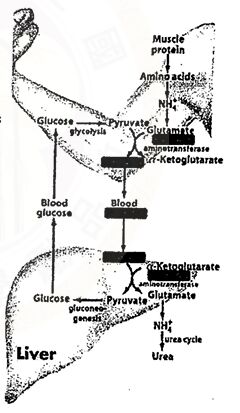
22. The figure on the right illustrates how the liver handles nitrogen wastes of amino acids from muscle protein breakdown. What is the missing component is the diagram? (A) Glutamate (B) Glutamine (C) Serine (D) Alanine (E) Glycine (圖片)
23. Which of the following enzyme is responsible for releasing nitrogen in the amide group of glutamine prior to urea synthesis? (A) Gultaminase (B) Glutamate dehydrogenase (C) Glutamate pyruvate transaminase (GPT) (D) Glutamate oxaloacetate transaminase (GOT) (E) Glutamine synthetase
24. What is the function of biotin in metabolism? (A) Streptavidin binding (B) Transfer of oxidized nitrogen (C) Transfer of reduced nitrogen (D) Transfer of oxidized carbon (E) Transfer of reduced carbon
25. Which of the amino acid is NOT glucogenic? (A) Isoleucine (B) Leucine (C) Arginine (D) Tryptophan (E) Aspartatic acid
26. Which of the following enzymes is not involved in synthesis of 22:6(n-3) fatty acid from 18:3(n-3) fatty acid? (A) Δ⁴ desaturase (B) Δ⁶ desaturase (C) Δ⁵ desaturase (D) elongase
27. Which of the following statements is true? (A) Chylomicron remnants can be uptaken by the liver through ApoB-100 binding to LDL-receptor (B) HDL contains ApoB-100 but not Apo-B48 (C) Apo-Al is a major protein HDL and an activator of lecithin:cholesterol acyl-transferase (D) Apo-CII is an activator of hormone sensitive lipase (E) Low density lipoprotein (LDL) can be converted to intermediate-density lipoproteins(IDL) by lipoprotein lipase
28. Which of the following enzymes is the major target of aspirin (a nonsteroidal anti-inflammatory drug)? (A) Acyl-CoA synthetase (B) Cyclooxygenase (C) HMG-CoA reductase (D) HMG-CoA synthase (E) Lipoxygenase
29. Lipoprotein lipase deficiency leads to: (A) hyperglycemia (B) hypoglycemia (C) ketonemia (D) hypertriglyceridemia (E) hypercholesterolemia
30. Which of the following enzymes are responsible for the synthesis of palmitate from acetyl-CoA? (A) HMG-CoA synthase and HMG-CoA reductase (B) Acetyl-CoA carboxylase and Fatty acid synthase (C) Acyl-CoA synthetase and Acyl-CoA dehydrogenase (D) Phosphoenolpyruvate carboxykinase and Pyruvate carboxylase (E) Δ⁹-desaturase and elongase
31. Which following enzyme only has one direction reaction? (A) enolase (B) glutamate dehydrogenase (C) aminotransferase (D) glutaminase (E) Serine hdroxymethyltransferase.
32. What material communication happens between liver and muscle in Cori cycle? (A) HDL and VLDL (B) HDL and LDL (C) glucose and lactate (D) fat and cholesterol (E) VLDL and alanine.
33. Which activity of following proteins will be reduced by phosphorylation? (A) phosphorylase kinase (B) 6-phosphofructokinase-2 (C) Inhibitor-1 for protein phosphatase 1 (D) 6-phosphofructokinase-1 (E) PKB/Akt.
34. What two modifications are required for serotonin biosynthesis from tryptophan? (A) hydroxylation and decarboxylation (B) adenosylation and methylation (C) dehydrogenation and phosphorylation (D) hydrogenation and phosphorylation (E) decarboxylation and hydrogenation.
35. Which following one is colorless? (A) bilirubin diglucuronide (B) bilirubin (C) bilirubin/albumin complex (D) urobilin (E) urobilinogen.
36. Compound A binds to an enzyme at a site other than the active site and increases the enzyme's catalytic activity. Compound A is called a(an): (A) allosteric regulator (B) substrate analog (C) uncompetitive inhibitor (D) homotropic effector (E) heterotropic effector
37. The of an enzyme are 0.2 mM and 5000 , respectively. Based on this information, please calculate the "rate" of this enzymatic reaction at very high substrate concentration ([S] >>) and in the presence of 1 mM enzyme? (A) 0.2 (B) 1000 (C) 25000 (D) 5000 (mM/sec) (E) 1000 (mM/sec)
38. Which of the following reaction is most likely catalyzed by an "lyase"? (A) A + B → C + D (B) AB + C → A + B (C) A + H₂O → B + C (D) A → B (E) A + ATP → A-PO₄ + ADP
39. On a double-reciprocal plot of Michaelis-Menton equation, the Y-intercept of the line is: (A) (B) (C)(D) (E)
40. You are trying to characterize the kinetic properties of a newly identified enzyme. Which is the most reasonable first kinetic plot to obtain? (Abbreviation used: total enzyme concentration (); substrate concentration ([S]); concentration of enzyme-substrate complex ([ES]); initial velocity ; time (T)) (A) plot vs [ET] (B) plot vs [ES] (C) plot vs [S] (D) plot vs T (E) plot vs 1/T
41. Which peptide sequences can facilitate cells spread in Integrin-dependent manner? (A) sehradısal (B) sehraelsal (C) sehrgdlsal (D) sehkgelsal (E) none of the above
42. Which is not a correct description for N-link glycosylations? (A) The attach site in the protein core is Asn (B) Direct the protein traffic from ER to Golgi (C) The major protein sorting pathway for secreted proteins (D) Involved in protein sorting to lysosomal compartment (E) Sensitive to glycosidase H treatment
43. Which of the following statements is true regarding the polysaccharides starch, glycogen, cellulose, and chitin? (A) All have 1-4 linkages. (B) Starch is built from a different monomer than are the others. (C) Only chitin has a core protein. (D) Each is built from a single type of monomer. (E) Chitin and cellulose differ from each other only in the extent of their branching.
44. Which of the following best supports the endosymbiotic theory of the evolutionary origin of mitochondria? (A) Mitochondria, chloroplasts, and prokaryotes contain electron carriers. (B) Mitochondrial and bacterial ribosomal functions are inhibited by the same antibiotics. (C) Genes for mitochondrial pyruvate dehydrogenase subunits are found in the nuclear DNA. (D) The outer mitochondrial membrane contains the protein porin. (E) Many mitochondrial proteins are imported across both inner and outer membranes after translation on cytoplasmic ribosomes is completed.
45. Which protein is not a component of the basal membrane? (A) type 4 collagen (B) fibronectin (C) nidogen (D) proteoglycan (E) lamin
46. According to the system of enzyme nomenclature developed by the International Union of Biochemists, enzymes that catalyze cleavage of C-C, C-O, C-N and other covalent bonds by atom elimination and often generating double bonds are: (A) Oxidoreductases (B) Hydrolases (C) Lyases (D) Isomerases (E) Ligases.
47. Which one of the following reactions is NOT catalyzed by an epimerase? (A) Ribulose 5-phosphate ↔ Xylulose 5-phosphate (B) UDP-Gal → UDPGIc (C) N-Acetyl-glucosamine 6-phosphate → N-Acetyl-mannosamine 6-phosphate (D) Glucose 1-phosphate ↔ Glucose 6-phosphate (E) All are catalyzed by an epimerase.
48. In the urea cycle, which one of the following enzymes is in the matrix of liver mitochondria to catalyze reactions? (A) Carbamoyl phosphate synthase I (B) Argininosuccinate synthase (C) Argininosuccinate lyase (D) Arginase (E) All of them.
49. Which one of the following amino acids can NOT be converted to glutamate and then to α-ketoglutarate? (A) Arg (B) Asn (C) Gln (D) His (E) Pro.
50. Glucose-6-phosphatase (glucose 6-P) deficiency causes type I glycogen storage disease. The enzyme catalyzes: (A) glucose 6-P to glucose 1-P (B) glucose 6-P to ribose 5-P (C) glucose 6-P to fructose 6-P (D) glucose 6-P to ribose (E) glucose 6-P to glucose.
 阿摩線上測驗
登入
阿摩線上測驗
登入
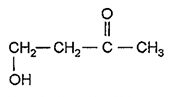 (A) Hydroxyl and ketone (B) Hydroxyl and aldehyde (C) Hydroxyl and carboxylic acid (D) Hydroxyl and ester (E) Ether and aldehyde
 (A) Cabomoyl phosphate synthetase I (B) Ornithine permease (C) N-acetylglutamate synthase (D) Arginase (E) Ornithine transcarbamoylase
 of an enzyme are 0.2 mM and 5000
  , respectively. Based on this information, please calculate the "rate" of this enzymatic reaction at very high substrate concentration ([S] >>
 ) and in the presence of 1 mM enzyme? (A) 0.2
  (B) 1000
 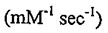 (C) 25000
 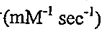 (D) 5000 (mM/sec) (E) 1000 (mM/sec)
 (B)
(B) (C)
(C) (D)
(D) (E)
(E)
 ); substrate concentration ([S]); concentration of enzyme-substrate complex ([ES]); initial velocity
  ; time (T)) (A) plot
  vs [ET] (B) plot
  vs [ES] (C) plot
  vs [S] (D) plot
  vs T (E) plot
  vs 1/T