所屬科目:研究所、轉學考(插大)-分析化學
1. Derivatization reactions are often used in preparation samples for chromatographic separation, which of the following statements are not the major purposes of these reaction?(A) Increasing the detection sensitivity.(B) Increasing separation resolution for chiral compounds.(C) Increasing the application range of chromatographic analysis.(D) Decreasing the analytes reaction with the separation column.(E) Decreasing the retention time of analytes.
2. Which of the following gas chromatographic detectors are nondestructive types?(A) Flame ionization detector.(B) Flame photometric detector.(C) Thermo-conductance detector.(D) Nitrogen phosphor detector.(E) Mass spectrometry detector.
3. What kinds of ionic sources are commonly used in time of flight mass spectrometer?(A) Electron impact.(B) Field desorption.(C) Electro-spray ionization.(D) Matrix assisted laser desorption/ionization.(E) Fast atom bombardment secondary ionization.
4. Which of the following experiment procedures are commonly used as sample pre-treatment method for determine inorganic compounds in sample?(A) Solid phase extraction.(B) Acid digestion.(C) Microwave extraction.(D) Pressurized solvent extraction.(E) Purge and trap.
5. Which of the following test are used for determine system error in experiment?(A) Blank test.(B) Duplicate test.(C) Standard reference material test.(D) Standard addition recover test.(E) Blind sample test.
6. Which of the following UV/Vis radiation transducer is the most sensitive one?(A) CdS photoconductivity cell.(B) GaAs photovoltaic cell.(C) Photomultiplier tube.(D) Silicon photodiode.(E) CdSe photoconductivity cell.
7. Corrected retention times for ethyl, n-propyl and n-butyl alcohols on a column are 0.69, 1.51, and 3.57 minutes respectively. Predict retention times for the next two members of the homologous series.(A) 7.20 and 15.88 minuses.(B) 8.00 and 18.20 minuses.(C) 5.67 and 14.36 minuses.(D) 6.54 and 13.78 minuses.(E) 8.99 and 17.56 minuses.
8. Which of the following factors can result in line broaden for an atom emission line width?(A) Collision between atom and other species in measurement system.(B) The lifetime of the atomic transition states are finite, usually the lifetime of ground state is longer the lifetime of excited state.(C) The direction of the fast moving atom, toward to or receding from a radiation transducer in measurement system.(D) Solvent type used for dissolving sample.(E) Types of energy source for excitation atom in measurement system.
9. Which of the following is/are not the sources of an instrument noise?(A) Shot noise.(B) Flicker noise.(C) Chemical noise.(D) Environmental noise.(E) Thermal noise.
10. Which of the following spectrometers usually requires very high resolution and more expensive optical equipment (monochromator) due to their highly complex spectrum lines?(A) Induced coupled plasma atomic emission spectrometer.(B) Flam fluoresces atomic spectrometer.(C) Electro thermal atomic absorption spectrometer.(D) Fourier transforms IR spectrometer.(E) Spark source atomic spectrometer.
11. A gas chromatographic column was used to separate a pair of compounds. The retention times for these two compounds were 11.56 minutes and 11.71 minutes respectively. If the dead time for mobile phase was 1.60 minutes and the theoretic plate height (HETP) was 0.28 mm under the separation condition, what is the column length (in meter) and peak width (in seconds) for these compounds should be when they need to be just totally resolved? Give the equation: (A) ~80 m and ~6 s.(B) ~70 m and ~8 s.(C) ~50 m and ~7 s.(D) ~60 m and ~6 s.(E) ~50 m and ~8.0 s.
12. A monochromator had a focal length of 0.65 m was equipped with an echellette grating of 2000 blazes per millimeter. If 3.0 centimeter of the grating were illuminated, please calculate the reciprocal linear dispersion (in nm/mm); resolving power, minimum difference of wavelength (in nm) can be resolved and slit width (in µm) of the instrument for the first order spectra at approximately 560 nm. Give the equations: (A) 0.77nm/mm, 6.0×10⁴, 0.0093 nm, 6.0 µm.(B) 0.57 nm/mm, 6.0×10⁴, 0.0063 nm, 12 µm.(C) 0.57 nm/mm, 7.2×10⁴, 0.0093 nm, 6.0 µm.(D) 0.77 nm/mm, 7.2×10⁴, 0.0063 nm, 6.0 µm.(E) 0.77 nm/mm, 6.0×10⁴, 0.0093 nm, 12 µm
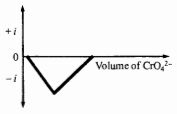
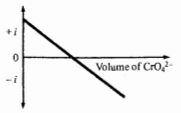
13. The amperometric titration of with is carried out at an applied potential where both titrand and titrant both are reducible but product not. The entire reaction is shown below. The titration curve would resemble most closely which of the following?(A)(B)(C)(D)(E)
14. Which of the following is not a desirable property of an indicator to be used in a complexometric titration that involves EDTA?(A) The indicator for complexometric titration should be a Lewis base.(B) The indicator should bind more tightly to the analyte metal than does EDTA.(C) The complexation reaction between the indicator and the analyte metal should be reversible.(D) The uncomplexed form of the indicator should be a different color than the indicator-metal complex.(E) The indicator should be highly soluble in the sample.
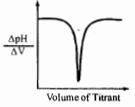
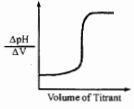
15. In plotting data from the potentiometric titration of a strong acid with a strong, a plot of the change in pH per change in volume of titrant (△pH/△V) versus volume of titrant will have which of the following shapes?(A)(B)(C)(D)(E)
16. Analysis of a bottle of 100 mg aspirin tablets yields an average aspirin content of 99.8 mg, with a standard deviation of ±0.3 mg. Assuming Gaussian statistics, which of the following statements is true?(A) None of the tablets contains less than 99.5 mg of aspirin.(B) 68% of tablets contain between 99.5 and 100.1 mg of aspirin.(C) 97% of tablets contain between 99.5 and 100.1 mg of aspirin.(D) All of the tablets contain less than 100 mg of aspirin.(E) The average value is incorrect.
17. The ionic strength of a solution depends on which of the following? I. The size of ions II. The charges on ions III. The concentration of the ions(A) I and II only.(B) I and III only(C) I, II and III only(D) II and III only(E) None of them.
18. A voltaic cell is constructed by immersing a strip of copper metal in 1.0 MCuSO4 solution and a strip of aluminum in 0.50 M Al2(SO4)3 solution. A wire and a salt bridge complete the circuit. The aluminum strip loses mass, and the concentration of aluminum ions in the solution increases. The copper electrode gains mass and the concentration of copper ions decreases. Which of the following are applicable to the copper electrode? I. The anode II. The cathode III. The positive electrode IV. The electrode at which electrons are produced V. The negative electrode VI. The electrode at which electrons are used up(A) I, III, and V(B) I, IV, and V(C) II, III, and VI(D) II, IV, and VI(E) None of the first four responses contains all the correct choices and no others
19. Which of the following statements is incorrect?(A) A buffered solution is one that resists a change in pH when either hydroxide ions or protons are added.(B) The ability of a buffer system to resist pH changes is its buffer capacity, indicated by ẞ value.(C) The Henderson-Hasselbalch equation enables to approximate the pH of a buffer solution.(D) The hydronium ion concentration of a solution containing a weak acid and its conjugate base is independent of the ratio of the molar concentrations of these two solutes as well as dilution.(E) The composition of buffer solutions can be visualized by plotting the relative equilibrium concentrations of the two components of a conjugate acid/base as a function of the pH of the solution.
20. Which of the following statements is correct?(A) In volatilization gravimetry, the analyte is separated from other constituents of a sample by converting it to a precipitate of known chemical composition.(B) In precipitation gravimetry, the product should be of sufficiently low solubility and reactive with constituents of the atmosphere.(C) A colloid consists of solid particles from 10-2 to 10-6 m in diameter that are visible to the naked eyes.(D) Nucleation is a process in which a maximum number of atoms, ions, or molecules join together to give a small number of larger particles.(E) When a precipitate is formed at high relative supersaturation, nucleation is the major precipitation mechanism.
II. Problem-solving questions, 5% for each question. Please read questions carefully, and show all work, steps, and units.1. An analytical chemist analyzed 100.00 mL of a waste water sample that contains heavy metal ions of and . Titration of both cations in a 25.00 mL aliquot of the sample required 45.81 mL of 0.05285 M EDTA solution. Mercaptoacetic acid and ammonia were then introduced. Production of the Cu complex with the former resulted in the release of an equivalent amount of EDTA, which required a 22.85 mL titration with 0.07238 M . Calculate the concentration in ppm of and in the waste water sample. (Ni: MW= 58.693 g/mol; Cu: MW= 63.546 g/mol) (10 pt)
2. Titrating 30.00 mL of a saturated calcium iodate solution requires 28.91 mL of a 0.092 M solution of Na2S2O3. Calculate Ksp for Ca(IO3)2, according to the equation
3. The overall Kf for the complex ion is 1.7 × 10⁷. Ksp for AgI is 1.5 × . What is the molar solubility of AgI in a solution that is 2.0 M in NH3?
4. A 0.611-g sample of an alloy containing Al and Mg is dissolved and treated to prevent interferences by the alloy's other constituents. Aluminum and magnesium are precipitated using 8-hydroxyquinoline, providing a mixed precipitate of Al(C9H6NO)3 and Mg(C9H6NO)2 that weighs 7.815 g. Igniting the precipitate converts it to a mixture of Al2O3 and MgO that weighs 1.002 g. Please calculate the %w/w Al and %w/w Mg in the alloy. (Al(C9H6NO)3: MW=459.45 g/mol; Mg(C9H6NO)2: MW=312.61 g/mol; Al: MW= 26.982 g/mol; Mg: MW= 24.305 g/mol; Al2O3: MW=101.96 g/mol; MgO: MW: 40.3044 g/mol)
 阿摩線上測驗
登入
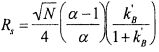 (A) ~80 m and ~6 s.(B) ~70 m and ~8 s.(C) ~50 m and ~7 s.(D) ~60 m and ~6 s.(E) ~50 m and ~8.0 s.
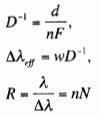 (A) 0.77nm/mm, 6.0×10⁴, 0.0093 nm, 6.0 µm.(B) 0.57 nm/mm, 6.0×10⁴, 0.0063 nm, 12 µm.(C) 0.57 nm/mm, 7.2×10⁴, 0.0093 nm, 6.0 µm.(D) 0.77 nm/mm, 7.2×10⁴, 0.0063 nm, 6.0 µm.(E) 0.77 nm/mm, 6.0×10⁴, 0.0093 nm, 12 µm
 with
 is carried out at an applied potential where both titrand and titrant both are reducible but product not. The entire reaction is shown below. The titration curve would resemble most closely which of the following?
 (A)
 (B)
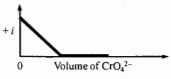 (C)
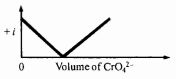 (D)
 (E)
 (B)
 (C)
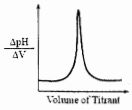 (D)
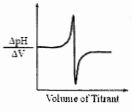 (E)
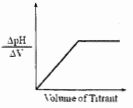
 and
 . Titration of both cations in a 25.00 mL aliquot of the sample required 45.81 mL of 0.05285 M EDTA solution. Mercaptoacetic acid and ammonia were then introduced. Production of the Cu complex with the former resulted in the release of an equivalent amount of EDTA, which required a 22.85 mL titration with 0.07238 M
 . Calculate the concentration in ppm of
 and
 in the waste water sample. (Ni: MW= 58.693 g/mol; Cu: MW= 63.546 g/mol) (10 pt)

 is 1.7 × 10⁷. Ksp for AgI is 1.5 ×
 . What is the molar solubility of AgI in a solution that is 2.0 M in NH3?