所屬科目:研究所、轉學考(插大)◆生物化學
1. Which of the following monosaccharides is NOT an aldose? (A) Erythrose (B) Fructose (C) Glucose (D) Glyceraldehyde (E) Ribose
2. Which of the following is NOT a characteristic of carbohydrates in cells? (A) They serve as energy stores in both plants and animals. (B) They are major structural components of plant tissues. (C) They act as binding sites for proteins. (D) They are organic catalysts. (E) They play a role in cell-cell recognition.
3. Which of the following statements about the pentose phosphate pathway is correct? (A) It generates 36 moles of ATP per mole of glucose consumed. (B) It generates 6 moles of CO₂ for each mole of glucose consumed (C) It provides precursors for the synthesis of nucleotides. (D) It is present in plants, but not in animals. (E) It is a reductive pathway; it consumes NADH.
4. Which of the following contributes to the structural rigidity of cellulose? (A) Adjacent glucose polymers are stabilized by hydrogen bonding. (B) Glucose residues are joined by a-1,4 linkages. (C) Cellulose is a highly branched molecule. (D) The conformation of the glucose polymer is a coiled structure. (E) Adjacent glucose polymers are covalently linked by short peptides.
5. Why are sugars usually found as phosphorylated derivatives in cells? (A) Phosphorylated sugars are important in regulating cellular pH. (B) Unphosphorylated sugars can be transported across cell membranes. (C) Unphosphorylated sugars are rapidly degraded by cellular enzymes. (D) Phosphorylated sugars encode genetic information. (E) None of the above is a correct explanation.
6. Coconut oil contains only a very small amount of unsaturated fatty acids. How can it still have a low melting point? (A) (B) It contains a lot of long-chain fatty acids. It contains mostly short-chain fatty acids. (C) It has only a few hydrogen bonds per fatty acid chain. (D) A and C are true. (E) B and C are true.
7. Which of the following statements is true of lipids? (A) Many contain fatty acids in ester or amide linkage. (B) Glycerophospholipids are found only in the membranes of plant cells. (C) Testosterone is an important sphingolipid found in myelin. (D) They are more soluble in water than in chloroform. (E) Most are simply polymers ofisoprene.
8. The polar head group of cholesterol is: (A) the alkyl side chain. (B) glycerol. (C) the hydroxyl group. (D) the steroid nucleus. (E) choline.
9. Which of the following statements is true concerning integral membrane proteins? (A) Hydrophobic interactions anchor them within the membrane. (B) Ionic interactions and hydrogen bonds occur between the protein and the fatty acyl chains ofthe membrane lipids. (C) These proteins can be solubilized by a solution of high ionic strength. (D) Hydropathy plots can be used to determine the amino acid sequence of the protein. (E) All of the above.
10. Cyclic AMP (cAMP) is important to cell function for all the following reasons EXCEPT: (A) it provides information about the extracellular environment. (B) it permits a large intracellular response to relatively weak extracellular signals. (C) it provides a site for integrating the metabolic requirements of cells. (D) it reversibly regulates enzymatic activity in cells. (E) it is a source of energy for cells.
11. Which of the following types of tissue can use glucose, but not fatty acids, as a source of fuel? (A) Skeletal muscle (B) Heart (C) Liver (D) Brain (E) Adipose tissues
12. Which of the following pathways is activated in response to phosphorylation of key enzymes by AMPК? (A) Fatty acid synthesis in the liver (B) Gluconeogenesis in the liver (C) Glycogenolysis in the heart (D) Glycolysis in the heart (E) Triacylglycerol synthesis in the liver
13. While RNA is often single stranded, transfer RNA (tRNA) is usually found with some double stranded structure. Which of the following explains this? (A) After synthesis, tRNA molecules are hydrolyzed in specific places to allow double stranded structures to form. (B) tRNAs contain self-complimentary stem-loop structures. (C) Regions of tRNAs become supercoiled, thus forcing formation of double stranded regions. (D) tRNAs adopt a form much like Z-DNA allowing double stranded regions to form. (E) None of the above. Which of the following, when paired with its complementary strand, would have the highest Tm? AAGTTCCAGT
14. Which of the following, when paired with its complementary strand, would have the highest Tm?(A)AAGTTCCAGT (B) GCAGCAGCAT (C) ATTACGAGCT (D) GCGAAATCAA (E) TGACCTTGAA
15. Which of the following coenzymes contains an adenylate group? (A) Cobalamin (B) Coenzyme A (C) Pyridoxal phosphate (D) Tetrahydrofolate (E) Thiamine pyrophosphate
16. Which of the following best explains the initial steps for the synthesis of deoxynucleotides? (A) Begins with reduction of the ribose residue in PRPP (B) Deoxy PRPP is formed from deoxyribose-5-phosphate (C) Formed by oxidation of ribonucleotide counterparts (D) Formed by reduction of ribonucleotide counterparts (E) None of the above
17. Base stacking, or the "stacking interaction," is most likely the result of which noncovalent interaction? (A) Charge-dipole interaction (B) Dipole-dipole interaction (C) Dipole-induced dipole interaction (D) van der Waals interaction (E) None of the above
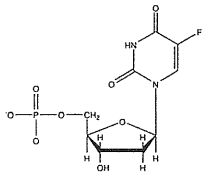
18. The following molecule is an irreversible inhibitor of which enzyme of nucleotide metabolism?
(A) Thymidine kinase (B) Thymidylate synthase (C) Ribonucleotide reductase (D) dCMP deaminase (E) CTP synthetase
19. Which of the following causes denaturation of a protein when disulfide bonds are present? (A) Heat (B) Reducing agent (C) pH changes (D) Detergent (E) All of the above
20. Glyphosate, the active molecule in the herbicide Roundup®, is an inhibitor ofthe enzyme5-enołpuruvylshikimate-3-phosphate synthase in the chorismate synthesis pathway. Which of the following amino acids would NOT be produced in a plant treated with Roundup®? (A) Glycine (B) Tyrosine (C) Proline (D) Histidine (E) Valine
21. Which of the following amino acids relies upon the synthesis of carbamoyl phosphate? (A) Lysine (B) Histidine (C) Arginine (D) Glutamine (E) Asparagine
22. Which amino acid most commonly serves as a general acid and general base in an enzyme mechanism? (A) Serine (B) Arginine (C) Histidine (D) Aspartic acid (E) Cysteine
23. Which of the following mutations is correctly defined? (A) Silent: change of a single base in the non-coding intron region of a gene (B) Missense: substitution of a single base results in a premature stop codon (C) Permissive: results in a protein that has greater thermodynamic stability (D) Frameshift: deletion of a single base results in a single amino acid change (E) Nonsense: substitution of a single base results in a complete change of amino acid sequence
24. Which of the following would contribute to tertiary structure? (A) Charge-charge interaction between lysine and aspartic acid (B) Disulfide bond (C) Hydrogen bond between serine hydroxyl group and amide of glutamine (D) Hydrophobic interaction between leucine and valine (E) All of the above
25. Which of the following is a highly compact structure that is very commonly used to transition from one region of secondary structure to another in a globular protein? (A) a bend (B) ẞ turn (C) a/ß hairpin (D) High-glycine loop (E) None of the above
(1) From the information given in the table, please calculate the specific activity of the enzyme after the final procedure.
(2) Which purification procedure used for this enzyme is the most effective? What is the principle of the procedure?
(3) To verify the identity of the purified recombinant protein, which assay would you suggest to use?
(4) The protein is composed of 420 amino acids.What is the approximate molecular weight of the protein?
(5) When the protein is resolved on the sodium dodecył sulfate polyacrylamide gel electrophoresis (SDS-PAGE) followed by Coomassie brilliant blue R250 (CBR) staining, only a protein band around 55 kDa is observed on the gel. Do you think the result match the predicted molecular weight of the protein from (4)? If not, please explain the possible reason for that. In addition, which experiment would confirm that?
(6) When the protein is resolved on the Native-PAGE followed by CBR staining, three protein bands are observed on the gel. Please explain these three protein bands.
(7) The enzyme has three substrates, including substrate A, B & C. The K, of substrate A, B and C to the enzyme is 8 nM, 50 nM and 4 mM, respectively. Among these three substrates, which one has the best reaction with the enzyme? Why?
(1) Does this mean that anaerobic glycolysis in muscle is a wasteful use of glucose? Please explain.
(2) Under aerobic conditions, all six carbons of glucose are oxidized to CO2. What is the first reaction that releases CO2? (Please include the name of the enzyme.)
(3) After the first reaction releasing CO2, the following oxidation in the mitochondria generates the bulk of the ATP. Please concisely describe the process how the oxidation energy is captured and converted into ATP.
(4) Compound X is an inhibitor of mitochondrial ATP synthesis. It was observed that when compound X was added to cells, the NAD*/NADH ratio decreased. Would you expect X to be an uncoupling agent or an inhibitor of the respiratory chain? Please explain.
3. What process must dietary triacylglycerols go through to be absorbed by intestines and utilized?
4.What are ketone bodies and why do they form during starvation?
 阿摩線上測驗
登入
阿摩線上測驗
登入
 (A) Thymidine kinase (B) Thymidylate synthase (C) Ribonucleotide reductase (D) dCMP deaminase (E) CTP synthetase