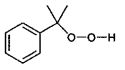
所屬科目:研究所、轉學考(插大)◆有機化學
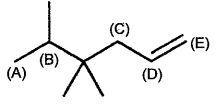
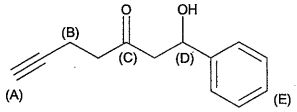
1. Which of the following carbons has the weakest C-H bond?(A) (B) (C) (D) (E)
2. Which of the following carbons has the largest 13C NMR chemical shift?(A) (B) (C) (D) (E)
4. Which of the following compounds would release the largest amount of heat per mole from hydrogenation reaction? (A) (B) (C) (D) (E)
5. Which of the following compounds has the highest reactivity in the Diels-Alder reaction with benzoquinone? (A) (B) (C) (D) (E)
6. What type of reaction mechanism would dominate the following reaction? (A)SN1 (B)SN2 (C)E1 (D)E2 (E)E1cb
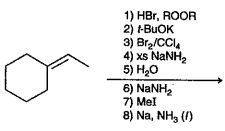
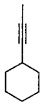
8. Which of the following is the best set of reagents to carry out the transformation shown below? (A) 1) NaOH; 2) EtBr; 3) H2, Pt (B) 1) NaNH2; 2) EtBr; 3) H2, Lindlar's catalyst (C) 1) EtMgBr; 2) Na, NH3(liq) (D) 1) O3; 2) Et2S; 3) H2, Lindlar's catalyst (E) 1) NaNH2; 2) EtBr; 3) Na, NH3(liq)
10. What is the major final organic product of the following sequential reactions? (xs = excess) (A) (B) (C) (D) (E)
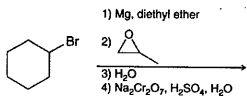
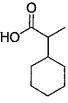
11. What is the major final organic product of the following reactions? (A) (B) (C) (D) (E)
12. What is the major final organic product of the following reactions? (A) (B) (C) (D) (E)
13. What is the major final organic product of the following reactions? (A) (B) (C) (D) (E)
14. What is the major final organic product of the following reaction? (A) (B) (C) (D) (E)No reaction
15. What is the major final organic product of the following reaction? (A) (B) (C) (D) (E)No reaction
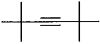
16. What is the major final organic product of the following reaction? (A) (B) (C) (D)Both A and C (E)No reaction
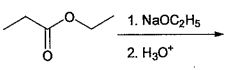
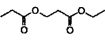
17. What is the major final organic product of the following reaction? (A) (B) (C) (D) (E)
18. Which of the following reagents could not oxidize ethanol? (A) 1)DMSO, (COCI)2; 2) Et3N (B) (C) PCC (D) Na2Cr2O7,H2SO4 (E) SOCI2
19. Which of the following compounds has a chirality center with the R configuration? (A) (B) (C) (D) (E)
20. Which of the following is a meso compound? (A) (B) (C) (D) (E)
24. How many of the following reactions give enantiomeric pairs as major products? (A)1 (B)2 (C)3 (D)4 (E)5
26. What type of compound would best fit the following IR spectrum? (A) Alkene (B) Alkyne (C) Phenol (D) Aldehyde (E) Amide
27. How many triplet signals are expected for the following compound in 1H NMR? (A)0 (B)1 (C)2 (D)3 (E)4
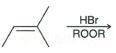
28. Which of the following conditions does not generate carbocation intermediates? (A) (B) (C) (D) (E)
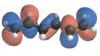
29. Which of the following is the LUMO of 1,3,5-hexatriene? (A) (B) (C) (D) (E)
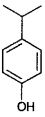
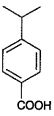
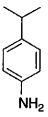
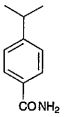
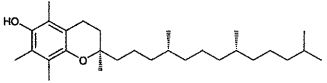
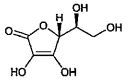
30. Which of the following compounds is not considered as an antioxidant? (A) (B) (C) (D) (E)
 阿摩線上測驗
登入
 (A) (B) (C) (D) (E)
 (A) (B) (C) (D) (E)
 (B)
 (C)
 (D)
 (E)

 (B)
 (C)
 (D)
 (E)

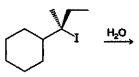 (A)SN1 (B)SN2 (C)E1 (D)E2 (E)E1cb
 (A) 1) NaOH; 2) EtBr; 3) H2, Pt (B) 1) NaNH2; 2) EtBr; 3) H2, Lindlar's catalyst (C) 1) EtMgBr; 2) Na, NH3(liq)
(D) 1) O3; 2) Et2S; 3) H2, Lindlar's catalyst (E) 1) NaNH2; 2) EtBr; 3) Na, NH3(liq)
 (A)
 (B)
 (C)
 (D)
 (E)
 (A)
 (B)
 (C)
 (D)
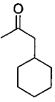 (E)
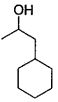
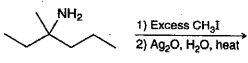 (A)
 (B)
 (C)
 (D)
 (E)

 (A)
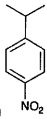 (B)
 (C)
 (D)
 (E)
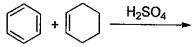 (A)
 (B)
 (C)
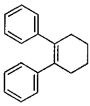 (D)
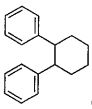 (E)No reaction
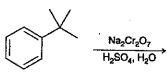 (A)
 (B)
 (C)
 (D)
 (E)No reaction
 (A)
 (B)
 (C)
 (D)Both A and C (E)No reaction
 (A)
 (B)
 (C)
 (D)
 (E)

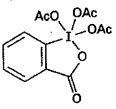 (C) PCC (D) Na2Cr2O7,H2SO4 (E) SOCI2
 (B)
 (C)
 (D)
 (E)
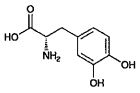
 (B)
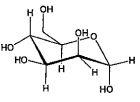 (C)
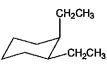 (D)
 (E)

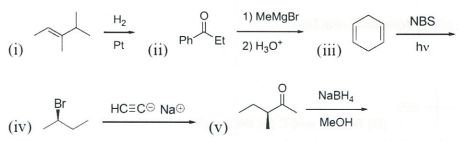 (A)1 (B)2 (C)3 (D)4 (E)5
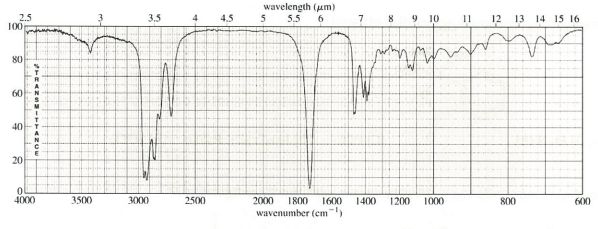 (A) Alkene (B) Alkyne (C) Phenol (D) Aldehyde (E) Amide
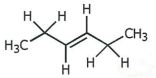 (A)0 (B)1 (C)2 (D)3 (E)4
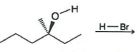 (B)
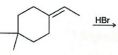 (C)
 (D)
 (E)
 (B)
 (C)
 (D)
 (E)

 (B)
 (C)
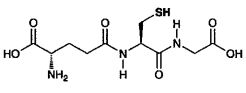 (D)
 (E)