所屬科目:研究所、轉學考(插大)◆審計學
1. Which of the following statements is correct concerning both an engagement to compile and an engagement to review a nonissuer's financial statements? (A) The accountant expresses no assurance on the financial statements. (B) The accountant should obtain a written management representation letter. (C) The accountant need not obtain an understanding of internal control. (D) The accountant must be independent in fact and appearance.
2. According to rules issued under the Sarbanes-Oxley Act, which of the following nonaudit services is an accounting firm permitted to provide for an issuer audit client without impairing the accounting firm's independence? (A) Providing an expert opinion in order to advocate the client's interest in litigation. (B) Providing an expert opinion in order to advocate the client's position in a regulatory investigation. (C) Providing factual accounts in testimony explaining positions taken during the performance of any services provided to the client. (D) Providing legal services to the client in a foreign jurisdiction.
3. Before accepting an audit engagement, a CPA should evaluate whether conditions exist that raise questions as to the integrity of management. Which of the following conditions most likely would raise such questions? (A) There are significant differences between the entity's forecasted financial statements and the financial statements to be audited. (B) The CPA will not be permitted to have access to sensitive information regarding the salaries of senior management. (C) There have been substantial inventory write-off's just before the year end in each of the past four years. (D) The CPA becomes aware of the existence of related party transactions while reading the draft financial statements.
4. Which of the following factors most likely would be considered an inherent limitation to an entity's internal control? (A) The ineffectiveness of the entity's audit committee. (B) Collusion of employees in circumventing internal controls. (C) The lack of resources to monitor internal controls. (D) The complexity of the entity's electronic order processing system.
5. Which of the following activities is not an element of a CPA firm's quality control system to be considered in establishing quality control policies and procedures? (A) Deciding whether to accept or continue a client relationship. (B) Selecting personnel for advancement who have the necessary qualifications. (C) Assessing a client's ability to establish effective internal controls. 12 (D) Monitoring the effectiveness of professional development activities.
6. During an engagement to compile the financial statements of a nonissuer, an accountant becomes aware that management had stated land at appraised value and that, if GAAP had been followed, both the land account and stockholders' equity would have been decreased by $1 million, a material amount. The accountant decides to modify the standard compilation report because management will not revise the financial statements. Under these circumstances, the accountant should (A) Issue either an adverse opinion or a qualified opinion, depending on materiality, because of the departure from GAAP. (B) Add a separate paragraph to the accountant's report that restricts the distribution of the financial statements to "internal use only." (C) Add a separate paragraph to the accountant's report that discloses the departure from GAAP and its effects on the financial statements. (D) Add a separate paragraph to the accountant's report that explains the underlying purpose of recording assets at historical cost.
7. Mill, CPA, was engaged by a group of royalty recipients to apply agreed-upon procedures to financial data supplied by Modern Co. regarding Modern's written assertion about its compliance with contractual requirements to pay royalties. Mill's report on these agreed-upon procedures should (A) Disclaimer of opinion about the fair presentation of Modern's financial statements. (B) List of the procedures performed (or reference thereto) and Mill's findings. (C) Opinion about the effectiveness of Modern's internal control concerning royalty payments. (D) Acknowledgment that the sufficiency of the procedures is solely Mill's responsibility.
8. Which of the following procedures would an auditor most likely perform to obtain evidence about the occurrence of subsequent events? (A) Verify inventory pledged under loan agreements by confirming the details with financial institutions. (B) Inquire about the current status of transactions that were recorded on the basis of preliminary data. (C) Compare the financial statements being reported on with those of the prior year. (D) Trace information from shipping documents to sales invoices and sales journal transactions.
9. In searching for unrecorded liabilities, an auditor most likely would examine the (A) Cutoff bank statement for deposits recorded in the books, but not by the bank. (B) Details of accounts receivable confirmations that are classified as "exceptions". (C) Files of purchase requisitions for items ordered just before the year end. (D) Receiving reports for items received before year end, but not yet recorded.
10. An auditor is using statistical sampling in testing whether cash disbursements were properly authorized. The sample results indicate that the sample rate of deviation plus the allowance for sampling risk exceeds the tolerable rate. Under these circumstances, the auditor most likely would reduce the (A) Planned reliance on the prescribed internal control. (B) Assessed level of control risk. (C) Planned reliance on substantive tests. (D) Tolerable rate of deviations.
11. In assessing the tolerable rate of exceptions of a test of controls that was performed using statistical sampling, an auditor should consider that (A) Deviations from pertinent controls do not affect the risk of material misstatement in the accounting records. (B) Deviations from pertinent controls at a given rate ordinarily result in misstatements at a lower rate. (C) When the degree of assurance desired in a sample is high, the auditor should allow for a high level of sampling risk. (D) Increasing the number of items selected for the test of controls usually increases the tolerable rate of exceptions.
12. An auditor is selecting prenumbered purchase orders for testing an entity's internal control activities related to their proper approval before office equipment is ordered. The auditor is matching random numbers with the purchase order numbers to determine which purchase orders to inspect. If a random number matches a voided purchase order, the auditor ordinarily would replace the voided purchase order with another if the voided purchase order (A) Represents office equipment ordered and never received. (B) Has been properly voided in the normal course of business. (C) Represents office equipment ordered and canceled before being processed by the vendor. (D) Has been electronically deleted from the purchase order file.
13. Which of the following factors most likely would heighten an auditor's concern about the risk of fraudulent financial reporting? (A) The audit committee's approval of the initial selection of accounting principles. (B) A lack of competition in the entity's industry, accompanied by increasing profit margins. (C) Management's disclosure of unresolved litigation and contingent liabilities. (D) Year-end adjustments by the entity that significantly affect financial results.
14. 有人主張A公司的內部控制不良,是因為: (A) 甲君私自成立A甲公司,不但沒有得到A公司董事會的允許,還動用A1公司的資產替A甲公司擔保, 操守不佳。 (B) 甲君既是A公司的董事長,卻另外成立A甲公司,而A甲公司可能幫助A公司拓展業務。 (C)A公司持有A1公司的股票,甲君亦持有A1公司的股票,造成交叉持股。 (D) 甲君侵占A集團的資產。
15. 有人主張B銀行的內部控制不良,最可能的原因是: (A)109年2月,借款戶A1公司大部分的生產線已停工,用電量已大幅減少,但B銀行卻渾然不知,未及時抽銀根。 (B)109年3月初,爆出甲君掏空A公司的消息,B銀行雖知悉,但 A 公司究竟不是借款戶,所以沒有及時 抽銀根。 (C)B銀行廈門分行雖握有A公司的股票,但竟在事發後全數被提領一空。 (D)109年7月,A1公司完全停工,B銀行搬走A1公司廠區內的機器設備,支付租金,租用他公司的倉儲 地放置機器。
16. 台灣可不可以主張 A 甲公司的內部控制良好? (A) 可以,因為 A 甲公司不但沒有被甲君掏空,而且被甲君寵愛,取得甲君所控制 A1 公司的機器設備當作 借款的抵押品。 (B) 可以,因為 A 甲公司是甲君所創,而且還不受 A 公司節制。 (C) 不可以,因為 A 甲公司遵循法令的目標可能達不成。 (D) 不可以,因為 A 甲公司之成立沒有通過 A 公司的董事會。
17. 以下諸陳述與A公司的財務報表有關,正確者有哪幾項?
I. A公司需編製一般目的財務報表,並請會計師查核,以供不特定外部人使用。
II. 一般目的財務報表即一般用途財務報表。
Ⅲ. 我國「財務報導之觀念架構」SP1.1 所指出的報導目的,只有一般用途的財務報導,沒有特定用途的 財務報導。
Ⅳ. 每家公司在做特定決策時,實質上都應編製特定用途的財務報表,供特定內部人或外部人使用,A公司也不例外。
Ⅴ. A公司的運作採區塊鏈,故財務報表不可能不實。 (A) I、II、III、IV、V (B) I、II、III、IV (C) I、III、IV、V (D) I、III、V
18. 109年9月底,金管會懲戒查帳會計師乙君,最可能的理由是: (A)A公司109年第二季的財務報表不實。 (B)A公司108年第四季財務報表的查核報告不實。 (C)A公司108年第四季的財務報表不實。 (D) 以上均是。
19. 金管會懲戒A公司查帳會計師乙君,理由可以是: (A) A1公司的機器被挪用,舞弊發生,但乙君未參照審計準則公報第74號「查核財務報導對舞弊之責任」 的規定,向主管機關舉報。 (B)A 甲公司向銀行超貸,屬於不法事項,但乙君未參照審計準則公報第72號「查核財務報表對法令遵循之 考量」的規定,向主管機關舉報。 (C) 會計師乙君在承接 A 公司的委任時,因查核風險高而計收高額的查帳公費。 (D) 乙君查核 A 公司 108 年度財務報告,於109年3月底出具查核報告,對外公開,後於109年7月獲知A公司發生期後事項,但會計師並未對108年度查核報告採取適當行動,背離審計準則公報第55號「期後 事項」的規定。
20. 審計準則公報第55號「期後事項」要求會計師對已對外公開之前期報告採取適當行動,目的在: (A) 避免財務報表使用者信賴原財務報告。 (B) 避免財務報表使用者信賴原查核報告。 (C) 更正會計師在查核前期財務報告(已對外公開者)時之故意錯誤。 (D) 更正會計師於查核尚未公開的前期財務報告之疏失。
21. 會計師乙君於查核簽證A公司108年財務報表時,將現金及銀行存款之存在性列為關鍵查核事項。下列與關 鍵查核事項有關之陳述,正確者有幾項?
I. 乙君與A公司治理單位溝通時,溝通之內容包括與現金及銀行存款之存在性有關之事項。
II. 乙君從與A公司治理單位溝通之多個事項中,選出與現金及銀行存款之存在性有關之事項,顯示乙君認為該事項的風險頗高。
III. 乙君認為:對本期財務報表之查核而言,現金及銀行存款之完整性也是最難查核的事項之一。 IV. 乙君認為:對A公司而言,現金及銀行存款之存在性,是經營風險較高之領域。
V. 乙君認為:自己查核A公司的現金及銀行存款,其存在性是該查核個案審計風險較高之領域。 (A)2項 (B)3項 (C)4項 (D)5項全部
22.A公司掏空案爆發後,甲君失聯,A公司的管理階層易人,由丙君掌握A公司的經營權,丙君並擔任發言人。109年9月,丙君責備乙君會計師未盡專業上應有之注意,同月,金管會亦懲戒乙君會計師,金管會懲戒會計師的理由,可能是: (A)A公司存放大陸銀行之存款,佔其總資產的 52%,雖然會計師發出函證,但對詢證函的控制不佳。換言之,雖乙君有執行查核程序,但所執行的查核程序非屬有效。 (B) 丙君宣稱乙君雖承諾要協助A公司調查,但承諾並未兌現。 (C) 丙君想知道 A 公司過去與銀行往來的情況,向乙君索取現金日報表,但開口要了三次,乙君都說沒有。 (D) 丙君懷疑乙君塗改手寫的工作底稿,塗改處雖有簽名,但工作底稿是會計師在業務上作成的文書,也不可以塗改。
23. 以下判斷C機關是何機關的諸陳述中,何者最為適當? (A)C機關是立法院,因為根據表一只有立法院才設有兩位副秘書長。 (B)C 機關是考試院,因為根據表一只有考試院院長才有這麼高額的特別費。 (C)C機關是監察院,因為政務委員與監察委員都是委員,監察委員是政務委員的尊稱。 (D)C機關是行政院,因為根據表一只有行政院才設有政務委員。
24. 承前題,判斷C機關是何機關,是否與審計有關? (A) 審計毫無關係,因為民間會計師不敢去查政府機關。 (B) 與審計毫無關係,因為政府機關之職能分工,應屬政府會計之範疇,與內部控制無關;與內部控制無關, 即與審計無關。 (C) 能與審計有關,因為本案涉及機關之內部稽核,而可能適用審計準則公報第 72 號「採用內部稽核人員之 工作」。 (D) 與審計一定有關,因為進行審計工作前,要先辨認受查者是誰,當受查者不同時,組織文化不同,所需採 行的審計程序也可能不同。
25. 審計可分為內部與外部兩類,前者由外部人進行,後者由內部人進行。以下四個陳述中,最適當者為: (A) 本案金額只有區區三千元,不可能也不應該有任何人發動審計權,不管內部審核或外部監督均不應有所 動作,否則,嚴重違反重大性原則。 (B) 本案可能同時涉及內部審計及外部審計。 (C) 本案只可能涉及外部審計,由監察院會同主計人員進行。 (D) 本案只可能涉及內部審計,由審計部人員擔負內部審核之責。
26. 本題表一之資料,係來自中華民國 109 年度 C 機關歲出計畫提要及分支計畫概況表。該表之格式如下: 以下諸陳述中,何者錯誤? (A)「經資門併計」的意思,是:本表列示經常門與資本門二者的情況。 (B)工作計畫的名稱,是「一般行政」。 (C)上表「一般行政」的金額是937,084千元,而表一的金額卻是4,768千元,二者不一致,必有錯誤。 (D)上述表格所描述的資訊,僅與C機關的歲出有關,會有另外的表格揭露 C 機關的歲入資訊。
27. 丁君赴 D 玩具店用振興券買積木送外孫,網友發現 D 玩具店在開立統一發票時,打上 C 機關的統一編號,輿 論譁然。以下五陳述中,正確有幾項?
I 輿論譁然有所不當,區區3千元,與4,768千元相較,不到 0.1%,不具重大性,何必大驚小怪。
II 輿論譁然是媒體炒作3千元在特別費的限額內,不必大驚小怪。
III 輿論譁然並無不當,因為很少看見如此疼愛孫輩的高官外祖父。
IV 輿論譁然並無不當,因為一旦輸入 C 機關的統編,即表示最終支付此筆支出的人,不是丁君,而 是政府機關。
V 輿論譁然並無不當,因為 C 機關好開統編,再加上三倍券可能洗成現金,入私人口袋。 (A)2 項 (B)3項 (C)4項 (D)5項全部
28. 下列有關發票之敘述,何者錯誤? (A)發票為記帳憑證,會計人員憑以記帳。 (B)發票為原始憑證,不論組織記帳,是採用單式簿記或複式簿記,都需取得。 (C)查核人員不論查核收入或支出,都可能會查發票。 (D)查核人員查核發票,可以順查,也可以逆查。
29. 在「各級政府機關特別費支用規定」下,特別費的使用範圍,有:
1、贈送婚喪喜慶之禮金、奠儀、禮品、花籃(圈)、喜幛、輓聯、中堂及匾額等支出。
2、對本機關及所屬機關人員之獎(犒)賞、慰勞(問)及餐敘等支出。
3、對外部機關(即本機關及所屬機關以外之機關)、民間團體與有關人士等之招待、餽(捐)贈及慰問等支出。 所以,有關購買玩具的支出能否報支特別費一事,以下諸陳述中何者最正確: (A)送給家人的積木是禮品,符合上述第一類支出,故能用特別費來報支。 (B) 上述三類支出每類均有「等」字,故能用特別費來報支。 (C) 只有少數送給公務員的禮品,才可能動用特別費來報支。 (D) 若上述三類使用範圍中,有「積木」字樣,則能報支特別費,而目前的使用範圍並無「積木」字樣。
30. 有關能否動用公款報支購買積木的判斷,以下諸陳述中何者最正確? (A)C機關能在公務預算報支,因C機關已取得開立該機關統編之統一發票。 (B) C 機關能在公務預算報支,因C機關已取得開立D玩具店統編之統一發票。 (C)C機關能否在公務預算報支,繫於C機關所取得的發票是否為表一所列人士消費之發票,只要是其本人之消費,而非收集所得他人消費之發票,均可在公務預算報支。 (D)C機關能否在公務預算報支,與丁君究竟是使用振興券或現金來支付,並無關係。
31. 查核人員在查核企業的支出時,在下列情況中,最難發現者,是: (A) 發票沒有抬頭。 (B) 使用他人提供的發票報銷。 (C) 發票上沒有清楚註明支出的用途或案據。 (D) 經手人既未取得統一發票又未取得收據,而是自己開具收支證明單,說明不能取具之原因。
1. The main reason that CPAs are prohibited to charge professional fees based on the outcome of engagements is to help CPAs maintain: (A) independence (B) technical standards (C) objectivity (D) confidentiality.
2. Which of the following is not a commonly used test of details of balances procedures for financial instruments accounts? (A) Physical inspection of the securities or derivative contracts (B) confirmation with the broker-dealer (C) verify proper classification in the footnotes as level 1,2, or 3 fair value estimates (D) Review minutes and loan agreements for any restrictions on cash.
3. Which of the following audit procedures is not commonly used to search for contingent liabilities? (A) Inquire of management (orally and in writing) about the possibility of unrecorded contingencies. (B) Review the minutes of directors' and stockholders' meetings for indications of lawsuits or other contingencies. (C) Review for contingent liabilities performed at the beginning and the end of the audit. (D) Analyze legal expense for the period under audit, and review invoices and statements from legal counsel for indications of contingent liabilities.
4. Which of the following is an accurate statement regarding presentation and disclosure? (A) Auditors generally set the risk as low that all required information may not be completely disclosed in the footnotes. (B) Audit tests performed in earlier audit phases provides sufficient appropriate evidence about contingent liabilities and subsequent events. (C) Auditors do not conduct tests of controls related to disclosures when the initial assessment of control risk is below maximum. (D) In completing the audit phase, auditors evaluate whether the overall presentation of the financial statements and related footnotes complies with accounting standards.
5. Regarding the reports on controls at service organizations (SOC Reports), which of the following statements is not true? (A) An SOC 1 report, Report on Controls at a Service Organization Relevant to User Entities' Internal Control Over Financial Reporting, is intended to meet the needs of user entities and their auditors. (B) SOC 1 Reports are used to plan and perform audits of the user entity's financial statements by user auditors. (C) The SOC 1 guidance for service auditors and the guidance for user auditors are both in the attestation standards. (D) SOC 2 Reports report about controls at a service organization that affect the security, availability, and processing integrity of the systems the service organization uses to process users' data and the confidentiality and privacy of the information processed by these systems.
 阿摩線上測驗
登入
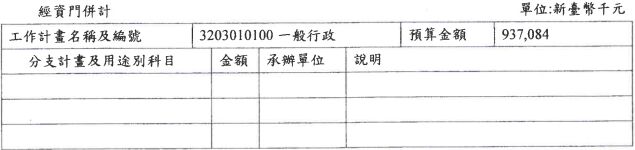 (A)「經資門併計」的意思,是:本表列示經常門與資本門二者的情況。 (B)工作計畫的名稱,是「一般行政」。 (C)上表「一般行政」的金額是937,084千元,而表一的金額卻是4,768千元,二者不一致,必有錯誤。 (D)上述表格所描述的資訊,僅與C機關的歲出有關,會有另外的表格揭露 C 機關的歲入資訊。