所屬科目:研究所、轉學考(插大)◆通訊系統
(d) (6%) To increase data rate, suppose now you want to send THREE messages instead of two, which again occur with equal a priori probability. Suppose SA(t), SB(t), and sc(t) are chosen to represent these messages, and the power spectral density of the noise is . The union bound of the average symbol error probability is_____________________
(a) (4%) Find the entropy H(Y) and the conditional entropy H(Y|X).
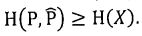
(d) (5%) Suppose the prior probability is not known in advance. We manage to produce an estimated prior probability which may or may not be equal to the true prior probability P(X = 0) = p. In this case, the cross- entropy between the true and estimated prior distributions P and is defined by , which can be considered as an approximated entropy of X. Please show that the cross- entropy is always no less than the true entropy H(X) of X, i.e. (Hint: You may use the Jensen's inequality: plog2 a + (1 -p)log2≤ b < log2(pa +(1 -p)b) for 0 ≤p ≤ 1, a > 0, and b >0.)
(b) (10%) Sketch the block diagram of the coherent receiver of a typical QAM system. Furthermore, derive what happens if the local oscillation used by the "coherent" receiver is incorrect (say, the frequency is f0 + △f).
(c) (5%) Let the symbol error rate of QAM be approximated aswhere Q represents the Q function and γ is the SNR. To improve the symbol error rate from , roughly how much shall the SNR increase?
(e) (7%) Now consider the car's speed v and the Doppler effect (the carrier frequency is modified with, where c is the speed of light, and choosing the sign according to the moving direction). Derive the mathematical expression of the received signal.
 阿摩線上測驗
登入
 using the Gram-Schmidt procedure, where
 is proportional to sA(r). The
signals sA(X), sB(t), sc(t), and sD(t) can be expressed as a linear combination of
these basis functions as
 . The union bound of the average
symbol error probability is_____________________
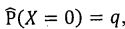 which may or may not be equal to the true prior probability P(X = 0) = p. In this case, the cross- entropy between the true and estimated prior distributions P and
 is defined by
 , which can be considered as an approximated entropy of X. Please show that the cross- entropy
 is always no less than the true entropy H(X) of X, i.e.
 where Q represents the Q function and γ is the SNR. To improve the symbol error rate from
 , roughly how much shall the SNR increase?
 , where c is the speed of light, and choosing the sign according to the moving direction). Derive the mathematical expression of the received signal.