所屬科目:研究所、轉學考(插大)◆綜合化學
1. According to the quantum mechanics, which is the correct statement for 3s, 3p and 3d of a helium ion, He⁺? (A) The orbital radii are the same for 3s, 3p and 3d. (B) 3s, 3p and 3d are degenerate. (C) The order of their energy levels is 3s < 3p < 3d. (D) 3s, 3p and 3d have the same number of the radial nodes. (E) The order of their energy levels is 3s > 3p > 3d.
2. What is the best description for the curved line in the figure? Please note that a₀ is the Bohr radius. (A) the radial distribution function of 2s of a hydrogen atom. (B) the radial distribution function of 3s of a hydrogen atom. (C) the radial distribution function of 3p of a hydrogen atom. (D) the radial wavefunction of 2s of a hydrogen atom. (E) the radial wavefunction of 3p of a hydrogen atom.
3. If a helium atom is confined to a 2D square box, the side length of the square box is 48 nm. What is the energy required to move the helium atom from the ground state to the second excited state? The energy level of a 2D square box is (A) (B) (C) (D) (E) There is not enough information.
4. Please identify the correct pair of atoms which are diamagnetic. (A) Pd, Hg (B) Ga, Si (C) Cr, Mn (D) Pb, Sn (E) O, N
5. Which one is the correct arrangement in order of increasing electron affinity of the first electron from left to right? (A) Li, B, N, O (B) Be, C, N, F (C) N, B, C, O (D) Be, C, N, Na (E) N, Li, B, F
6. The quantum numbers (4, 3, 0, +1/2) represent an excited state electron except for (A) Silver (B) Scandium (C) Cesium (D) Zirconium (E) Tungsten
7. Arrange the following bonds in order of decreasing bond strength (A) F-F > Cl-Cl > Br-Br > I-I (B) Cl-Cl > F-F > Br-Br > I-I (C) Cl-Cl > Br-Br > F-F > I-I (D) F-F > Cl-Cl > I-I > Br-Br (E) Cl-Cl > Br-Br > I-I > F-F
8. How many σ and π bonds are there in the Lewis structure of sulfite ion which minimizes formal charges? What is the molecular geometry? (A) 4 σ bonds, 2 π bonds, tetrahedral (B) 3 σ bonds, 1 π bonds, trigonal pyramidal (C) 4 σ bonds, 0 π bonds, tetrahedral (D) 3 σ bonds, 3 π bonds, trigonal planar (E) 3 σ bonds, 0 π bonds, trigonal planar
9. Among the following diatomic molecules, how many molecules will their bond length decrease when they obtain one extra electron? Li2, B2, C2, N2, O2, F2, NO, CN (A) 2 (B) 3 (C) 4 (D) 5 (E) 6
10. Predict the smallest actual bond angle in IBr3 using the VSEPR theory (A) more than 120° (B) exactly 120° (C) between 109° and 120° (D) between 90° and 109° (E) less than 90°
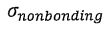
11. Considering X-axis as the internuclear axis for N2, what kind of the molecular orbitals will be formed when ? (A) (B) (C) (D) (E)
12. When one mole of a real gas isothermally expands from 1 L to 2 L against a vacuum, which is the correct expression? (A) q = 0 and ΔS > 0 (B) w = 0 and ΔU = 0 (C) w = 0 and ΔS = 0 (D) q = 0 and ΔS = 0 (E) w = 0 and ΔS > 0
13. Which is the correct description? (A) An atom with the electronic configuration [Kr] has one valence electrons. (B) Thallium is a transition metal atom. (C) are isoelectronic. (D) The effective nuclear charge can be larger than the actual nuclear charge Z. (E) Europium and californium belong to lanthanides.
14. Germanium crystallizes in a cubic lattice. The atomic mass and radius of a germanium atom are 72.6 g. and 123 pm respectively. The unit cell edge length is 566 pm. The density of germanium is 5.33 g.. How many germanium atoms are there in a unit cell? (A) 2 (B) 4 (C) 8 (D) 12 (E) 24
15. Consider the van der Waals coefficients in the following table, which molecule may have the strongest attractive intermolecular interactions? (A) Benzene (B) Ammonia (C) Chlorine (D) Diethyl ether (E) Water
16. Consider the following statements:
a. Real gases act more like ideal gases as the pressure increases.
b. The Maxwell speed distribution graph for different molecules shows that heavier molecules travel with speeds close to their average values than the lighter ones.
c. At 1 atm and 273 K, every molecule in a sample of a gas has the same speed.
d. The kinetic model of gases states that gas particles move in ordered and non-random motions.
e. At constant T, Xe molecules at 1 atm and He molecules at 5 atm both have the same average kinetic energy.
Which of these statements are true? (A) a and d (B) b and e (C) a and e (D) b and e (E) a and c
17. The melting points of the oxides of the third-period elements are given below. How many oxides are the molecular solids?
Na2O (1275 °C), MgO (2800 °C), Al2O3 (2045 °C), SiO2 (1610 °C), P4O6 (23.8 °C), SO3 (16.8 °C), Cl2O7 (-91.5 °C) (A) 1 (B) 2 (C) 3 (D) 4 (E) There is no correct answer.
18. Which is the correct statement for the second law of thermodynamics? (A) In any cyclic process the entropy will either decrease or remain the same. (B) A system's entropy approaches a constant value as its temperature approaches absolute zero. (C) If two systems are in thermal equilibrium with a third system, then they are in thermal equilibrium with each other. (D) In a thermodynamic process involving a closed system, the increment in the internal energy is equal to the difference between the heat accumulated by the system and the work done by it. (E) It is impossible for a system to receive a given amount of heat from a high-temperature reservoir and provide an equal amount of work output.
19. A group of scientists recently synthesis a brand-new compound, named as Q. Please use the following thermodynamic data to estimate the boiling temperature of Q at P = 1 bar. Here are thermodynamic data of Q at 25 °C, and it is assumed that and S° are independent of temperature. (A) 8442 K (B) 508.7 °C (C) 3818 K (D) 898.2 °C (E) There is not enough information.
20. According to the second law of thermodynamics, which is the correct expression for the spontaneous reaction? (A) > 0 (B) > 0 (C) /T > 0 (D) + P·ΔV (E)
21. Which is the correct statement for a substance when the temperature increases? (A) The entropy of a substance always increases when the temperature increases. (B) The entropy of a substance always decreases when the temperature increases. (C) The free energy of the formation of a substance always increases when the temperature increases. (D) The free energy of the formation of a substance always decreases when the temperature increases. (E) None of the above is correct.
22. What is the correct description for the role of the light in the photosynthesis reaction from the point of view of thermodynamics? (A) The light provides the heat required by the photosynthesis reaction. (B) Without the light, the photosynthesis reaction is nonspontaneous. The light provides the enthalpy which make the reaction spontaneous. (C) The light provides the enthalpy which causes the photosynthesis reaction to release the heat. (D) Without the light, the photosynthesis reaction is nonspontaneous. The light provides the free energy which makes the reaction spontaneous. (E) None of the above is correct.
23. The reaction 2 Cu(s) + CO2(g) → 2 CuO(s) + C(s) is not spontaneous at all temperatures. Predict the sign of the reaction enthalpy and entropy, respectively. (A) + and + (B) − and − (C) + and − (D) − and + (E) There is not enough information
24. The system contains 1.50 mole N2 at 298 K and 1 atm, and is initially at equilibrium. Calculate the change in internal energy when 2.50 kJ of energy is transferred as heat to the system at constant pressure. Assume that N2 behaves as an ideal gas and its heat capacity is mainly contributed by translational and rotational motion but none of vibrational ones. (A) +1.50 kJ (B) +1.79 kJ (C) +1.89 kJ (D) +2.50 kJ (E) None of the above is correct.
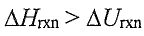
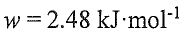
25. For the reaction CO2(aq) → CO2(g), at 298 K. At constant pressure and temperature, which of the following statements is true? (A) (B) (C)¹ (D)(E) None of the above is correct.
26. The vapor pressure of a binary liquid mixture that is composed of hydrazine (b.p. 114 °C) and water (b.p. 100.0 °C) exhibits a negative deviation from Raoult's law. Then we know that (A) the mixture on fractional distillation yields a low-boiling azeotrope. (B) the mixture on fractional distillation yields a high-boiling azeotrope. (C) the boiling point of the mixture is always between 100 and 114 °C. (D) the boiling point of the mixture may be higher than 114 °C. (E) the boiling point of the mixture may be lower than 100 °C
27. The Kjeldahl digestion is a method for the quantitative determination of nitrogen contained in organic samples. Firstly the sample is oxidized by concentrated sulfuric acid at high temperature, and then the N-containing products are separated from other products and quantized. Which of the following sets of substances are produced in the oxidation reaction? (A) CO2, H2O, N2 (B) CO2, H2O, (C) C, H2O, HNO3 (D) CxHy, H2O, CO2, HNO3 (E) CxHy, H2O, CO2, HCN
28. For the oxides CrO, Cr2O3, and CrO3, which of the following is true? (A) CrO is acidic, and Cr2O3 and CrO3 are basic. (B) CrO and Cr2O3 are acidic and CrO3 is basic. (C) CrO is basic, Cr2O3 is amphoteric, and CrO3 is acidic. (D) All the oxides are acidic. (E) All the oxides are basic.
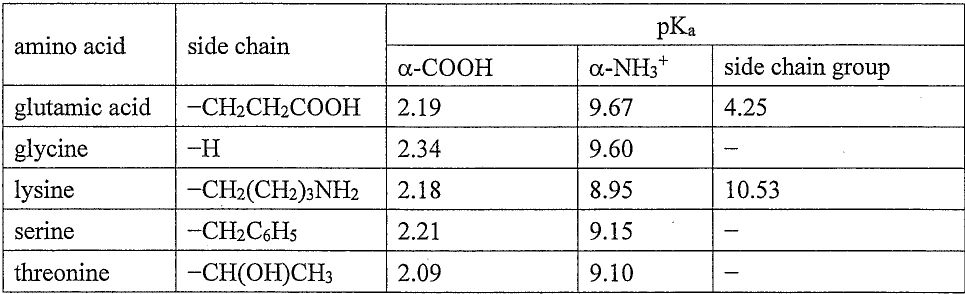
29. Given that :
Which of the amino acids has the lowest isoelectric point? (A) glutamic acid (B) glycine (C) lysine (D) serine (E) threonine
30. According to the crystal field theory, is a low-spin or high-spin complex cation? How many unpaired d-electrons are expected for it? (A) low-spin, 0 unpaired electron (B) low-spin, 1 unpaired electron (C) low-spin, 3 unpaired electrons (D) high-spin, 3 unpaired electrons (E) high-spin, 5 unpaired electrons
31. Which of the following reactions involving magnesium is incorrect? (A) MgC2 + H2O → MgO + C + H2 (B) Mg3N2 + 6 H2O → 3 Mg(OH)2 + 2 NH3 (C) MgH2+2 H2O → Mg(OH)2 + 2 H2 (D) at high temperature, 3 Mg + N2 → Mg3N2 (E) at high temperature, 3 Mg + 2 NH3 → Mg3N2 + 3 H2
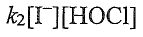
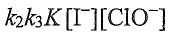
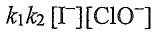
32. The rate law for the following mechanism is
(A) reaction rate =(B) reaction rate = (C) reaction rate = (D) reaction rate = (E) reaction rate =
33. Which of the following systematic names of coordination compounds is correct? (A) Ag(NH3)2[Ag(CN)2] : diamminesilver(I) dicyanoargentate(I) (B) Fe(CO)s: pentacarbonmonoxoiron(0) (C) : dibromodi(ethylenediamine)cobalt(III) ion (D) [Cr(H2O)4Cl2]C1·2H2O : tetraaquadichlorochromium(III) chloride diaqua (E) : trichloroammineplatinum(II) ion
34. The formula of neoprene, one of the synthesis rubber families, is
What is the name of the monomer used to produce neoprene in industry? (A) 2-chloro-1-butene (B) 2-chloro-2-butyne (C) 1,2-dichloro-1-butene (D) 2-chloro-1,3-butadiene (E) ethyne and chloroethene
35. The piranha solution is a strong oxidizing agent used to decompose organic matters. It can also add hydroxyl groups to hydrophobic surface and make them hydrophilic. What is the composition of the piranha solution? (A) HCl and HNO3 (B) H2O2 and H2SO4 (C) H2O2 and NaBH4 (D) KMnO4 and NaOH (E) HCI and HAuCl4
36. ABS is a very common thermoplastic plastic in life. Which of the following statements about ABS is incorrect? (A) ABS is a copolymer. (B) The letter "S" of ABS is styrene monomer. (C) The letter “A” of ABS is acrylonitrile monomer. (D) High temperature makes ABS irreversibly hardening. (E) ABS offer poor resistance to many kinds of solvents.
37. When 0.02 mole of NaF is added into the 2.0 L, 0.01 M CaCl2 solution at 27 °C. It makes the osmotic pressure of this solution (A) increasing by 12 Pa (B) increasing by 0.12 atm (C) increasing by 0.49 atm (D) decreasing by 0.25 atm (E) no change
38. The organic compounds with the formula C4H8O (A) have no optical isomer (B) have no geometric isomer (C) can be an unsaturated cyclic ether (D) can be a tertiary alcohol (E) can be a saturated secondary alcohol
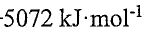
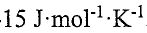
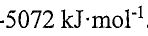
39. The equilibrium constant K measurements at several different temperatures for a reaction showed the relationship between K and T (in Kelvin): lnK = -1.8 +610×(1/T). Which of the followings is true? (A) This reaction is endothermic (B) The ΔG° of this reaction is +(C) The ΔS° of this reaction is -. (D) The ΔH° of this reaction is . (E) The relationship should be lnK = x/T. The intercept -1.8 must be experimental error.
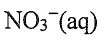
40. Given the half reaction: → NO(g), in acidic solution, how many electrons appear in the half-reaction when it is properly balanced? (A) 2 (B) 3 (C) 4 (D) 6 (E) 8
41. Which of the following cations is likely to have the largest exothermic hydration enthalpy? (A) (B) (C) (D) (E)
42. Given that E°() = +0.15 V and E°() = +0.34 V. Then E°() = (A) +0.04 V (B) +0.19 V (C) +0.49 V (D) +0.53 V (E) none of above
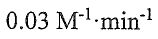
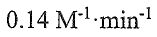
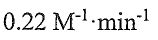
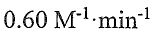
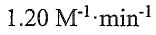
43. In the dimerization reaction of compound A, 2A(g) → A2(g), when the concentration of A was doubled, the rate increased by a factor 4. When the initial concentration of A is 0.50 M, it requires 10 min for 75% of A to react. The rate constant k = (A) (B)(C) (D) (E)
44. The HBr synthesis is thought to involve the following reactions:
a. Br2 → 2 Br‧
b. Br‧+ H2 → HBr + H‧
c. H‧+ Br2 → HBr + Br‧
d. H‧+ Br‧→ HBr
e. 2 Br‧→ Br2
f. 2 H‧→ H2
The chain propagation reactions in this mechanism are reactions (A) a (B) b, c (C) b, d, e (D) d, e, f (E) b, c, d
45. In 1789, a French chemist Claude Louis Berthollet was first to develop a bleach solution by passing chlorine gas through a solution of potassium hydroxide. Now many factories use cheaper sodium hydroxide instead of potassium hydroxide to produce chlorine-based bleach solution. The active agent in the bleach solution mentioned above is potassium/sodium (A) chlorate (B) chlorite (C) hypochlorite (D) perchloride (E) perchlorate
46. If Eº for the following cell is 0.36 V at 25 °C
Pb(s) | PbSO4(s) | -(aq, 0.50 M) || (aq, 0.80 M) | H2(g, 175 kPa) | Pt(s)
The Nernst equation for the cell properly expressed at 25 °C, E = ? (A)(B)(C) (D)(E)
47. Which of the following indicators would be most suitable for the titration of sodium dihydrogen phosphate with 0.10 M sodium hydroxide? For phosphoric acid, = 7.21, and = 12.68. (A) bromocresol green, = 4.7 (B) litmus, = 6.5 (C) bromothymol blue, = 7.1 (D) phenolphthalein, = 9.4 (E) indigo carmine, = 12.2
48. Which of the following statements about the lithium ion batteries used in electronic devices and electric cars is false? (A) Typically, the electrolyte used in Li-ion batteries is aqueous solution of lithium salt. (B) The graphite anode can rapidly and reversibly intercalate Li atoms. (C) LiCoO2 and LiFePO4 are commonly used cathode materials. (D) A Li-ion battery has higher gravimetric energy density than a lead-acid battery. (E) A Li-ion battery has higher volumetric energy density than a lead-acid battery.
49. Which of the following aromatic compounds has the highest boiling point? (A) benzene (B) m-xylene (C) o-xylene (D) p-xylene (E) toluene
50. Comparing ammonia NH3 and phosphine (phosphane) PH3. Which of the followings is false? (A) Both are gases at room temperature. (B) PH3 is flammable in air but NH3 is not. (C) The of NH3 is greater than that of PH3. (D) The aqueous solubility of NH3 is higher than that of PH3. (E) The solubility of NH3 in non-polar solvents is lower than that of PH3.
 阿摩線上測驗
登入
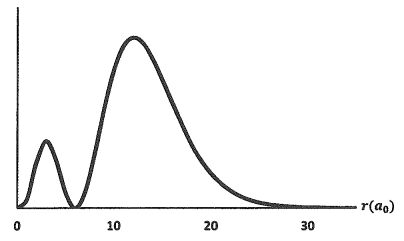 (A) the radial distribution function of 2s of a hydrogen atom. (B) the radial distribution function of 3s of a hydrogen atom. (C) the radial distribution function of 3p of a hydrogen atom. (D) the radial wavefunction of 2s of a hydrogen atom. (E) the radial wavefunction of 3p of a hydrogen atom.
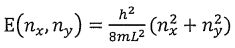 (A)
 (B)
 (C)
 (D)
 (E) There is not enough information.
 ? (A)
 (B)
 (C)
 (D)
 (E)
 has one valence electrons. (B) Thallium is a transition metal atom. (C)
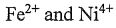 are isoelectronic. (D) The effective nuclear charge
 can be larger than the actual nuclear charge Z. (E) Europium and californium belong to lanthanides.
 and 123 pm respectively. The unit cell edge length is 566 pm. The density of germanium is 5.33 g.
 . How many germanium atoms are there in a unit cell? (A) 2 (B) 4 (C) 8 (D) 12 (E) 24
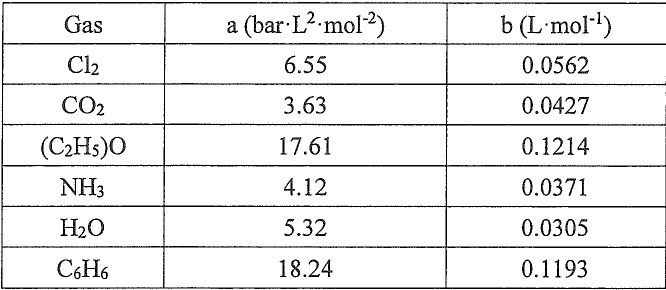 (A) Benzene (B) Ammonia (C) Chlorine (D) Diethyl ether (E) Water
 and S° are independent of temperature.
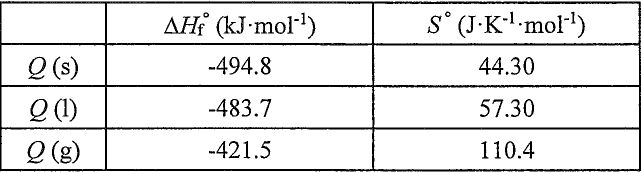 (A) 8442 K (B) 508.7 °C (C) 3818 K (D) 898.2 °C (E) There is not enough information.
 > 0 (B)
 > 0 (C)
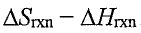 /T > 0 (D)
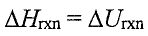 + P·ΔV (E)

 at 298 K. At constant pressure and temperature, which of the following statements is true? (A)
 (B)
 (C)
 ¹ (D)
 (E) None of the above is correct.
 (C) C, H2O, HNO3 (D) CxHy, H2O, CO2, HNO3 (E) CxHy, H2O, CO2, HCN
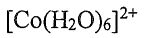 a low-spin or high-spin complex cation? How many unpaired d-electrons are expected for it? (A) low-spin, 0 unpaired electron (B) low-spin, 1 unpaired electron (C) low-spin, 3 unpaired electrons (D) high-spin, 3 unpaired electrons (E) high-spin, 5 unpaired electrons
 (A) reaction rate =
 (B) reaction rate =
 (C) reaction rate =
 (D) reaction rate =
 (E) reaction rate =
 : dibromodi(ethylenediamine)cobalt(III) ion (D) [Cr(H2O)4Cl2]C1·2H2O : tetraaquadichlorochromium(III) chloride diaqua (E)
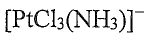 : trichloroammineplatinum(II) ion

 (C) The ΔS° of this reaction is -
 . (D) The ΔH° of this reaction is
 . (E) The relationship should be lnK = x/T. The intercept -1.8 must be experimental error.
 → NO(g), in acidic solution, how many electrons appear in the half-reaction when it is properly balanced? (A) 2 (B) 3 (C) 4 (D) 6 (E) 8
 (B)
 (C)
 (D)
 (E)

 ) = +0.15 V and E°(
 ) = +0.34 V. Then E°(
 ) = (A) +0.04 V (B) +0.19 V (C) +0.49 V (D) +0.53 V (E) none of above
 (B)
 (C)
 (D)
 (E)
 (A) chlorate (B) chlorite (C) hypochlorite (D) perchloride (E) perchlorate
 -(aq, 0.50 M) ||
 (aq, 0.80 M) | H2(g, 175 kPa) | Pt(s)
 (B)
 (C)
 (D)
 (E)

 = 7.21, and
 = 12.68. (A) bromocresol green,
 = 4.7 (B) litmus,
 = 6.5 (C) bromothymol blue,
 = 7.1 (D) phenolphthalein,
 = 9.4 (E) indigo carmine,
 = 12.2
 of NH3 is greater than that of PH3. (D) The aqueous solubility of NH3 is higher than that of PH3. (E) The solubility of NH3 in non-polar solvents is lower than that of PH3.