所屬科目:學士後西醫-化學
1.If the equilibrium constant for A+B⇌C is 0.123, then the equilibrium constant for 2C⇌2A+2B is . (A) 1.00-2(0.123) (B) 8.13 (C) 0.123 (D) 66.1 (E) 16.3
6. CaCl2(s)+2H2O(g)⇌ CaCl2 •2H2O(s) Consider the reaction: The equilibrium constant for the reaction as written is . (A) K=[CaCl2·2H2]/([CaCl2][H2O]2) (B) K=1/[H2O]2 (C) K=1/2[H2O] (D) K=[H2O]2 (E) K=[CaCl2·2H2O]/[H2O]2
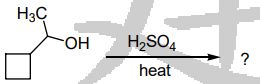
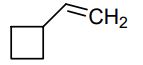
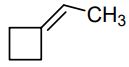
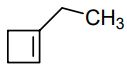
24. What is the major product of the following reaction?(A) (B)(C) (D) (E) None of the above
29. What is the major product of the following reaction? (A) (S) 2-butanol (B) (R)2-butanol (C) racemic mixture of 2-butanol (D) e.e of (S)-butanol (E) diastereomeric mixture of 2-butanol
30. How many absorptions will the following compound have in its carbon NMR spectrum? (A) 3 (B) 4 (C) 5 (D) 6 (E) 7
32. Rank the following compounds with respect to increasing acidity (least acidic to most acidic). (A) 3<1<2<5<5 (B) 4<3<1<2<5 (C) 4<3<1<2<5 (D) 5<2<1<3<4 (E) 4<5<2<1<3
33. What is the product of the following reaction: (A) (B) (C) (D) All of the above (E) Pentane
34. What is the stereochemistry of the following compound: (A) R-form (B) S-form (C) not chiral (D) meso compound (E) racemic mixture
35. What is the name of the compound whose line drawing is shown below? (A) 3-ethyl-4-methyl-2-hexanol (B) 4-ethyl-3-methyl-5-hexanol (C) 3,4-diethyl-2-pentanol (D) 2,3-diethyl-4-pentanol (E) 3-iso-buty1-2-pentanol
41. Give the intermediate that is formed in the ozonolysis reaction of (E.)-2-butene. (A) (B) (C) (D) (E)
42. Give the reagent(s) that would best accomplish the following transformation. (A) CH3COOH (B) MnO2 (C) mCPBA (D) NBS (E) AIBN
46. What is the name of the following amine? (A) Pyridine (B) Pyrrole (C) Piperidine (D) Pyrimidine (E) Pyrrolidine
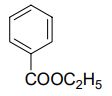
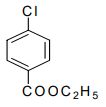
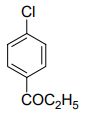
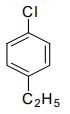
47. Which structure best fits compound Y produced by the following series of reactions starting with p-chlorotoluene? (A) (B) (C) (D) (E)
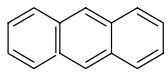
49. Which of the following are antiaromatic? (A) (B) (C) (D) (E) None of the above
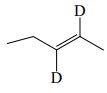
53. Which of the following reagents is best used for conversion show below? (A) 1. NaBH4, 2. D3O+ (B) 1. NaBD4, 2. H3O+ (C) 1. LiAlH4, 2. D3O+ (D) 1. LiAlH4, 2. H3O+ (E) 1. NaBH4, 2. H3O+
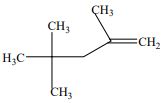
55. The following compound is used as an additive in gasoline to improve its octane value:Which of the following is a correct IUPAC name for this compound: (A) 2,2,4-trimethyl-1-pentene (B) 2,2,4-trimethyl-2-pentene (C) 2,2,4-trimethyl-5-pentene (D) 2,4,4-trimethyl-1-pentene (E) 2,4,4-trimethyl-2-pentene
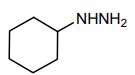
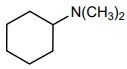
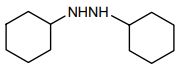
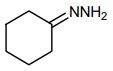
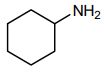
57. Which of the following compounds is a hydrazone? (A) (B) (C) (D) (E)
59. What is the product from the following reaction? (A) (B) (C) (D) (E) none of the above
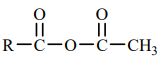
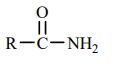
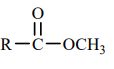
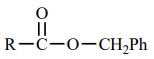
60. Which of the following compounds is hydrolyzed most slowly in aqueous NaOH? (A) (B) (C) (D) (E)
61. What is the major product of the following reaction? (A) (B) (C) (D) (E) none of the above.
62. Which of the following is the best method for preparing N-benzylpyrrolidine from benzoic acid?(A) I). Pyrrolidine; II) SOCl2; III). 1. LAH; 2. H2O (B) I). SOCl2; II). Pyrrolidine; III). 1. LAH; 2. H2O (C) I). 1. LAH; 2. H2O; II). SOCl2; III). Pyrrolidine (D) I). SOCl2; II). 1. LAH; 2. H2O; III). 1. Pyrrolidine (E) None of the above
63. What is the major product of the following conversions? (A) (B) (C) (D) (E)
64. What is the major product of the following reaction? (A) Only (I) is formed (B) Only (II) is formed (C) (I) is major product (D) (II) is major product (E) (I):(II) = 50:50
65. What is the product of the following reaction? (A) (B) (C) (D) (E)
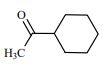
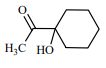
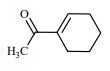
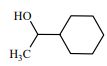
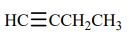
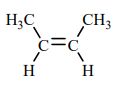
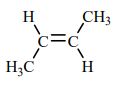
66. What is the major product from this reaction? (A)CH2=C=CHCH3 (B)CH2=CHCH2CH3 (C) (D) (E)
67. Which Fischer projections represent pair of enantiomers? (A) I and II (B) II and III (C) II and IV (D) III and IV (E) I and IV
68. Which constitutional isomer has the lowest heat of hydrogenation? (A) (B) (C) (D) (E)
69. Which compound would provide the following 1H-NMR spectrum? Multiplet at 5.01 ppm (1H) Singlet at 2.04 ppm (3H) Doublet at 1.25 ppm (6H) (A) (B) (C) (D) (E)
70. An unknown compound, C4H8Br2, gave the following NMR spectrum: Singlet at 1.97 ppm (6H) Singlet at 3.89 ppm (2H) What is the structure of the compound? (A) (B) (C) (D) (E) none of the above
71. What is the major product of the following conversions? (A) (B) (C) (D) (E) none of the above
72. What is the major organic product of the following reaction? (A) (B) (C) (D) (E) none of the above
73. What reagent(s) would you use to accomplish the following conversion? (A) CH3Br, H3O+ (B) CH3MgBr, H3O+ (C) (CH3)2CuLi, H3O+ (D) CH3Br, LiAlH4, H3O+ (E) CH3MgBr, LiAlH4, H3O+
74. What carbonyl compound and what phosphonium ylide are required for the synthesis of the following alkene? (A) only (1) (B) only (2) (C) only (3) (D) (2) and (3) (E) (1),(2),and (3).
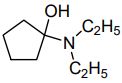
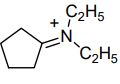
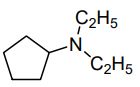
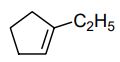
75. What is the major organic product of the following reaction? (A) (B) (C) (D) (E)
76. Which of the following is most reactive toward nucleophilic aromatic substitution? (A) (B) (C) (D) (E)
77. What are the products of the following reaction? (A) only (1) (B) only (2) (C) only (3) (D) (1) and (2) (E) (2) and (3)
78. An unknown compound has the formula C8H10OS, and is known to contain a thiophene ring. The proton NMR spectrum of this compound is: 0.98, triplet, 3H; 1.74, multiplet, 2H; 2.80, triplet, 2H; 7.40, multiplet, 1H; 7.55, multiplet, 2H. What is the structure of this compound? (A) (B) (C) (D) (E) none of the above.
80. What is the major organic product of the following reaction? (A) (B) (C) (D) (E)none of the above.
 阿摩線上測驗
登入
 (A)
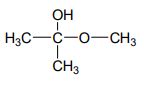 (B)
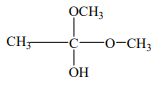 (C)
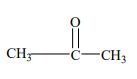 (D)
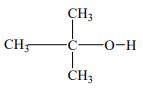 (E) None of the above
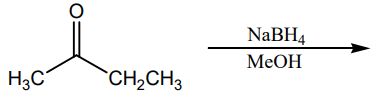 (A) (S) 2-butanol (B) (R)2-butanol (C) racemic mixture of 2-butanol (D) e.e of (S)-butanol (E) diastereomeric mixture of 2-butanol
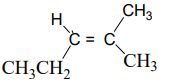 (A) 3 (B) 4 (C) 5 (D) 6 (E) 7
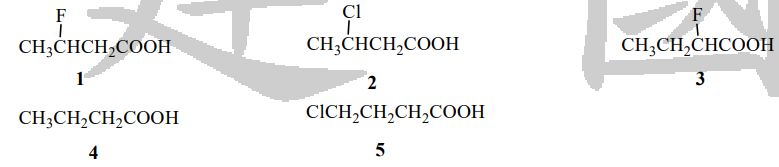 (A) 3<1<2<5<5 (B) 4<3<1<2<5 (C) 4<3<1<2<5 (D) 5<2<1<3<4 (E) 4<5<2<1<3
 (A)
 (B)
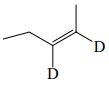 (C)
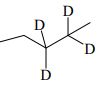 (D) All of the above (E) Pentane
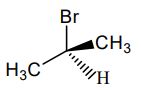 (A) R-form (B) S-form (C) not chiral (D) meso compound (E) racemic mixture
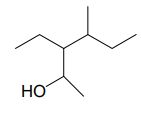 (A) 3-ethyl-4-methyl-2-hexanol (B) 4-ethyl-3-methyl-5-hexanol (C) 3,4-diethyl-2-pentanol (D) 2,3-diethyl-4-pentanol (E) 3-iso-buty1-2-pentanol
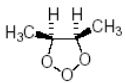 (B)
 (C)
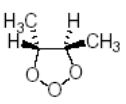 (D)
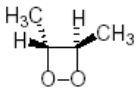 (E)
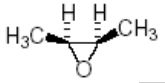
 (A) CH3COOH (B) MnO2 (C) mCPBA (D) NBS (E) AIBN
 (A) Pyridine (B) Pyrrole (C) Piperidine (D) Pyrimidine (E) Pyrrolidine
 (A)
 (B)
 (C)
 (D)
 (E)

 (B)
 (C)
 (D)
 (E) None of the above
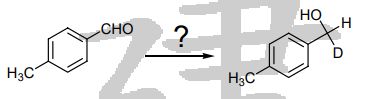 (A) 1. NaBH4, 2. D3O+ (B) 1. NaBD4, 2. H3O+ (C) 1. LiAlH4, 2. D3O+ (D) 1. LiAlH4, 2. H3O+ (E) 1. NaBH4, 2. H3O+
 (B)
 (C)
 (D)
 (E)
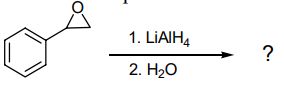 (A)
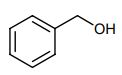 (B)
 (C)
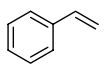 (D)
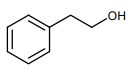 (E) none of the above
 (B)
 (C)
 (D)
 (E)

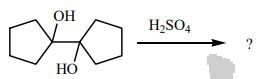 (A)
 (B)
 (C)
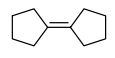 (D)
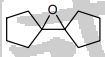 (E) none of the above.
 (A) I). Pyrrolidine; II) SOCl2; III). 1. LAH; 2. H2O (B) I). SOCl2; II). Pyrrolidine; III). 1. LAH; 2. H2O (C) I). 1. LAH; 2. H2O; II). SOCl2; III). Pyrrolidine (D) I). SOCl2; II). 1. LAH; 2. H2O; III). 1. Pyrrolidine (E) None of the above
 (A)
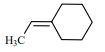 (B)
 (C)
 (D)
 (E)
 (A) Only (I) is formed (B) Only (II) is formed (C) (I) is major product (D) (II) is major product (E) (I):(II) = 50:50
 (A)
 (B)
 (C)
 (D)
 (E)
 (A)CH2=C=CHCH3 (B)CH2=CHCH2CH3 (C)
 (D)
 (E)
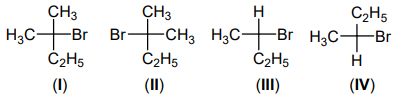 (A) I and II (B) II and III (C) II and IV (D) III and IV (E) I and IV
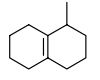 (B)
 (C)
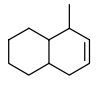 (D)
 (E)

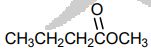 (B)
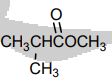 (C)
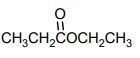 (D)
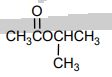 (E)
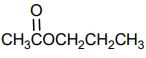
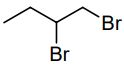 (B)
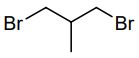 (C)
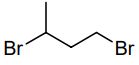 (D)
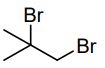 (E) none of the above
 (A)
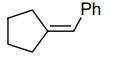 (B)
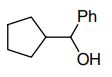 (C)
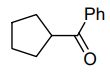 (D)
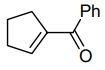 (E) none of the above
 (A)
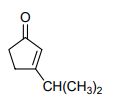 (B)
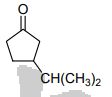 (C)
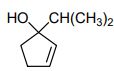 (D)
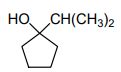 (E) none of the above
 (A) CH3Br, H3O+ (B) CH3MgBr, H3O+ (C) (CH3)2CuLi, H3O+ (D) CH3Br, LiAlH4, H3O+ (E) CH3MgBr, LiAlH4, H3O+
 (A) only (1) (B) only (2) (C) only (3) (D) (2) and (3) (E) (1),(2),and (3).
 (A)
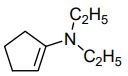 (B)
 (C)
 (D)
 (E)
 (B)
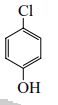 (C)
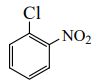 (D)
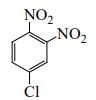 (E)
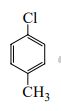
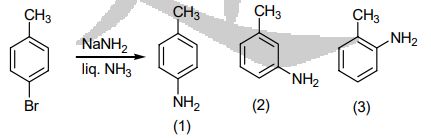 (A) only (1) (B) only (2) (C) only (3) (D) (1) and (2) (E) (2) and (3)
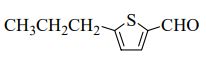 (B)
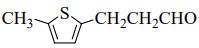 (C)
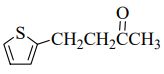 (D)
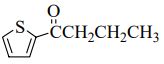 (E) none of the above.
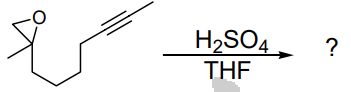 (A)
 (B)
 (C)
 (D)
 (E)none of the above.