阿摩線上測驗
登入
首頁
>
研究所、轉學考(插大)◆有機化學及無機化學
>
113年 - 113 國立中山大學_碩士班暨碩士在職專班招生考試試題_化學系碩士班:有機化學及無機化學#119266
> 試題詳解
13. Which of the following amine CANNOT be synthesized by reductive amination?
(A)
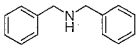
(B)
(C)
(D)
(E)
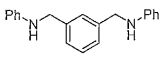
答案:
登入後查看
統計:
A(0), B(1), C(1), D(1), E(0) #3222737

詳解 (共 1 筆)
MoAI - 您的AI助手
B1 · 2025/10/26
#6969120
題目解析 題目要求選擇一個無法通過還原胺...
(共 717 字,隱藏中)
前往觀看
0
0
其他試題
9.Which of the following pair of structures represent an identical compound? (A)(B)(C)(D)(E)
#3222733
10. Which of the following solvent is the most soluble in water? (A) hexanoic acid (B) dichloromethane (C) dimethylformamide (D) 1-butanol (E) ethyl acetate
#3222734
11. Which of the following compound is the most reactive in an SN1 reaction? (A)(B)(C)(D)(E)
#3222735
12. Which of the following reaction conditions will give the desire product as shown? Reaction conditions: (1)O3 (2) (3) Excess HBr, then excess KOH (4) BuLi, then H2O (A) (1) and (2) only (B) (2) and (3) only (C) (2), (3) and (4) only (D) All of the above (E) None of the above
#3222736
14. Which of the following acetal will react the fastest in acid-catalyzed hydrolysis? (A)(B)(C)(D)(E)
#3222738
15. Which of the following compounds is the oxidant in the reaction below? (A)(B)(C)KOH(D)oxygen in air(E)
#3222739
16. Rank the reactivity of the following compounds towards nucleophilic substitution of carboxylic acid derivative in increasing order (least to most). (A)2<3<5<1<4 (B)5<3<2<4<1 (C)1<2<5<3<4 (D)1<2<3<5<4 (E)2<5<3<1<4
#3222740
17.Which of the following compound is most likely to be the major product of the following reaction? (A)(B)(C)(D)(E)
#3222741
18. Which of the following solvent is a protic solvent? (A)(B)(C)(D)(E)
#3222742
19.Which of the following description about SN2 reaction is incorrect? (A) The rate of the reaction is second order. (B) Inversion of configuration at the reacting center will occur. (C) There is no intermediate in an SN2 reaction. (D) Alkyl fluoride is very reactive in SN2 reaction. (E) In Sx2 reaction, using polar aprotic solvents will give a faster reaction rate compare to polar protic solvents.
#3222743