所屬科目:研究所、轉學考(插大)◆有機化學及無機化學
2. Rank the following molecules in order of increasing relative rate of SN1solvolysis with methanol and heat (slowest to fastest reacting).(A) 3<2<4<5<1 (B) 2<3<4<1<5 (C) 5<4<3<2<1 (D) 2<3<4<5<1 (E) l<2<5<4<3
4. Rank the following compounds in order of increasing reactivity towards chlorination with CI2/AICI3 (slowest reacting to fastest). (A) 3<4<2<1<5(B) 2<4<1<3<5 (C) 4<2<1<3<5 (D) 2<4<5<1<3 (E) 2<4<1<5<3
5. Which of the following structures, if flat, would be classified as antiaromatic? (A)(B)(C)(D)(E)
9. Predict the major product fbr the following reaction. (A)(B)(C)(D)(E)
11. Which one of these alkene would be likely to experience a carbocation rearrangement when treated with aqueous acid? (A)(B)(C)(D)(E) None of these would undergo a rearrangement
12. What is the complete systematic IUPAC name for the following compound?(A) (S)-4-ethyl-4-isopropoxycyclopent-2-en-1 -one(B) (R)-4-ethyl-4-isopropoxycyclopent-2-en-l -one (C) (S)-3-ethyl-3-isopropoxycyclopent-4-en-l-one (D)(R)-3-ethyl-3-isopropoxycyclopent-4-en-l-one (E) (R)- 4-isopropoxy-4-ethyl-cyclopent-2-en-l-one
13. Which of the following is the best Michael acceptor? (A)(B) (C)(D)(E)
14. Provide the major organic product of the reaction below. (A) (B)(C)(D) (E)
15. Provide the structure of the major organic product of the reaction below. (A)(B) (C)(D)(E)
16. Provide the structure of the major organic product in the reaction below. (A)(B)(C)(D)(E)
17. Which position of the molecule shown below is most likely to undergo a Friedel-Craft acylation? (A)(B)(C)(D)(E)
18. What would be the resulting product when (3R, 4S)-3,4-dimethylhexa-1,5-diene (shown below) is heated? (A) (±)-3,4-dimethyl-1,5-hexadiene(B) (3S,4R)-3,4-dimethylhexa-1,5-diene (C) (2E, 6E)-octa-2,6-diene(D) (2Z, 6Z)-octa-2,6-diene(E)(2Z, 6E)-octa-2,6-diene
22. How many π bonds does an O2 molecule have?(A)0(B)1(C)2(D)3(E)4
30. In H2O, the wave functionrepresents the group orbital that is highest in energy, where c c2, and c3 are normalized coefficients, c1 + c2 + c3 = (A)0(B)1 (C) 2(D)3(E)4
32. The magnetic moment (in μB)of [Co(H2O)6]3+ = (A)0 (B) 1.4 (C) 1.7(D)2 (E)none of the above
36. Wliich of the following is true for tetrahedral [FeCI4]-? (A) it is diamagnetic (B) its magnetic moment = 1.7 μB (C) there are MLCT bands in its UV-vis spectrum(D) its spin multiplicity = 4 (E) d-d transitions are spin forbidden
a)
b)
c)
d)
2. Design a synthesis of Compound G from Compound F (more than one step is required)? (4%)
(a)
(b)
 阿摩線上測驗
登入
阿摩線上測驗
登入
 (A) 3<2<4<5<1
(B) 2<3<4<1<5
(C) 5<4<3<2<1
(D) 2<3<4<5<1
(E) l<2<5<4<3
 (A) 3<4<2<1<5(B) 2<4<1<3<5
(C) 4<2<1<3<5
(D) 2<4<5<1<3
(E) 2<4<1<5<3
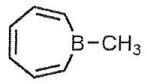 (B)
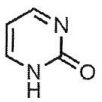 (C)
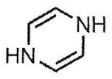 (D)
 (E)
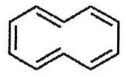
 (A)
 (B)
 (C)
 (D)
 (E)

 (B)
 (C)
 (D)
 (E)
None of these would undergo a rearrangement
 (A) (S)-4-ethyl-4-isopropoxycyclopent-2-en-1 -one(B) (R)-4-ethyl-4-isopropoxycyclopent-2-en-l -one
(C) (S)-3-ethyl-3-isopropoxycyclopent-4-en-l-one (D)(R)-3-ethyl-3-isopropoxycyclopent-4-en-l-one (E) (R)- 4-isopropoxy-4-ethyl-cyclopent-2-en-l-one
 (B)
 (C)
 (D)
 (E)

 (A)
 (B)
 (C)
 (D)
 (E)

 (A)
 (B)
 (C)
 (D)
 (E)

 (A)
 (B)
 (C)
 (D)
 (E)

 (A)(B)(C)(D)(E)
 (A) (±)-3,4-dimethyl-1,5-hexadiene(B) (3S,4R)-3,4-dimethylhexa-1,5-diene (C) (2E, 6E)-octa-2,6-diene(D) (2Z, 6Z)-octa-2,6-diene(E)(2Z, 6E)-octa-2,6-diene
 represents the group orbital that is highest in energy, where c c2, and c3 are normalized coefficients, c1 + c2 + c3 = (A)0(B)1 (C) 2(D)3(E)4





