阿摩線上測驗
登入
首頁
>
研究所、轉學考(插大)◆有機化學及無機化學
>
112年 - 112 國立中山大學碩士暨碩士專班招生考試_化學系碩士班:有機化學及無機化學#119263
> 試題詳解
5. Which of the following structures, if flat, would be classified as antiaromatic?
(A)
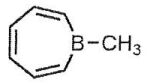
(B)
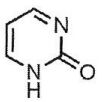
(C)
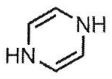
(D)
(E)
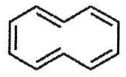
答案:
登入後查看
統計:
A(0), B(0), C(0), D(1), E(0) #3222613

詳解 (共 1 筆)
MoAI - 您的AI助手
B1 · 2025/10/26
#6969194
題目解析 這個題目要求我們判斷哪一個結...
(共 852 字,隱藏中)
前往觀看
0
0
其他試題
複選題1. Which of the species below is less basic than acetylide? (A)CH3Li(B)CH3ONa (C) CH3MgBr(D)both A and C (E)all of the above
#3222609
2. Rank the following molecules in order of increasing relative rate of SN1solvolysis with methanol and heat (slowest to fastest reacting).(A) 3<2<4<5<1 (B) 2<3<4<1<5 (C) 5<4<3<2<1 (D) 2<3<4<5<1 (E) l<2<5<4<3
#3222610
3. What compound is formed when 2,2-dimethyloxirane is treated with ethanol containing a trace of HCl? (A)2-ethoxy-2-methyl-1 -propanol(B)1 -ethoxy-2-methyl-2-propanol (C) 2-ethoxy-2-methyl-2-propanol(D)2-ethoxy-1 -butanol (E)1 -ethoxy-2-butanol
#3222611
4. Rank the following compounds in order of increasing reactivity towards chlorination with CI2/AICI3 (slowest reacting to fastest). (A) 3<4<2<1<5(B) 2<4<1<3<5 (C) 4<2<1<3<5 (D) 2<4<5<1<3 (E) 2<4<1<5<3
#3222612
6. The Williamson ether synthesis proceeds via an________ mechanism.(A)SN1(B)SN2 (C) El(D)E2 (E)none of the above
#3222614
7. Which of the following is least likely to undergo a smooth crossed Claisen condensation with methyl pentanoate? (A) (CH3)3CCO2CH3(B)PhCH2CO2CH3 (C)PhCO2CH3(D)HCO2CH3 (E)(CH3O)2CO
#3222615
8. Which of the following describes an unsymmetrical addition reaction? (A) propyne with 1 mole H2, Ni and heat(B) propyne with 2 moles Cl2 in CCI4 (C) propyne with 1 mole Br2 in CCI4(D) propyne with Na/NH3 (E)propyne with 1 mole HBr
#3222616
9. Predict the major product fbr the following reaction. (A)(B)(C)(D)(E)
#3222617
10. Which of the following reagents or sequences do not produce an alcohol or diol from an alkene starting material? (A) H+, H2O (B) HCO3H (C) BH3. THF followed by H2O2, NaOH (D) Hg(OAc)2, H2O followed by NaBH4 (E)OsO4, H2O2
#3222618
11. Which one of these alkene would be likely to experience a carbocation rearrangement when treated with aqueous acid? (A)(B)(C)(D)(E) None of these would undergo a rearrangement
#3222619