阿摩線上測驗
登入
首頁
>
計算機概論、大意(資訊科學概論,電腦常識,電子計算機概論)
>
111年 - 111 地方政府特種考試_四等_資訊處理:計算機概要#112611
> 試題詳解
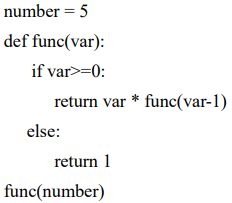
21若執行以下的 Python 程式碼,則 func()方法會被呼叫幾次?
(A)6
(B)7
(C)8
(D)9
答案:
登入後查看
統計:
A(217), B(184), C(38), D(18), E(0) #3036539
詳解 (共 1 筆)
ANABEBE
B2 · 2022/12/21
#5684158
number為5,在func(numbe...
(共 237 字,隱藏中)
前往觀看
11
0
相關試題
22若執行以下的Java程式碼,則螢幕上輸出的數字依序為何?(A)1,3,4(B)1,5,3,4(C)1,3,3,4,5(D)1,3,3,3,4,5
#3036540
23在電腦記憶體中主記憶體、暫存器、快取記憶體在速度比較上,從高至低的順序為何? (A)主記憶體、快取記憶體、暫存器 (B)暫存器、快取記憶體、主記憶體 (C)快取記憶體、暫存器、主記憶體 (D)暫存器、主記憶體、快取記憶體
#3036541
24若一作業系統之 CPU 排程採用依序循環方法(round-robin scheduling),每次程序使用 CPU 的時間配 額(time quantum)為 t 毫秒。今有某一排程,共有三個程序 P1、P2 及 P3,所需 CPU 使用時間分別 為 6 毫秒、9 毫秒、7 毫秒;且開始的執行順序為 P1、P2、P3。若內容轉換(context switch)時間不 計,根據下列不同的時間配額設定,那個設定產生的平均執行時間(turn-around time)最短? (A)t=1(B)t=3(C)t=5(D)t=7
#3036542
25下列那一項非作業系統的四大資源管理項目? (A)記憶體管理(Memory Management)(B)程序管理(Process Management) (C)函式庫管理(Library Management)(D)設備管理(Device Management)
#3036543
26使用 UNIX 系統時,若欲傳送一個信號(Signal)“28”給代碼(PID)為 101 的程序,應使用下列 那一項命令? (A) kill -28 101(B) signal -28 101 (C) kill -101 28 (D) signal -101 28
#3036544
27在 UNIX 或 Linux 作業系統中,若有一目錄的權限為 drwx--x--x,下列敘述何者錯誤? (A)目錄擁有者可以更改此目錄的名稱 (B)所有帳號都可以改變工作目錄至此目錄 (C)所有帳號都可以列出此目錄下的檔案與目錄清單 (D)除了目錄擁有者之外,其他帳號無法更改此目錄的名稱
#3036545
28setuid 是 UNIX 的檔案權限管理其中一種旗標(flag) ,一個可執行檔被加入 setuid 權限後,就可以允 許此可執行檔的執行者暫時性的轉換身分為檔案所有者,來存取該使用者所屬檔案,以便順利執行此 可執行檔。下列指令何者可以用來設定可執行檔 test 的 setuid? (A) chmod g+s test (B) chmod 4777 test(C) chmod u-s test(D) chmod 2777 test
#3036546
29若執行以下的 Java 程式碼,則螢幕上輸出的數字依序為何?(A) 1,2,3,4 (B) 3,6,9,12 (C) 5,6,7,8(D) 15,18,21,24
#3036547
30使用阿姆達爾定律(Amdahl's Law)來考慮下列問題:一個應用程式中,有百分之四十的部分只能循 序(serial)執行,另外百分之六十的部分可以完全平行(parallel)執行,如果透過增加核心的數量來 達到應用程式的速度提升(speedup),若以單核心的環境做為比較的基準,此應用程式在多核心系統 上速度提升的上限是多少? (A) 1.4 倍(B) 1.6 倍 (C) 1.7 倍(D) 2.5 倍
#3036548
31下列何者不是 360 度視訊常用之投影模型? (A)立方體投影(Cubemap projection) (B) EAC(Equi-Angular Cubemap) (C)等距長方投影(Equirectangular projection) (D)正交投影(Orthographic projection)
#3036549
相關試卷
115年 - 115 原住民族特種考試_四等_電子工程:計算機概要#144534
2026 年 · #144534
115年 - 115 調查特種考試_三等_電子科學組:計算機概論#143363
2026 年 · #143363
115年 - 115 普通考試_電子工程、電信工程:計算機概要#142356
2026 年 · #142356
115年 - 115 普通考試_資訊處理:計算機概要#141845
2026 年 · #141845
115年 - 115 高等考試_三級_電力工程、電子工程、電信工程:計算機概論#141768
2026 年 · #141768
115年 - 115 國家安全情報特種考試_三等_資訊組(選試英文)、電子組(選試英文):計算機概論#140900
2026 年 · #140900
115年 - 115 身心障礙特種考試_四等_資訊處理:計算機概要#138974
2026 年 · #138974
115年 - 115 關務特種考試_四等_資訊處理(選試英文):計算機概要#138972
2026 年 · #138972
115年 - 115 身心障礙特種考試_四等_電子工程:計算機概要#138951
2026 年 · #138951
115年 - 115 身心障礙特種考試_五等_電腦打字:計算機大意#138949
2026 年 · #138949
 阿摩線上測驗
登入
阿摩線上測驗
登入
阿摩線上測驗
登入
阿摩線上測驗
登入